"A scientific article by Miss Noor al-Huda Azmi Hassan entitled: The Role of Organic Matter in Increasing Soil Fertility and Enhancing Plant Growth"
26/02/2026 Share :
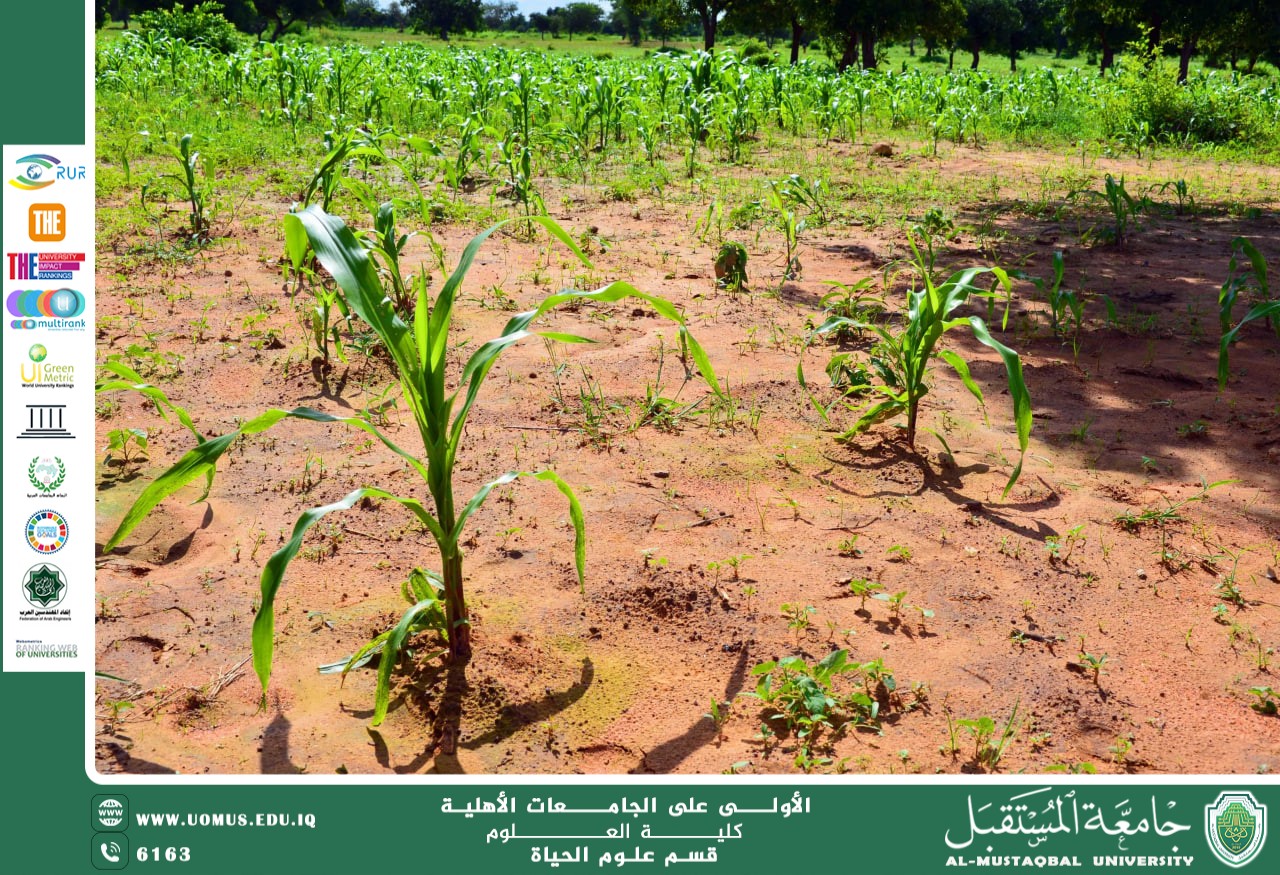
Organic matter plays a fundamental role in improving soil fertility and increasing its capacity to support plant growth. It enhances the soil’s ability to retain water and nutrients, and improves aeration, allowing roots to absorb nutrients more efficiently. Adding organic fertilizers and compost increases crop productivity and improves the quality of agricultural produce. Organic matter also activates beneficial microorganisms in the soil, which decompose organic materials and continuously provide nutrients to plants. Soil rich in organic matter is flexible and can resist environmental stress and drought.
On the other hand, soil erosion is a major threat to sustainable agriculture. Erosion occurs due to strong winds, heavy rainfall, and surface water runoff, leading to the loss of the nutrient-rich topsoil. Losing this layer reduces soil fertility and diminishes plant growth. Soil erosion can be prevented by planting cover crops, using soil-conserving farming methods, and applying proper irrigation systems. Incorporating organic matter into the soil also strengthens its structure and prevents erosion. Preserving soil from degradation and contamination ensures continued agricultural production and protects food security for future generations. Focusing on organic matter and erosion-prevention techniques makes soil more fertile and sustainable.