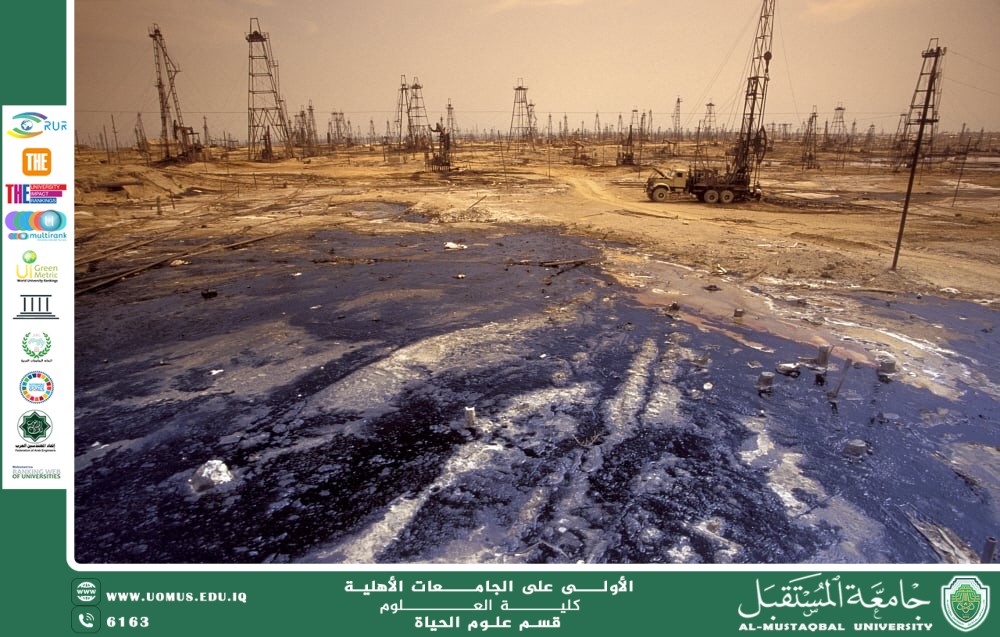
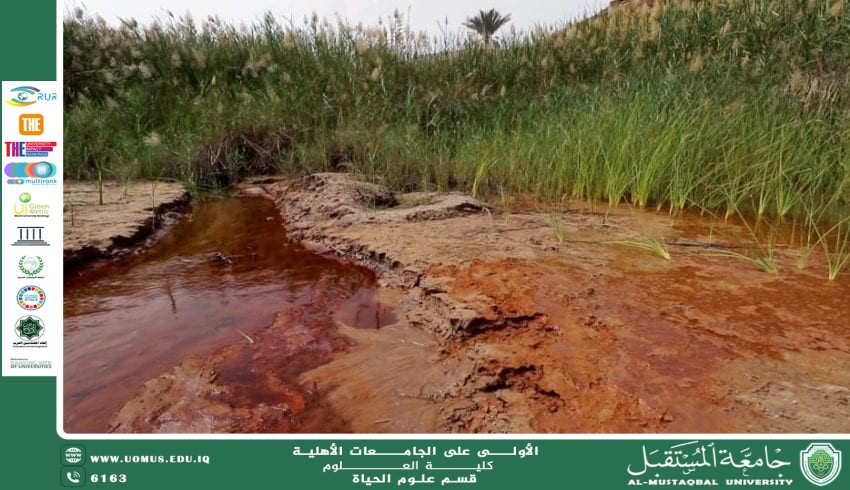
"A scientific article by Assistant Lecturer Ola Adel Rasmi entitled: Oil Pollution of Soil: Causes, Effects, and Remediation Methods"
26/02/2026 Share :
Soil is considered one of the most important natural resources, as it forms the foundation for agriculture and food production. Today, soil faces many challenges that affect its fertility and quality. One of the most prominent challenges is oil contamination, which occurs due to oil spills or industrial waste on agricultural lands. Oil pollution leads to the degradation of soil structure, reduces its organic matter content, and negatively affects plant growth and the surrounding environment. Furthermore, toxic substances can accumulate in plants and transfer to humans and animals. Effective methods to remediate oil contamination include adding microorganisms and organic materials that help decompose petroleum compounds and convert them into less harmful substances.
Organic matter plays a major role in improving soil fertility. It enhances the soil's ability to retain water and nutrients, improves aeration, and facilitates healthy root growth. Adding organic fertilizers and compost increases crop productivity and improves quality. Organic matter also activates beneficial microorganisms that support nutrient cycling.
On the other hand, soil erosion is one of the greatest threats to sustainable agriculture. It occurs due to wind, rain, and surface runoff, leading to the loss of the nutrient-rich topsoil. Soil erosion can be prevented by planting cover crops, applying soil-conserving farming techniques, and using proper irrigation methods. Preserving soil, remediating contamination, and improving fertility ensure the sustainability of agricultural lands for future generations and maintain food security.