
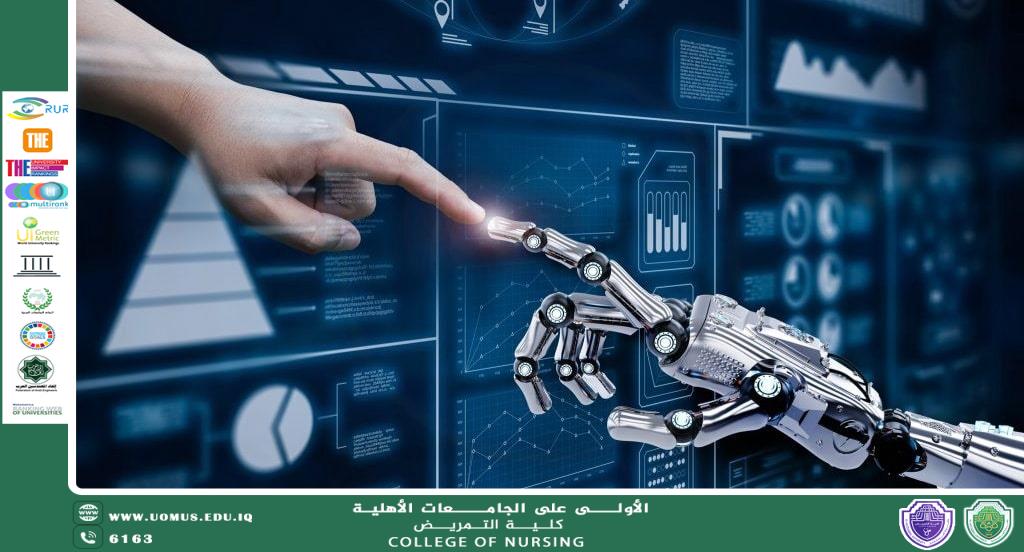
Artificial Intelligence and Its Role in Improving University Education
08/03/2026 Share :
In recent years, the world has witnessed rapid development in artificial intelligence technologies, leading to significant changes in various fields, including higher education. Artificial intelligence has become an important tool in improving the quality of education and developing teaching methods, as well as enhancing the learning experience for students. In education, artificial intelligence refers to the use of computer systems and smart technologies that can simulate human abilities such as learning, analysis, and decision-making, with the aim of supporting the educational process and improving its outcomes.
Artificial intelligence contributes to the development of university education through several important aspects. First, it helps provide personalized learning for students, as intelligent systems can analyze a student’s performance and determine their level of understanding of academic subjects. Based on this analysis, educational content can be delivered in a way that suits the student’s needs and individual abilities. This helps improve comprehension and reduce educational gaps among students. Second, artificial intelligence contributes to improving teaching methods by providing analytical tools that help faculty members identify students’ strengths and weaknesses, enabling them to develop more effective teaching strategies.
Artificial intelligence also plays an important role in developing academic assessment systems. It can be used to electronically grade exams and analyze students’ answers quickly and accurately, in addition to providing immediate feedback that helps students improve their academic performance. Moreover, artificial intelligence supports e-learning through virtual assistants and smart educational platforms that provide diverse learning resources and answer students’ inquiries at any time.
Despite the many benefits of using artificial intelligence in higher education, its implementation faces some challenges, such as the need for advanced technological infrastructure, training academic staff to use these technologies, and ensuring the protection of students’ data privacy. Nevertheless, the proper use of artificial intelligence can significantly contribute to the development of university education and improve the quality of its educational outcomes.