Iraq Between Neutrality and Engagement: A Critical Reading of the Discourse of Political Identity
16/03/2026 Share :
For me, Iraq has never been merely a homeland in which I live; rather, it has been a text unfolding before my eyes since my birth in the mid-1960s—a text written by history through wars, shaped by geography through borders, and continually reproduced by society through memory. I have lived alongside wars not as passing events, but as a daily rhythm that leaves its mark on consciousness and identity. Thus, Iraq has become, in my perception, a poem oscillating between silence and expression, between the language of shadow that seeks to protect the self and the language of light imposed by reality.
From this perspective, when I write about the duality of neutrality and engagement, I am not merely addressing political concepts. Rather, I am reading an existential discourse that defines the meaning of Iraq in times of turmoil—a discourse that places the country between being the author of its own narrative or remaining a text written by others.
Neutrality in our experience does not signify withdrawal or weakness. Instead, it represents an attempt to consolidate sovereignty and avoid being drawn into competing axes. It is a choice closely tied to a collective memory burdened with the consequences of wars, reflecting a desire to protect the domestic sphere from the repercussions of external conflicts.
Engagement, on the other hand, represents the other side of the equation. Iraq often finds itself compelled to participate in regional interactions, whether through alliances, alignments, or openness to external powers. While engagement may offer opportunities to enhance influence, it also places the country in the midst of complex security, economic, and political challenges, and risks turning Iraq into an arena for settling external scores.
From a critical perspective, this duality can be read as a discourse of national identity. Neutrality appears in the language of mediation and calls for dialogue, while engagement manifests in practical positions shaped by regional and international pressures. In this sense, Iraq is not merely a political actor; it is a narrative text contested by metaphors of shadow and light, fire and water, survival and action.
This dialectic transforms neutrality and engagement into tools for reproducing national identity in times of turbulence, revealing that Iraq faces an existential test that extends beyond politics to the very meaning of its existence. Having lived through these transformations, I realize that the future will not be easy. If Iraq does not craft a new discourse that transcends the duality of neutrality and engagement, it will remain trapped in an endless cycle between independence and dependency.
What is required today is the formulation of a third vision—what I call “active neutrality.” In this approach, Iraq is neither a passive observer nor a subordinate actor, but rather a mediator that holds the initiative and writes its political narrative with its own hand. This vision derives its strength from Iraq’s history, culture, and geographical position, redefining neutrality and engagement not as imposed choices but as instruments for shaping a new political identity.
The conclusion I reach affirms that Iraq stands before a genuine existential test: either it succeeds in crafting an independent discourse that reflects its national will and grants it an active place within the regional order, or it remains a text written by others according to their interests and visions. Redefining these variables within a comprehensive strategic framework is the only path through which Iraq can become the author of its own discourse, rather than a reader compelled to recite what is dictated to it, presenting itself to the world as an independent narrative with its own distinctive meaning.
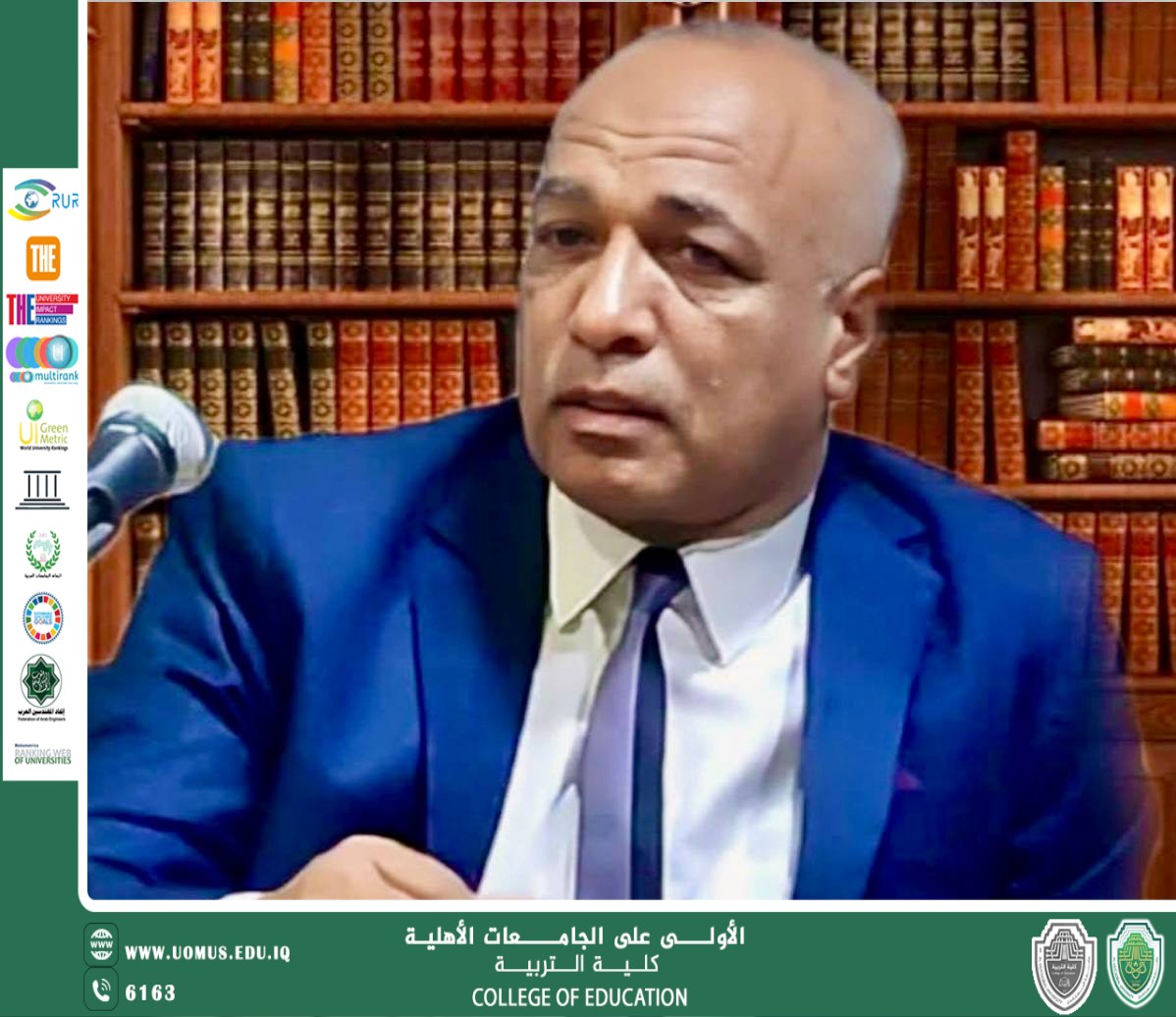
By Dr. Hashim Sayehood Mohammed