
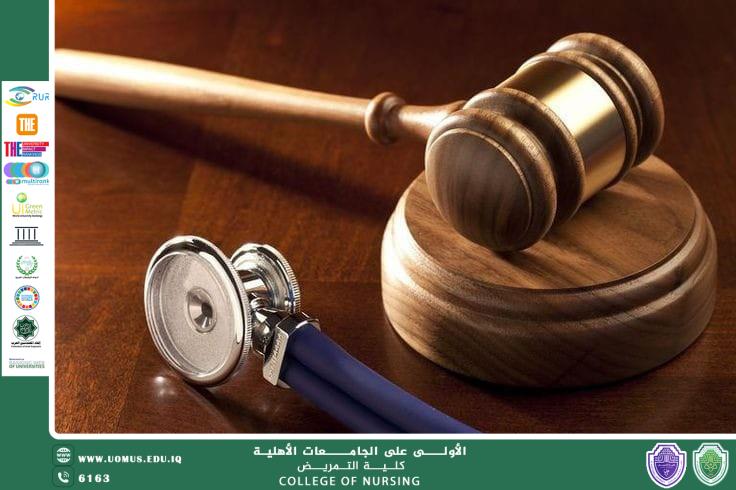
Law and Nursing: An Organizational Partnership to Ensure Patient Safety and Quality Healthcare
17/03/2026 Share :
Introduction
The nursing profession is considered one of the most important healthcare professions, playing a central role in providing medical care to patients and monitoring their health conditions within healthcare institutions. Nurses work in an environment that requires a high level of accuracy, professionalism, and strict adherence to ethical and professional standards.
In this context, the role of law emerges as a regulatory framework that defines the rules governing the practice of the nursing profession and ensures a balance between patients’ rights and the duties of healthcare providers. Law does not only regulate professional relationships within healthcare institutions, but it also extends to protecting human life and health from any negligence or misconduct that may occur during the provision of healthcare services. Therefore, nurses’ understanding of the legal rules governing their profession is essential to ensure patient safety and achieve high-quality healthcare.
First: The Concept of the Relationship Between Law and the Nursing Profession
The relationship between law and the nursing profession is based on organizing professional practice through a set of rules that ensure healthcare is provided in a safe and responsible manner. The law establishes the general framework that defines the rights and duties of nurses and clarifies the limits of their authority while performing their duties within healthcare institutions.
The practice of nursing is directly connected to human life and physical safety, which necessitates the existence of clear legal rules regulating this profession and defining the standards that must be followed when providing healthcare.
Thus, the law serves as a fundamental reference for nurses when dealing with patients. It clarifies the procedures that must be followed in various medical situations and defines the responsibilities that may arise from any professional error that could cause harm to a patient.
Second: The Role of Law in Regulating the Nursing Profession
Law plays a vital role in regulating the nursing profession through a set of rules and regulations aimed at improving the quality of healthcare services and ensuring patient safety. This role can be highlighted through the following points:
1. Defining the Professional Duties of Nurses
The law defines a set of duties that nurses must adhere to while performing their work, such as following medical instructions, providing healthcare according to approved professional standards, and maintaining the confidentiality of patient information.
2. Regulating the Relationship Between Nurse and Patient
The law determines the professional relationship between nurses and patients, requiring respect for the patient’s dignity and human rights, providing healthcare without discrimination, and preserving the patient’s privacy by not disclosing health information except in cases permitted by law.
3. Protecting Patients’ Rights
The law seeks to protect patients from any negligence or misconduct that may occur during the provision of healthcare by imposing legal liability on any person proven to have committed professional negligence that causes harm to a patient.
4. Providing Legal Protection for Nurses
The role of law is not limited to protecting patients only; it also protects nurses from unfair accusations or unjustified legal liability. If a nurse adheres to professional rules and medical instructions, they are entitled to legal protection that shields them from responsibility.
Third: The Legal Liability of the Nurse
A nurse may be subject to legal accountability if a professional error occurs during the performance of their duties and results in harm to a patient. Legal liability can be divided into several types:
1. Civil Liability
Civil liability arises when professional negligence causes harm to a patient that requires compensation.
In such cases, the responsible person must pay financial compensation to the patient or their family for the damage suffered.
2. Criminal Liability
Criminal liability arises when the committed act constitutes a crime punishable by law, such as gross negligence or unlawful conduct that leads to injury or death of a patient.
3. Disciplinary Liability
This liability occurs when a nurse violates professional rules or the internal regulations of the healthcare institution where they work. It may result in administrative penalties such as a warning, salary deduction, or even dismissal from work.
Fourth: Professional Ethics and Their Relationship with Law
The ethics of the nursing profession complement the legal rules that regulate the profession. They are based on a set of humanitarian principles that govern the behavior of nurses while providing healthcare. Among the most important of these principles are respect for human dignity, prioritizing the patient’s welfare, and maintaining professional confidentiality.
Although professional ethics are primarily based on professional conscience and human values, many of these principles are supported by binding legal rules that require nurses to adhere to them while practicing their profession.
Fifth: The Importance of Legal Awareness for Nurses
Possessing basic knowledge of health laws and regulations is essential for nurses in order to improve professional performance and avoid legal mistakes. Legal awareness helps nurses understand their rights and responsibilities and enables them to make correct decisions when dealing with different medical situations.
Furthermore, knowledge of laws enhances patients’ trust in healthcare institutions because it ensures that healthcare services are provided with responsibility and adherence to legal and professional standards.
Conclusion
From the above discussion, it becomes clear that law is a fundamental element in regulating the nursing profession and ensuring that it is practiced according to clear rules that protect human life and dignity. It defines the duties and rights of nurses and establishes a legal framework that ensures healthcare services are provided safely and responsibly. It also protects patients from medical errors and strengthens trust between society and healthcare institutions.
Therefore, promoting legal awareness among professionals in the nursing field is an important step toward developing the healthcare sector and achieving the highest levels of quality in the delivery of medical services.