Programming Languages – Diversity of Tools and Variety of Uses By: Adil Foiad Hadi
15/03/2026 Share :
Programming languages form the foundation upon which systems and applications are built. They serve as the interface between humans and computers. With technological advancements, hundreds of programming languages have emerged, each with its own characteristics and use cases.
Classification of Programming Languages
Programming languages can be broadly categorized into several types:
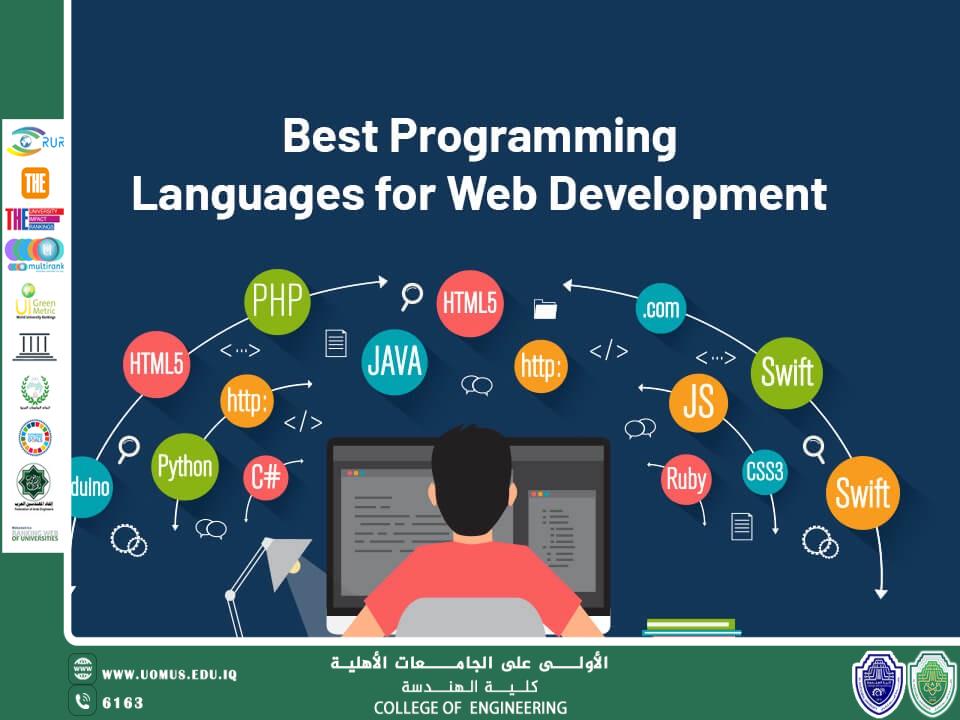
High-level languages such as Python and Java, known for their ease of use and readability.
Low-level languages such as Assembly, used for hardware-level programming.
Web development languages such as JavaScript.
Database languages such as SQL.
Criteria for Choosing a Programming Language
Selecting the appropriate programming language depends on several factors, including:
The nature of the project
Required performance
Execution environment
Ease of maintenance and scalability
Challenges of Language Diversity
While the diversity of programming languages offers flexibility, it also presents challenges for developers, who must continuously learn and adapt to new technologies.
Conclusion
Understanding the features and use cases of programming languages is essential for building efficient and scalable systems.
References:
Sebesta, R. (2012). Concepts of Programming Languages
Oracle Documentation
Mozilla Developer Network
University of Al-Mustaqbal – the first university in Iraq