
A Scientific Article by Lecturer M.M. Zeinab Nadhim Aziz Entitled: Spider Plant
25/03/2026 Share :
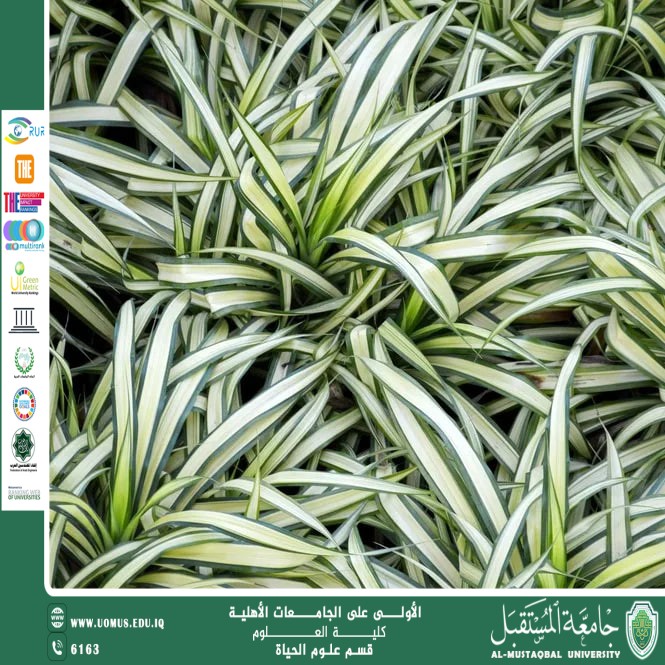
The Spider Plant is one of the most popular indoor ornamental plants, known for its adaptability to various lighting conditions and ease of care. It is scientifically called Chlorophytum comosum and belongs to the Asparagaceae family. It is named for its long, arching stems that resemble spider legs, and it produces small plantlets called “babies” at the tips of the stems.
Botanical Description:
The Spider Plant is a perennial herbaceous plant, typically reaching a height of about 30–45 cm. Its leaves are long, narrow, slightly curved, and usually green with longitudinal white stripes in some varieties. The small plantlets hanging from the stems can be planted to create new plants, making it easy to propagate.
Environment and Cultivation Methods:
Spider Plants grow well in medium to indirect light and can tolerate bright indirect light. They prefer light, well-drained soil and require moderate watering, allowing the soil to dry slightly between waterings. Propagation is simple through cutting the plantlets and planting them in separate pots.
Importance of the Spider Plant:
Used as an indoor ornamental plant in homes and offices.
Easy to care for and fast-growing.
Helps purify indoor air from certain pollutants.
Suitable for hanging pots or placing on shelves.
Conclusion:
The Spider Plant is a favorite ornamental plant for many due to its beautiful trailing leaves and ease of care. Its fast propagation makes it an excellent choice for decorating indoor spaces and adding a natural green touch to the environment.
Al-Mustaqbal University is the First University in Iraq
الهدف الرابع : التعليم الجيد