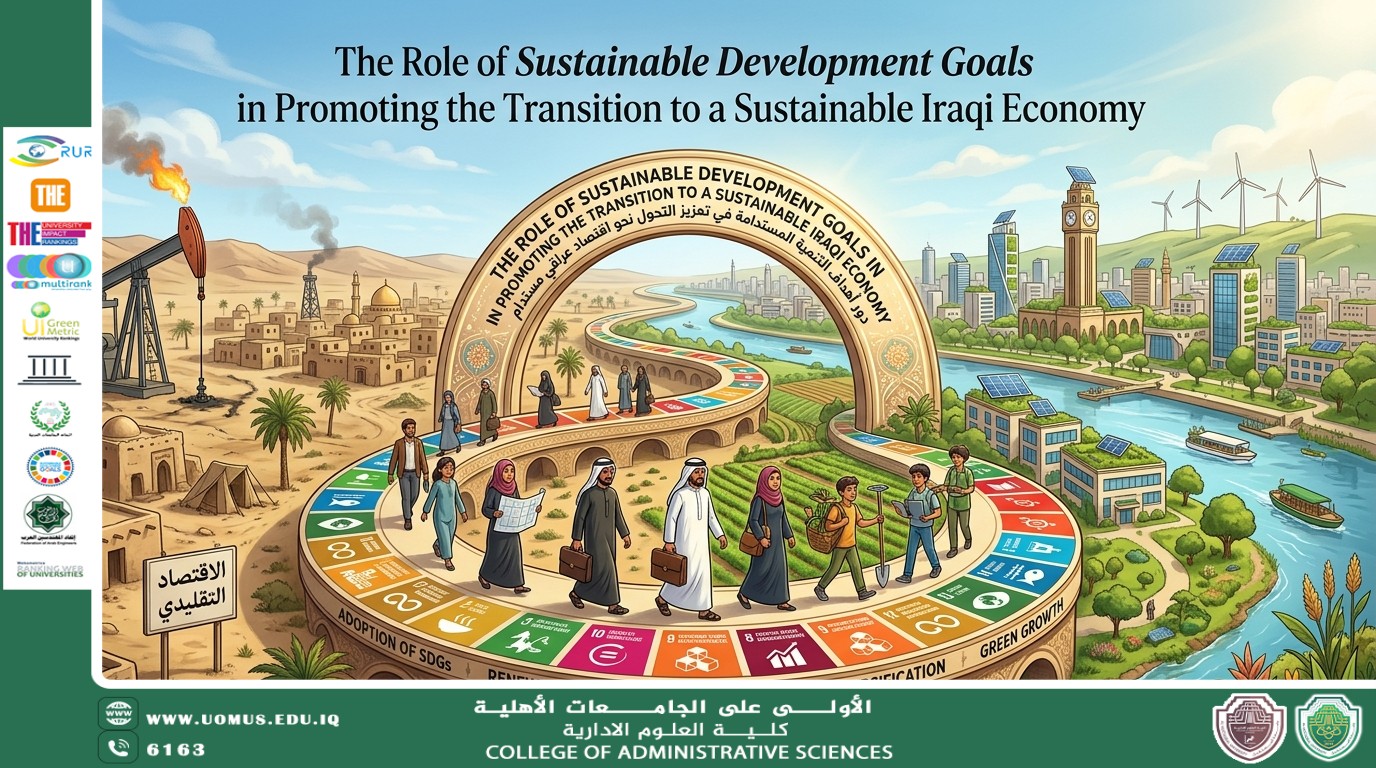
The Role of the Sustainable Development Goals in Promoting the Transition toward a Sustainable Iraqi Economy
23/03/2026 Share :
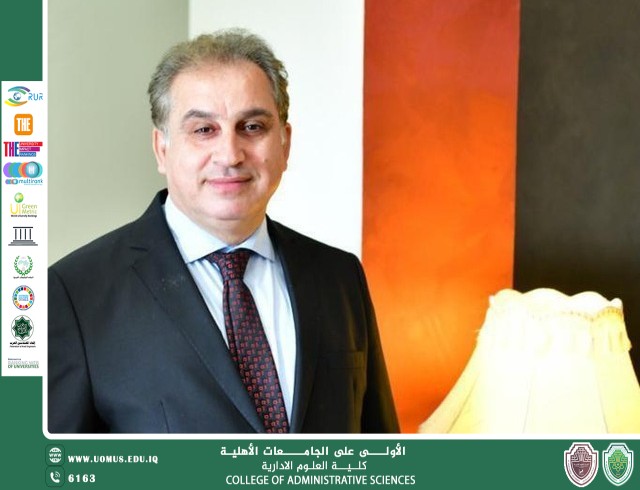
Prof. Dr. Haider Ali Al-Dulaimi
College of Administrative Sciences
The Sustainable Development Goals (SDGs) represent an integrated global framework adopted by the United Nations in 2015, aiming to achieve comprehensive and balanced development that takes into account economic, social, and environmental dimensions. In light of the challenges facing the Iraqi economy, these goals emerge as a strategic reference that can contribute to redirecting the path of development toward sustainability and long-term prosperity.
The Iraqi economy relies heavily on oil revenues, which makes it vulnerable to fluctuations in global markets. Therefore, the Sustainable Development Goals gain particular importance in supporting efforts toward economic diversification by promoting vital sectors such as agriculture, industry, and renewable energy, in addition to supporting innovation and entrepreneurship. This contributes to reducing dependence on oil, creating sustainable job opportunities, and achieving more stable economic growth.
The Sustainable Development Goals also emphasize the importance of investing in human capital through improving the quality of education, enhancing healthcare, and empowering youth and women. This aspect is essential for building a strong and competitive economy, as qualified human resources constitute the fundamental pillar of any successful development process.
On the environmental level, the Sustainable Development Goals provide a roadmap for addressing the challenges faced by Iraq, such as water scarcity, desertification, and environmental pollution. Adopting sustainable policies for managing natural resources and relying on clean energy sources contribute to protecting the environment and ensuring the sustainability of resources for future generations.
Moreover, the Sustainable Development Goals promote the principles of good governance, transparency, and anti-corruption, which are critical factors in improving the efficiency of government institutions and attracting both local and foreign investments. A stable and reliable institutional environment is a key element in achieving sustainable economic development.
In this context, achieving the transition toward a sustainable Iraqi economy requires the integration of efforts between the government, the private sector, academic institutions, and civil society organizations. It also necessitates the development of national strategies aligned with the Sustainable Development Goals, along with continuous monitoring and evaluation to measure progress achieved.
In conclusion, the Sustainable Development Goals represent a real opportunity for Iraq to rebuild its economy on more diversified, equitable, and sustainable foundations. By adopting these goals and adapting them to the local context, Iraq can take confident steps toward achieving comprehensive development, improving the standard of living of its citizens, and building a more stable and prosperous economic future.
Al-Mustaqbal University is the leading private university in Iraq.
اطلع على المقالة على موقع linkedin