A scientific article by Miss Noor Al-Huda Azmi Hassan titled Sustainability Technologies in Industrial Water Treatment
28/03/2026 Share :
Industrial water treatment is considered one of the most important challenges in environmental engineering, especially with increasing pollution and the scarcity of water resources. Therefore, sustainability technologies have emerged, aiming to reduce environmental impact, reuse water, and lower the consumption of energy and chemicals. With the growth of industrial activity, treating industrial water has become an urgent necessity to protect the environment and water resources.
Objectives of Sustainability Technologies
Reducing the discharge of pollutants into the environment
Reusing water within factories
Reducing energy consumption
Complying with environmental regulations
Lowering operational costs in the long term
Key Sustainability Technologies in Industrial Water Treatment
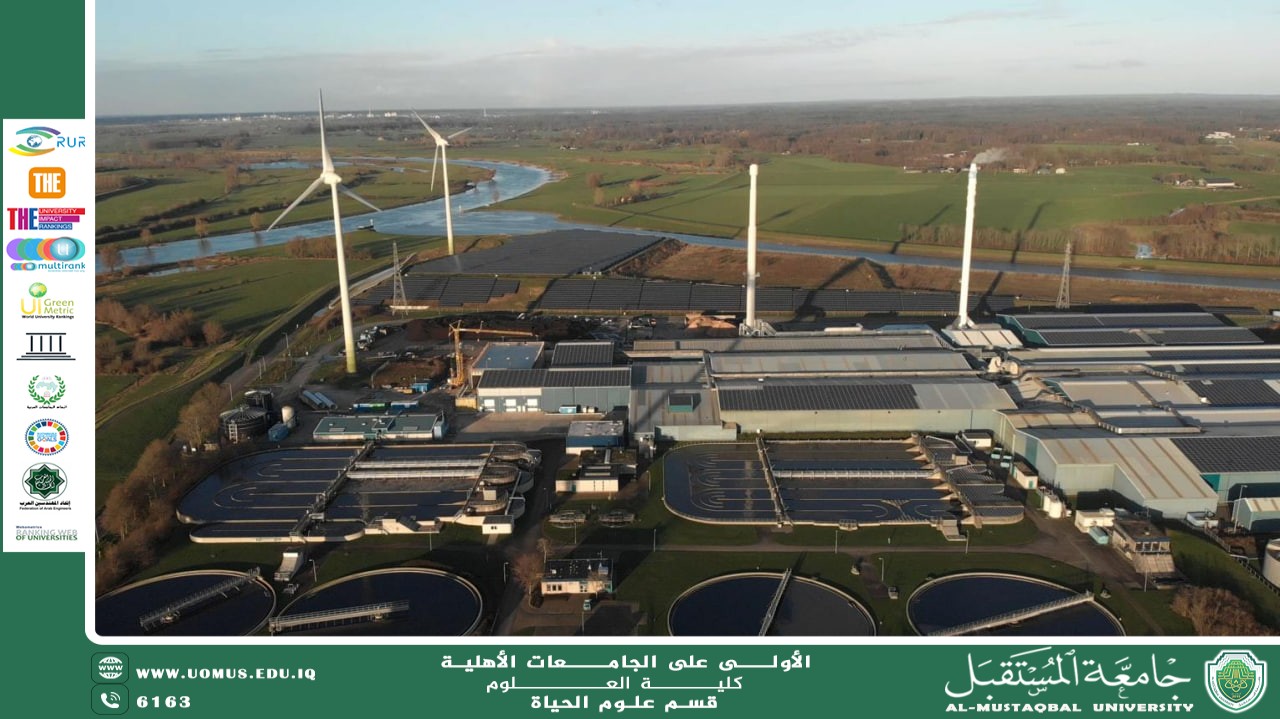
Biological Treatment
Relies on microorganisms to break down organic pollutants.
Examples:
Activated Sludge
Membrane Bioreactors (MBR)
Advantages:
Effective in removing organic matter
Environmentally friendly
Reduces the use of chemicals
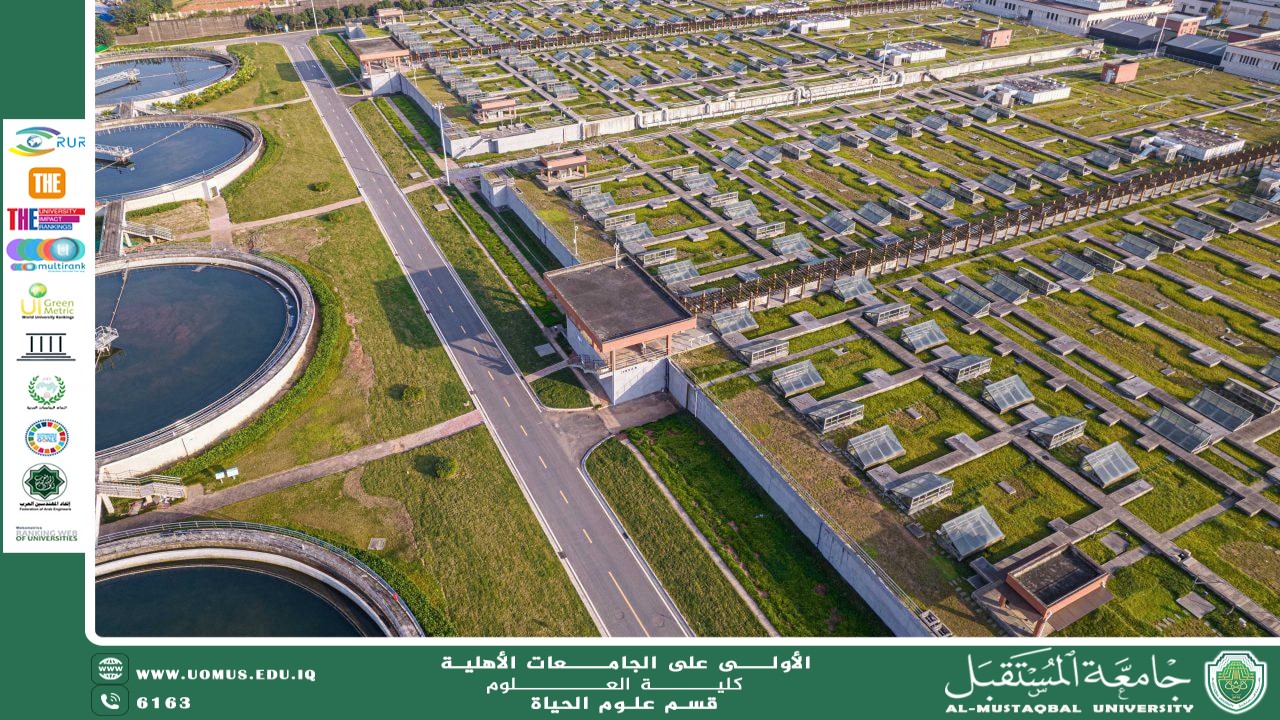
Nature-Based Solutions
Depend on natural systems such as plants and soil.
Examples:
Constructed Wetlands
Phytoremediation
Advantages:
Low cost
Eco-friendly
Easy to operate
Problem
Industrial wastewater contains toxic substances and heavy metals that are difficult to remove.
Objectives
Developing sustainable water treatment technologies
Reducing industrial pollution
Reusing water
Technologies Used
Biological treatment using bacteria
Membrane filtration
Advanced oxidation
Results
These technologies have proven their ability to significantly reduce pollutants while minimizing energy consumption.
Conclusion
Adopting sustainable technologies contributes to environmental protection and achieving sustainable development.
الهدف الرابع : التعليم الجيد