Biomedical Engineering students invent a smart educational kit for processing cardiac signals (ECG)
29/03/2026 Share :
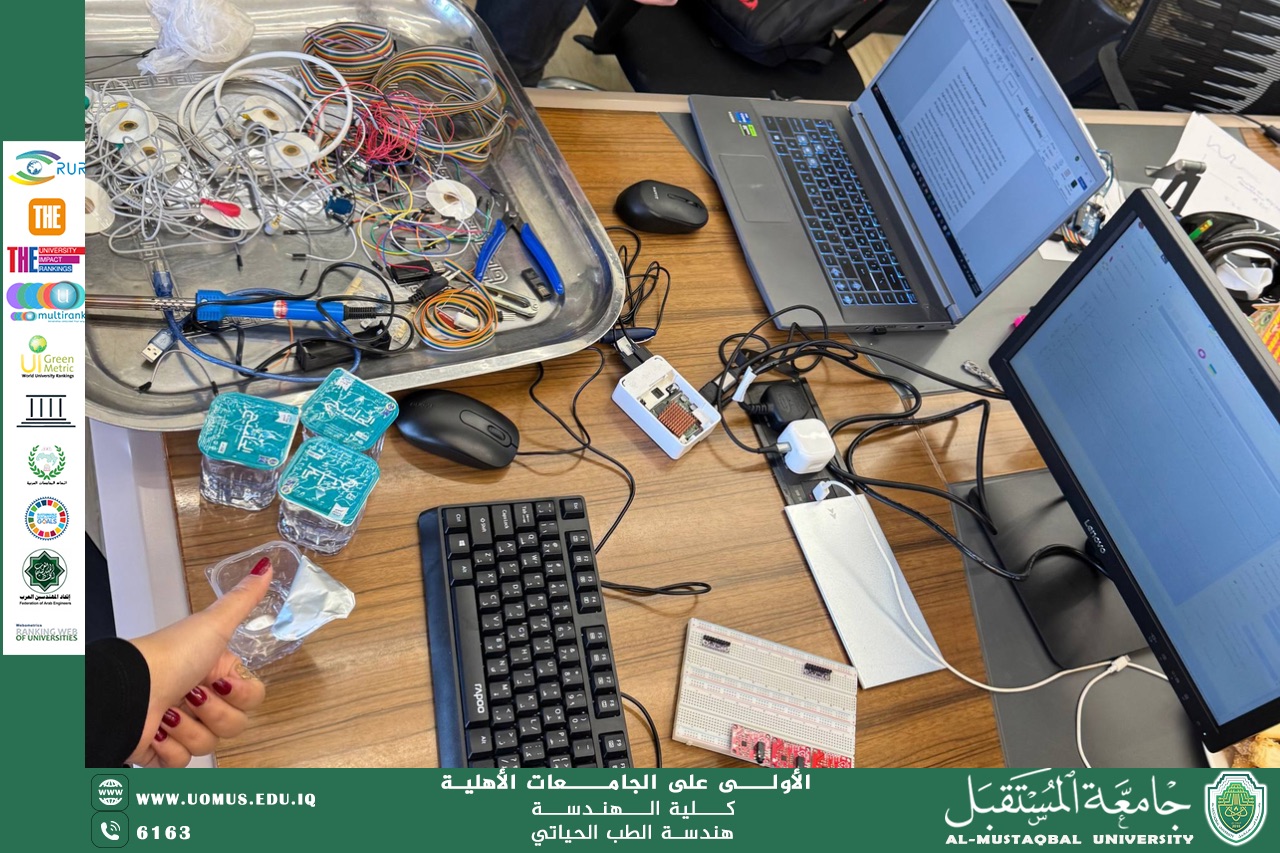
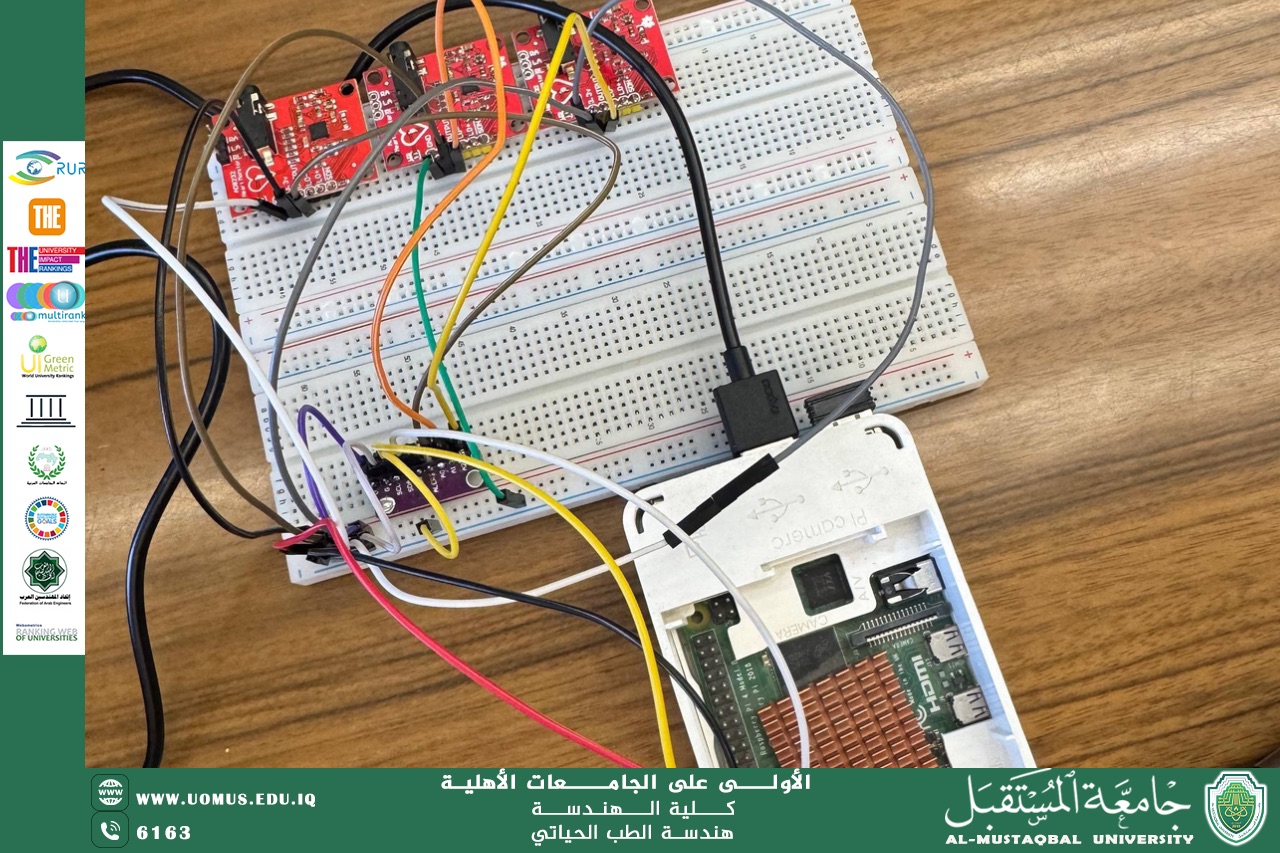
In a move aimed at modernizing educational tools and bridging the gap between theory and practice, a research team of students from the Biomedical Engineering Department at Al-Mustaqbal University successfully developed a comprehensive educational kit based on Raspberry Pi technology for real-time electrocardiogram (ECG) signal processing, under the supervision of Professor Maher Rahman Al-Hajjaj.
Project Vision and Objectives:
The project, completed by students Ali Karim Kadhim, Duha Hakim Dakhel, Fatima Ali Mahdi, and Yahya Majid Muhi, aims to design low-cost, highly efficient educational tools that help biomedical engineering students understand the processes of acquiring and processing vital signals, both programmatically and technically, in a direct and interactive manner.
Implementation and Technical Methodology:
The project relied on integrating embedded systems with modern programming languages according to the following methodology:
• Acquisition: Acquiring the cardiac signal (ECG) via surface electrodes.
• Signal Conditioning: Performing amplification and pre-filtering to ensure signal purity. • Digital Processing: Using a Raspberry Pi and programming algorithms in Python to reduce noise and perform feature extraction.
• Interactive Display: Real-time display of cardiac waves with parameter control and the ability to select P, QRS, and T waves.
Results and Relationship to Sustainable Development:
The educational kit proved successful in providing clear and stable cardiac signals, enhancing students' ability to interact with modern medical technology. This work achieves key objectives within the university's sustainability vision:
• Goal 3 (Good Health and Well-being): Developing accessible health monitoring technology.
• Goal 4 (Quality Education): Providing an applied learning environment that supports innovation.
• Goal 9 (Industry and Innovation): Using modern tools to build innovative, portable medical