
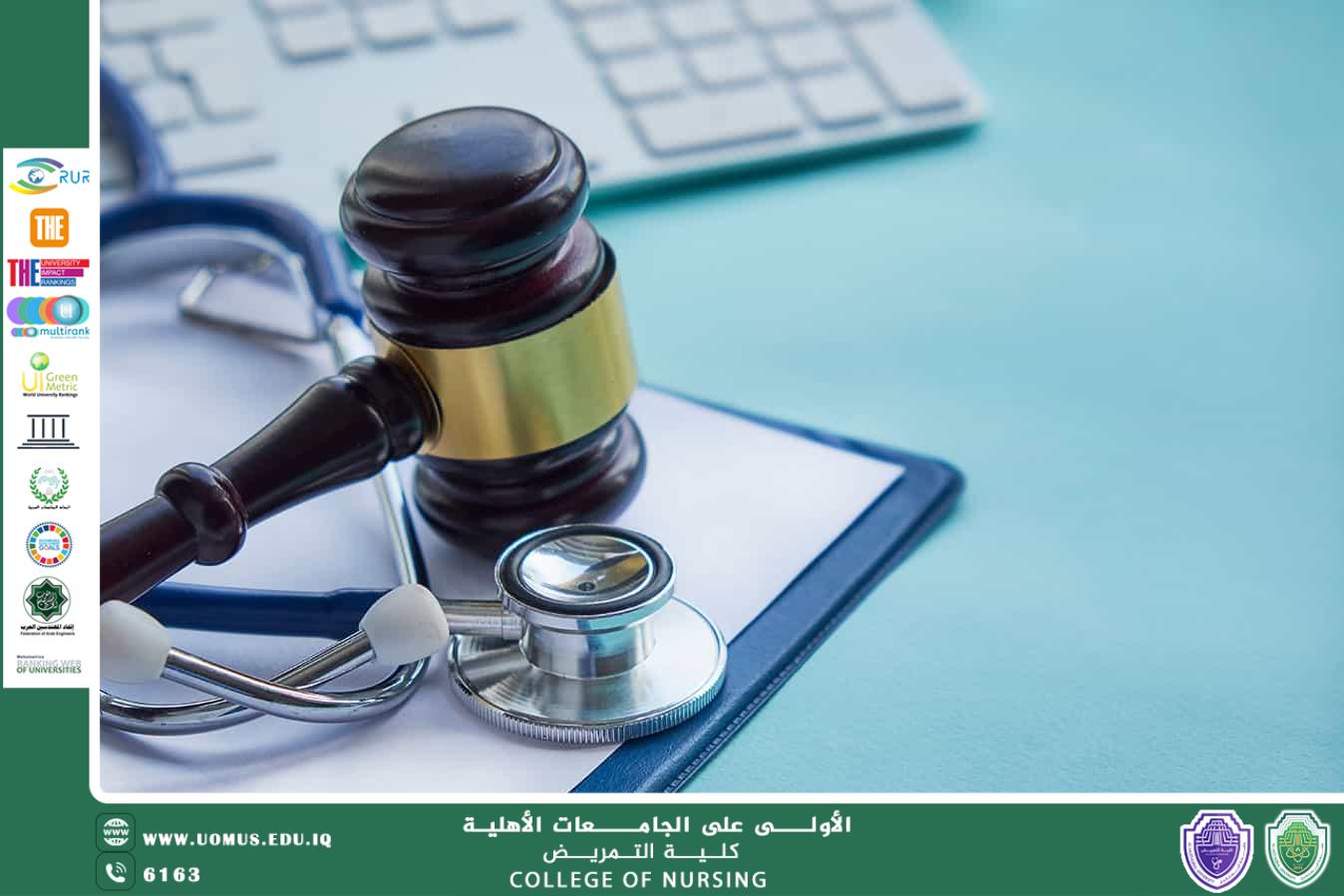
Nursing and Law: Integrating Professional Responsibility and Legal Safeguards to Protect Patients and Enhance Healthcare Quality
30/03/2026 Share :
Introduction
Nursing is considered one of the fundamental pillars of the healthcare system due to its direct and continuous role in patient care and safety within medical institutions. With the advancement of healthcare systems and the increasing complexity of medical procedures, the connection between nursing and law has become a necessity to regulate professional performance, protect patients' rights, and define the duties of nurses within a clear legal framework that ensures quality healthcare and reduces professional errors. Hence, the importance of the integrative relationship between nursing and law emerges as an organizational, ethical, and professional one.
**First: The Concept of Nursing in the Legal Framework**
Legally, nursing refers to a set of healthcare services provided by nurses to patients in accordance with scientific principles, medical instructions, and applicable regulations, ensuring patient safety and preserving human dignity. Nurses are legally responsible for performing their duties according to established standards. Their role extends beyond executing physicians' orders to include monitoring, evaluation, and continuous observation of the patient’s health condition.
**Second: The Importance of Law in Regulating the Nursing Profession**
The importance of law in nursing is reflected in several aspects, including:
* Defining nurses’ authority and the limits of their professional responsibilities.
* Protecting patients’ rights and ensuring they receive safe healthcare.
* Protecting nurses from unfair accountability when adhering to professional standards.
* Regulating professional relationships between nurses and other healthcare team members.
* Reducing medical errors and enhancing healthcare performance within institutions.
**Third: The Legal Responsibility of Nurses**
Legal responsibility arises when nurses fail to fulfill their professional duties or violate healthcare regulations. It includes several types:
* **Civil Liability:**
Occurs when harm is caused to a patient due to negligence or malpractice, resulting in compensation for damages.
* **Criminal Liability:**
Arises when a serious error leads to significant harm to a patient due to negligence or violation of medical instructions.
* **Disciplinary Liability:**
Relates to violations of institutional rules and professional regulations, which may result in warnings or administrative penalties.
**Fourth: Nurses’ Rights Under the Law**
While the law imposes duties on nurses, it also guarantees several important rights, including:
* Working in a safe healthcare environment.
* Legal protection أثناء أداء duties.
* Access to continuous training and professional development.
* Respect for their professional dignity within healthcare institutions.
* Not being held responsible for tasks outside their professional scope.
**Fifth: Legal Duties of Nurses Toward Patients**
Nurses are committed to a set of legal and professional obligations, including:
* Accurately following medical instructions.
* Maintaining patient confidentiality.
* Providing humane and ethical care.
* Monitoring the patient’s condition and reporting any changes.
* Properly documenting nursing procedures in medical records.
**Sixth: The Impact of Legal Compliance on Healthcare Quality**
Adherence to legal rules in nursing contributes to:
* Reducing medical errors.
* Increasing trust between patients and healthcare institutions.
* Enhancing nurses’ professional performance.
* Improving the quality of healthcare services provided to society.
* Promoting teamwork within healthcare institutions.
**Seventh: The Integrative Relationship Between Professional Ethics and Law in Nursing**
The regulation of nursing is not limited to legal rules but also includes ethical standards that form the human foundation of professional practice. Law defines the minimum required obligations, while professional ethics represent the highest level of humane conduct that strengthens patient trust in nurses and healthcare institutions.
**Conclusion**
The relationship between nursing and law is an integrative one aimed at balancing patient protection with safeguarding nurses’ rights, contributing to the development of professional performance within healthcare institutions. The more nurses adhere to legal and ethical standards, the higher the quality of healthcare and the greater the public trust in medical institutions. Thus, law is a fundamental partner in the success and sustainability of the nursing profession and its noble humanitarian mission.