Scientific Article for Haider Mutlak Mousa Coordination Compounds and Their Importance in Inorganic Chemistry
01/04/2026 Share :
[3/31/2026 9:10 PM] estabraq Arif: مقالة علمية للتدريسي م.م حيدر مطلك موسى
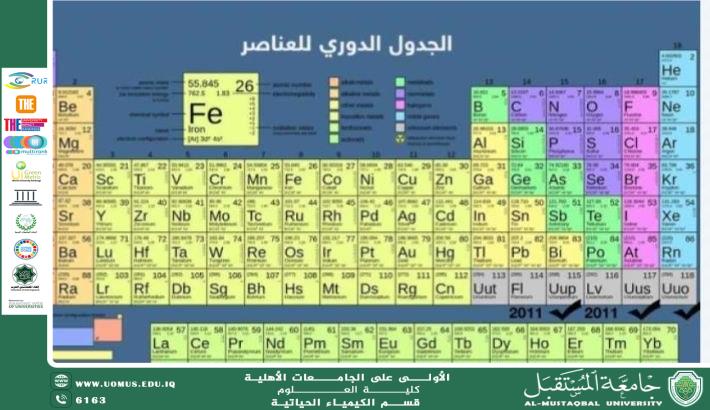
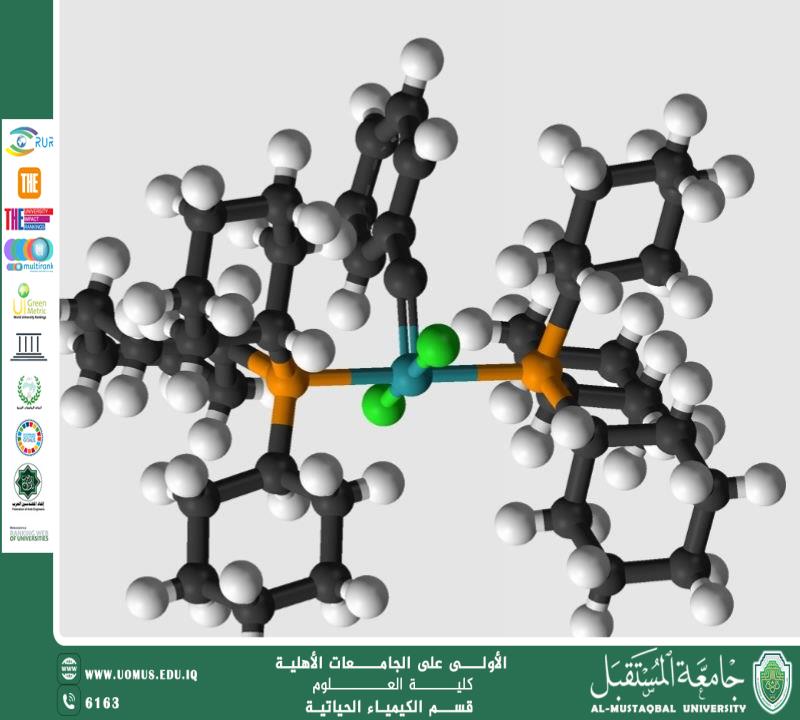
المعقدات التناسقية (Coordination Compounds) وأهميتها في الكيمياء اللاعضوية
تُعد المعقدات التناسقية من المواضيع الأساسية في الكيمياء اللاعضوية، حيث تتكون من ذرة أو أيون فلزي مركزي يرتبط بعدد من الجزيئات أو الأيونات تُعرف بالليكاندات (Ligands). ترتبط هذه الليكاندات بالفلز من خلال روابط تناسقية، حيث تقدم زوجًا من الإلكترونات إلى الفلز لتكوين رابطة كيميائية مستقرة.
تعتمد خصائص المعقدات التناسقية على نوع الفلز المركزي وطبيعة الليكاندات المرتبطة به. فقد تؤثر هذه العوامل على لون المعقد، وخواصه المغناطيسية، ونشاطه الكيميائي. على سبيل المثال، تُظهر العديد من معقدات الفلزات الانتقالية ألوانًا مميزة نتيجة انتقالات إلكترونية داخل المدارات d، وهو ما يجعلها مهمة في التطبيقات التحليلية والصناعية.
تُستخدم نظرية المجال البلوري (Crystal Field Theory) لتفسير سلوك هذه المعقدات، حيث توضح كيفية انقسام مستويات الطاقة في المدارات d عند ارتباط الليكاندات بالفلز المركزي. يؤدي هذا الانقسام إلى ظهور اختلافات في الطاقة، والتي تنعكس على الخواص الطيفية والمغناطيسية للمركب.
تلعب المعقدات التناسقية دورًا مهمًا في العديد من التطبيقات العملية. فهي تُستخدم في التحفيز الكيميائي، حيث تعمل بعض المعقدات كعوامل محفزة فعالة في التفاعلات العضوية وغير العضوية. كما تدخل في المجال الطبي، مثل استخدام بعض معقدات البلاتين في علاج السرطان. بالإضافة إلى ذلك، تُستخدم هذه المعقدات في عمليات التحليل الكيميائي مثل المعايرات المعقدية التي تعتمد على تكوين معقدات مستقرة بين الفلزات والليكاندات.
كما أن للمعقدات التناسقية أهمية كبيرة في الأنظمة الحيوية، حيث توجد في العديد من الجزيئات الحيوية مثل الهيموغلوبين، الذي يحتوي على أيون الحديد في مركزه ويرتبط بالأوكسجين لنقله في الدم. هذا يوضح أن الكيمياء اللاعضوية لا تقتصر على المختبرات فقط، بل تمتد لتشمل العمليات الحيوية داخل الكائنات الحية.
إن دراسة المعقدات التناسقية تُعد من الركائز المهمة في الكيمياء الحديثة، حيث يسعى العلماء إلى تصميم معقدات جديدة بخصائص محسّنة تُستخدم في مجالات متنوعة مثل الطاقة والبيئة والتقنيات الحيوية.
جامعة المستقبل الأولى على الجامعات العراقية الأهلية
Scientific Article for Asst. Lecturer Haider Mutlak Mousa
Coordination Compounds and Their Importance in Inorganic Chemistry
Coordination compounds are among the fundamental topics in inorganic chemistry. They consist of a central metal atom or ion bonded to a number of molecules or ions known as ligands. These ligands are attached to the metal through coordinate bonds, in which the ligand donates a pair of electrons to form a stable chemical bond with the metal center.
The properties of coordination compounds depend on the nature of the central metal and the type of ligands attached to it. These factors influence the color, magnetic properties, and chemical reactivity of the complex. For example, many transition metal complexes exhibit characteristic colors due to electronic transitions within the d-orbitals, making them important in analytical and industrial applications.
Crystal Field Theory is commonly used to explain the behavior of coordination compounds. It describes how the energy levels of the d-orbitals split when ligands approach and bind to the central metal ion. This splitting leads to differences in energy that are reflected in the optical and magnetic properties of the compound.
Coordination compounds play a significant role in many practical applications. They are widely used in catalysis, where certain complexes act as efficient catalysts in both organic and inorganic reactions. In the medical field, some metal complexes, such as platinum-based compounds, are used in cancer treatment. In addition, coordination compounds are important in analytical chemistry, especially in complexometric titrations where stable complexes are formed between metal ions and ligands.
These compounds are also essential in biological systems. For instance, hemoglobin contains an iron ion at its center, which binds oxygen and facilitates its transport in the bloodstream. This demonstrates that inorganic chemistry extends beyond laboratory studies to vital processes in living organisms.
The study of coordination compounds remains a cornerstone of modern chemistry, as researchers continue to design new complexes with enhanced properties for applications in energy, environmental science, and biotechnology.
Al-Mustaqbal University, the leading private university in Iraq