
Quantum Physics in Medicine Scientific article By Eman Ahmed
13/03/2022 Share :
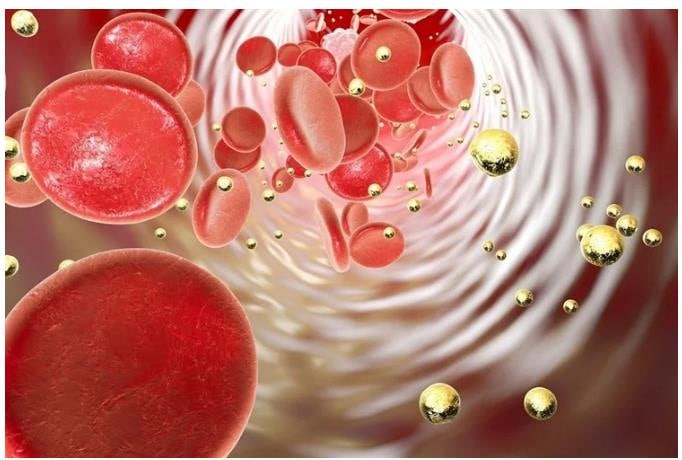
Quantum physics has the potential to revolutionize many aspects of everyday life, and medicine and healthcare are no exception. The laws of quantum physics define the human body as a quantum system, from the smallest vibrations and energy units that communicate with each other. Quantum physics could be the key to solving the current issues in healthcare and bring in a new era of integrative medicines: utilizing the complex rules of quantum mechanics, scientists aim to make medicine faster, less painful, and more personalized. <br /><br />Quantum technology could change how we think about healthcare and medical data, even how we view our biology. Several cell processes occur at the Nano scale, in the domain of atoms and subatomic particles - the realm of quantum. At this scale, matter ceases to behave according to the laws of classical physics and instead starts displaying unique and often counterintuitive properties of quantum mechanics. <br />Scientists hope to utilize these unusual properties to develop medical tools, diagnostics, and treatments that are incredibly precise and ultra-personalized, tools that will ultimately improve and lengthen lives. Using quantum mechanics in medicine could provide disease. <br /><br />Improving the Sensitivity of Magnetic Resonance Imaging<br />Bio-barcode assays, a relatively new method developed by scientists, could improve disease screening and treatment. Gold nanoparticles are employed to detect biomarkers in the blood and can be visualized using MRI machines; their unique quantum properties enable them to attach to disease-fighting cells.<br />Optimized imaging protocols can be applied to enhance the resolution of existing MRI scanners. A research team at Centro Atomic Brioche in Argentina, led by Dr. Gonzalo Alvarez, employed quantum information theory to investigate the limiting factors that hinder the existing MRI scanner. The researchers developed an advanced MRI imaging protocol that dramatically reduces acquisition time and allows quantitative microstructure imaging at the sub-cellular level (resolving axon structures approximately 0.1–20 μm in diameter) with the existing modern clinical instruments.<br />Single Cell Manipulation Using Quantum Nano diamonds<br />Some of the tools used to study quantum phenomena can also be utilized to develop a new generation of medical sensing and imaging applications. A novel technique involving Nano scale diamond particles is under development at the Quantum Optics Laboratory of Harvard University. <br />Professor of Physics Mikhail Lufkin and his team incorporate single-atom defects in the Nano diamonds, exhibiting quantum mechanical behavior under ambient conditions. When incorporated into living cells, these Nano diamonds could be used to measure and control the temperature locally inside the cells. As a proof-of-concept, Prof. Lufkin's team used a laser to control the temperature of the quantum particles very precisely, to the point where they could selectively accelerate the development of different cells. <br />