Diatoms as Bioindicators of Water Quality (Assistant Lecturer Mais Uday Mohammed)
16/04/2026 Share :
Diatoms are a major group of microscopic algae widely distributed in both freshwater and marine environments. They play a crucial role in aquatic ecosystems by contributing significantly to primary production and oxygen generation through photosynthesis.
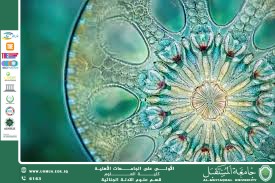
One of the most distinctive features of diatoms is their siliceous cell wall, known as a frustule, which exhibits intricate and species-specific patterns. These structures are highly resistant and remain preserved even after the organism dies, making them valuable in environmental studies.
Diatoms are widely used as bioindicators for assessing water quality due to their sensitivity to environmental changes such as:
• Temperature
• pH levels
• Nutrient concentrations (e.g., nitrates and phosphates)
• Organic pollution
Different species of diatoms respond differently to environmental conditions. Some species thrive in polluted waters, while others are associated with clean and unpolluted environments.
Advanced statistical methods such as Canonical Correspondence Analysis (CCA) and Analysis of Similarities (ANOSIM) are often used to correlate diatom distribution with environmental variables, providing insights into ecological conditions and water quality assessment.
Al-Mustaqbal University – the first university in Iraq.