Production of Magnesium
14/10/2022 Share :
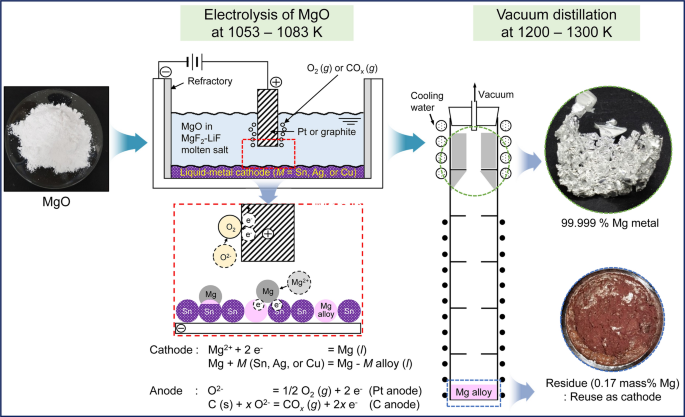
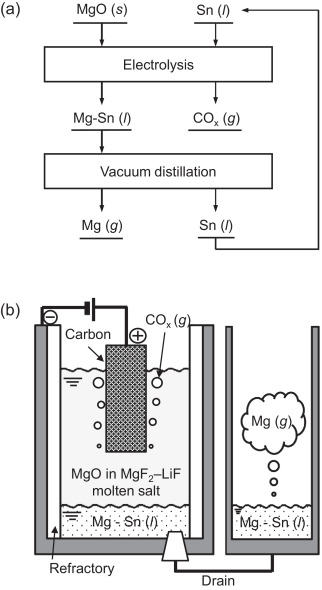
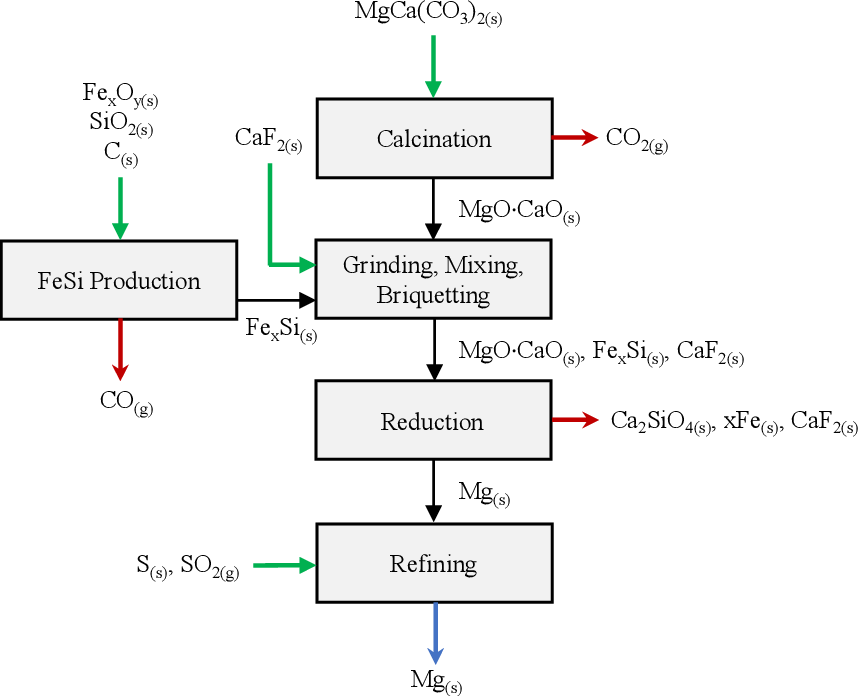
Production of Magnesium <br />It is possible to obtain industrially pure magnesium metal in two ways, either according to the “Dow process”, which is based on the principle of electrolysis of molten magnesium chloride; Or according to the Pidgin process, which is based on the thermal reduction of magnesium oxide.<br />1. Dow Process<br />The Dow process involved obtaining magnesium by electrolysis of molten magnesium chloride obtained from brine and seawater. The brine containing Mg2+ ions is treated with quicklime (calcium oxide) and then the precipitated magnesium hydroxide is collected.<br /><br />Mg2+ (aq) + CaO (s) + H2O (l) Ca 2+ (aq) + Mg(OH)2 (s)<br /><br />The hydroxide is subsequently converted to the partial hydrate of magnesium chloride by treatment with hydrochloric acid and by subsequent heating :<br /><br />Mg(OH)2 (s) + 2HCl (aq) MgCl2 (s) + 2H2O (l) <br /> <br />molten magnesium chloride is then carried out in Down's cells, where magnesium ions are reduced at the cathode, while chlorine gas is released on the anode:<br />Mg2+ + 2e- Mg<br />2Cl - Cl2+ 2e-<br /><br /><br /><br />2. Pidgin Process <br />The Pidgin process involves obtaining magnesium by thermal reduction of magnesium oxide (magnesia) at elevated temperatures using silicon obtained from ferrous silicon ores (ferrosilicon) as a reducing agent at about 1160 °C:<br /><br />2MgO (s) + Si (s) + CaO (s) 2Mg (g) + Ca2SiO4 (s)<br /><br />or using carbon (coal) at about 2300 °C:<br /><br />MgO (s) + C (s) Mg (g) + CO (g)<br />The magnesium vapor obtained from the process is condensed, and then purified by vacuum distillation, while carbon monoxide is oxidized to carbon dioxide. The production of 1 kg of magnesium involves the release of about 30 kg of CO2 into the atmosphere.<br />Also, there is a relatively recent process for the production of magnesium that relies on the use of solid oxide film technology during the reduction of magnesium oxide in the presence of a ceramic material consisting of zirconium oxide (zirconia) stabilized with yttrium oxide (yttria). Oxygen gas is formed on the elevator in this process, so it is environmentally friendly; It is also about 40% less expensive than the thermal reduction process.