
A scientific article by A.L Zainab Wadah Nasser, entitled (Squint)
17/10/2022 Share :
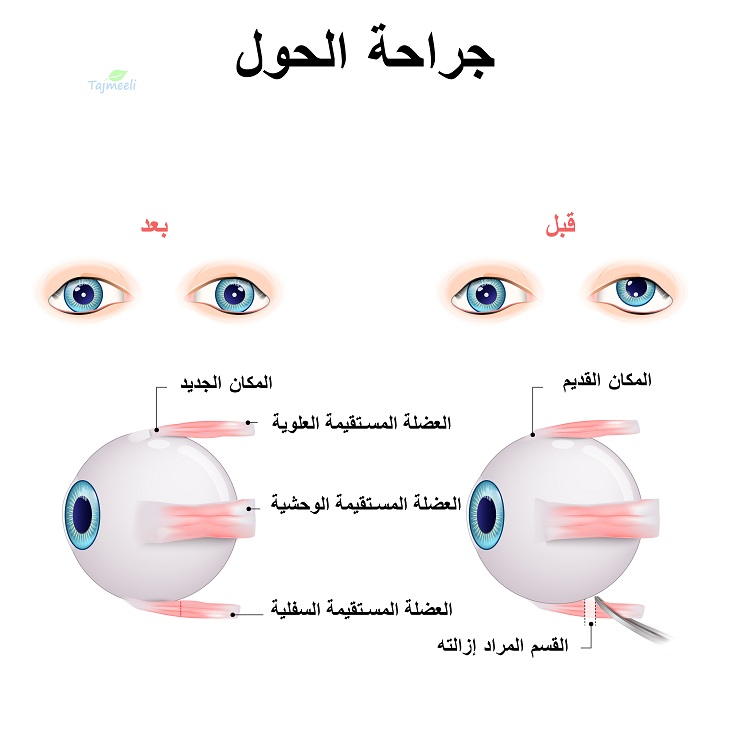
Squint<br />It is the loss of parallelism between the eyes, as they are not aligned in the same direction when looking at an object. It is estimated that strabismus appears in 4% of children, and it is considered one of the most common eye diseases in them.<br />Under normal circumstances, the two eyes look together towards the same object, and the brain is thus able to combine the two images (one from each eye) to obtain a single image with three-dimensional properties.<br />For this coordination to occur, a complex system relays commands from the brain to each of the eye muscles. When any of them is impaired, strabismus occurs.<br />Depending on the direction, the strabismus can be horizontal, vertical, torsional or mixed. Amblyopia always affects one eye, or there may be an alternating effect, that is, one eye or the other deviates independently.<br />The deviation can occur continuously or intermittently, and appears only during times of fatigue, fever, fugue, etc. It can also develop at any age: it is called congenital if it appears before the age of 6 months in an infant, acquired in childhood if it begins after 2 or 3 years, and it is called puberty if it develops in adulthood.<br />Symptoms<br />Visual fatigue: headache, redness and pain in the eyes, burning ...<br />Difficulty in reading and writing and poor academic achievement.<br />wink eye<br />Diplopia or double vision: continuous or intermittent in all or some of the viewing points. This symptom appears in amblyopia acquired in adulthood, because the brain in childhood "adapts", canceling the image from the deviated eye.<br /><br />Torticollis: It is the abnormal position of the head that the patient gets used to to compensate for the visual defect in the event of double vision. The head "rotates" towards the place where the affected muscles have difficulty moving the eye, in an attempt to do the work of these muscles.<br /> Sensory disturbances.<br />Amblyopia or lazy eye: It develops in children between the ages of birth and 8 or 9 years, during which time the maturity or development of vision occurs. If there is an aberration in one of the eyes, the child's brain cancels or ignores the image that it receives from the skewed eye to avoid double vision. As a result, the eye does not develop vision properly, which leads to the problem of lazy eye.<br />Disorder in the development of bilateral vision (both eyes cooperate with the visual brain).<br />the reasons<br />The origin of the development of strabismus is linked to several factors. Although the cause is known in certain types of strabismus, in most cases it remains unknown or not fully known.<br />What we know is that there are various genetic factors (squint cases in the family history of the patient), environmental factors (prematurity, low birth weight, maternal smoking and alcoholism during pregnancy, neonatal problems...), and visual factors (average sight extension to severe, and the difference in refractive force in one eye in relation to the other eye...), all of which increase the possibility of strabismus.<br />protection<br />Amblyopia cannot be prevented, but it can be detected early. Therefore, it is very necessary to have a full examination by a specialist at the age of 2-3 years, even if there are no symptoms, and another at the age of 5-6 years, before the full maturity of the visual system.<br /><br />treatment<br />Strabismus treatment includes different treatment options, and they must be considered by a specialist ophthalmologist in an individual manner tailored to each case. For treatment to be effective, it must be applied as soon as possible.<br />In the first place, we must correct the refractive error, if any, with glasses or contact lenses. In some cases, such as in adaptive strabismus, visual correction alone can compensate for the aberration. Second, if amblyopia (lazy eye) occurs in the deviated eye, we must restore normal vision in the affected eye. For this purpose, the most effective procedure is to cover the healthy eye with a patch. There are alternative solutions to avoid covering the eye that fall under the term "punishment of the healthy eye" and include the induction of distorted vision in this healthy eye. This procedure can be optical by prescribing glasses with special filters or a corrective value that is inappropriate for the healthy eye, or pharmacologically by placing drops in the healthy eye that dilate its pupil. In general, the 'punishment' procedure is left to cases in which it is impossible to adhere to the patch, or in certain cases of nystagmus.<br />If the deviation persists after correcting the visual defect and amblyopia, the transition to surgical treatment is required. But in addition to surgery, other treatment options may be available, such as visual rehabilitation, prisms and botulinum toxin injections. For its part, botulinum toxin injection is an alternative solution in certain cases, such as paralysis of the eye muscles, and orthoptics exercises can be useful as a complementary treatment to surgery and also in some specific cases such as hidden strabismus and intermittent lateral (external) strabismus. The degree that causes the diplopia.<br />Species<br />There are many types of amblyopia, but the most common ones in clinical practice are:<br />Medial (internal) or convergent strabismus<br /><br /><br />Congenital amblyopia: It appears before the age of 6 months of the infant's life. It is characterized by a large degree of deviation angle, rotation and stability, and is usually not associated with a significant refractive error of the eyes. It is often associated with the presence of vertical deviations in the eyes, and in some cases torticollis, and nystagmus.<br />Acquired Adaptive Amblyopia: It appears from the age of 2-3 years, and is associated with hyperopia of a degree higher than 2 or 3 diopters. It is usually unilateral (in one eye) and causes amblyopia. The full adaptive esotropia is talked about if the visual correction of the farsightedness completely removes the deviation, while the partial adaptive esotropia is if it continues despite the use of glasses.<br />Acquired non-adaptive amblyopia.<br />Sensory amblyopia: It is a complication resulting from the loss of vision in one eye or its decrease in both eyes, which impedes the process of bilateral vision.<br />Successive medial strabismus: It develops after surgery for lateral (external) strabismus.<br />Mild medial strabismus: in one eye there is a low degree of deviation that usually ends with a slight amblyopia, and in most cases, the double vision is achieved.<br />Lateral (external) or distal strabismus<br /><br />Congenital lateral strabismus: It appears before the age of 6 months and has similar characteristics to congenital lateral strabismus.<br />Intermittent lateral strabismus: It appears before the age of 3 years, although it is usually discovered in late childhood due to its intermittent nature. In its early stages, it appears accompanied by physical fatigue, fussiness, and fever. It is common for the difference in the amount of deviation of the eyes to change over time, in both the frequency and severity of the deviation.<br />Restrictive strabismus: It is the type of strabismus in which there is a "mechanical" component that impedes the rotation of the eye, and thus causes a restriction of movement in a specific direction. Restrictive strabismus can occur in children, but is more common in adulthood (acquired). We can classify it into two main groups:<br /><br /> Congenital (appears from birth or after a few months of life)<br />Duane's syndrome: It occurs due to an abnormality in the innervation of the lateral rectus muscle as a result of a defect in the development of the sixth cranial nerve during fetal development, and the cause is usually unknown. This disturbance of innervation leads to a restriction or limitation of the horizontal movement of the eye, and is accompanied by other typical signs including a decrease in the length of the palpebral fissure, abnormal vertical movements of the eye, ocular deviation, and torticollis.<br /> Brown syndrome: characterized by limited movement of the eyeball upward and inward (ie toward the medial angle of the eye).<br />Congenital fibrosis of the eye muscles: It is characterized by a very high limitation of eye movements due to fibrous tissue replacing the muscle tissue, which turns the muscles into what looks like “loose bands of elasticity” and also causes anomalies in their fixation.<br />Acquired (develops during puberty)<br />Strabismus caused by orbital thyroid disease: It is an autoimmune disease associated with thyroid dysfunction, characterized in its first stage by hypertrophy of the eye muscles and orbital fat, followed by a chronic stage in which muscle atrophy and fibrosis occurs, with the consequent loss of muscle flexibility. The muscle that is affected in most cases is the inferior rectus muscle, and therefore the patient will suffer from inferior squint (the deviation of the eye vertically downward) with limited lifting of the eyeball upward.<br /><br /><br /><br />Restrictive amblyopia: It occurs in patients with severe myopia (greater than 15 diopters). The strabismus is of a convergent type (inward) with a restriction of outward rotation, accompanied by inferior squint (a deviation of the eye vertically downward) with a limitation in raising the eyeball upward.<br />Restrictive strabismus resulting from ophthalmic surgery: Although the rate of its occurrence varies depending on the type of anesthesia and the surgical technique used, strabismus may occur after any of the eye surgeries, such as: retinal detachment surgery (especially scleral surgery), cataract and glaucoma surgery (especially when Valve implantation), pterygium and orbit, in addition to eyelid surgery.