


A scientific article by Lecturer A. L. Muhaimin Samir Aref, entitled (Myopia)
15/04/2023 Share :
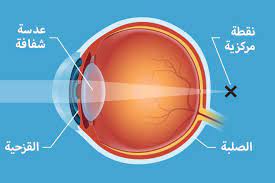
Presbyopia (myopia) Presbyopia is a condition in which the lens of the eye gradually loses its fexible elasticity as a result of advancing age and becomes unable to increase its curvature when looking near, and thus the image of the near object falls behind the retina.<br /><br />The lens of the eye is connected to the ciliary body through the ciliary ligaments. With age, the number of ligaments declines and the density of the lens increases, so the lens gradually loses its elasticity. There are two types of muscles in the ciliary body, which are radial muscles and circular muscles when looking.<br />For distance, the circular muscle of the ciliary body is at rest. When looking near near, these muscles narrow constricts. Thus, it allows the flexible lens to increase its curvature, which leads to more focusing power with the aim of falling<br />The image on the retina to obtain a clear vision when looking at close objects such as reading in visually sound people far away Emmetropia Presbyopia begins after the age of forty to forty-five<br />In the case of people with farsightedness, hypermetropia, in many cases, symptoms of nearsightedness begin before the age of forty.<br />In the case of people with long-sightedness, myopia, the onset of presbyopia can be delayed until<br />After the age of forty-five, according to the amount of weakness<br />It is processed by:<br />1- Medical glasses<br />2- The contact lens<br />3- Excimer laser