
A scientific article by Lecturer A. L. Ali Hussein Al-Nasrawi entitled (Keloids and Hypertrophic Scars)
15/05/2023 Share :
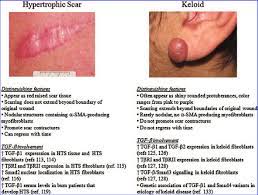
<br />Keloids and hypertrophic scars are both types of scars that occur due to an overgrowth of tissue at the site of a healed skin injury. Keloids extend beyond the original wound margin, while hypertrophic scars are limited to the area of damaged skin.<br />Keloids and hypertrophic scars can be caused by various forms of physical or chemical injuries, such as trauma, burns, insect bites, surgery, vaccination, skin piercing, acne, folliculitis, chickenpox, and herpes zoster infection <br />Notably, superficial injuries that do not reach the reticular dermis never cause keloidal and hypertrophic scarring .<br />Received message. Keloids and hypertrophic scars are both types of scars that occur due to an overgrowth of tissue at the site of a healed skin injury. Keloids extend beyond the original wound margin, while hypertrophic scars are limited to the area of damaged skin. Keloids and hypertrophic scars can be caused by various forms of physical or chemical injuries, such as trauma, burns, insect bites, surgery, vaccination, skin piercing, acne, folliculitis, chickenpox, <br />and herpes zoster infection . <br />Notably, superficial injuries that do not reach the reticular dermis never cause keloidal and hyper-trophic scarring . Would you like more information on any specific cause?<br />What is the difference between keloids and hypertrophic scars?<br />Keloids and hypertrophic scars are both types of scars that occur due to an overgrowth of tissue at the site of a healed skin injury. However, there are some key differences between the two.<br />Keloids extend beyond the original wound margin and can continue to grow over time. They can also recur after being removed.<br /> Hypertrophic scars, on the other hand, are limited to the area of damaged skin and do not grow beyond the original wound. <br />They also tend to improve over time and may eventually fade.<br />Another difference between keloids and hypertrophic scars is their appearance. Keloids are usually raised, shiny, and hairless, while hypertrophic scars are raised but not as much as keloids and may have a red or purple appearance.<br />Keloids and hypertrophic scars are both types of scars that occur due to an overgrowth of tissue at the site of a healed skin injury. However, there are some key differences between the two. Keloids extend beyond the original wound margin and can continue to grow over time. They can also recur after being removed. Hypertrophic scars, on the other hand, are limited to the area of damaged skin and do not grow beyond the original wound. They also tend to improve over time and may eventually fade. Another difference between keloids and hypertrophic scars is their appearance.<br /> Keloids are usually raised, shiny, and hairless, while hypertrophic scars are raised but not as much as keloids and may have a red or purpleappearance. <br /><br /><br /><br />Characteristic Keloid Hypertrophic Scar<br />Growth Extends beyond original wound margin and can continue to grow over time Limited to the area of damaged skin and does not grow beyond the original wound<br />Recurrence Can recur after being removed Less likely to recur after being removed<br />Appearance Raised, shiny, and hairless Raised but not as much as keloids, may have a red or purple appearance<br />Improvement over time May not improve over time Tend to improve over time and may eventually fade<br /><br /><br />These are an excessive growth of tissues due to an abnormal response to tissue injury and scar formation.Hypertrophic scars are limited within injury borders, while keloids grow beyond the wound boundaries. Patients with darker skin, genetic predisposition, and wounds closed under tension are prone to develop this abnormal scarring.<br />Options of treatment include surgical excision with intralesional steroid injection, silicone sheeting, pressure bandages, laser, and cryotherapy.<br />Keloids have a high chance of recurrence, while hypertrophic scar tends to regress with time.<br />Chondritis/Perichondritis<br />An inflammatory condition involves the perichondrium (Perichondritis) and/or the auricular cartilage (chondritis). It can be secondary to infections, trauma, or as a manifestation of rheumatologic disease as in relapsing polychondritis.<br />The most common pathogen is Pseudomonas aeruginosa. It presents as painful erythematous swelling sparing the pinna .<br />Relapsing polychondritis can affect larynx, trachea,and nose as well as present with recurrent<br />progressive attacks of perichondritis with elevated ESR thought to be due to autoimmune disorder.<br />Treatment by topical and oral antibiotics is generally sufficient in mild cases, and rarely surgical debridement is needed. <br />Corticosteroids therapy is recommended if presumed relapsing polychondritis.