
A scientific article by the teacher, A.L Muhammad Qasim Abbas, entitled (Artificial Intelligence in Health Care)
15/08/2023 Share :
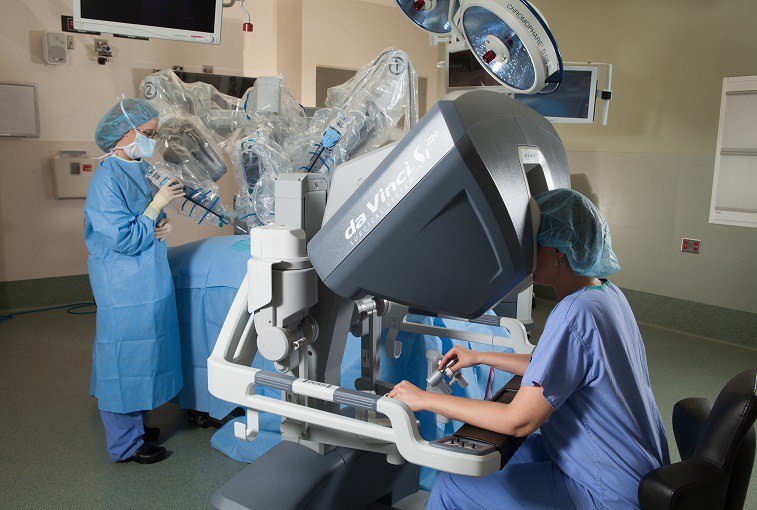
Artificial intelligence in healthcare<br /><br />• artificial intelligence in health care (healthcare in artificial intelligence)<br /> It is an umbrella term to describe the application of machine learning algorithms and other cognitive technologies in medical settings. In a simple way<br />Artificial intelligence is the simulation of computers and other machines of human cognition to be able to learn, think, make decisions and actions.<br />Thus, the employment of artificial intelligence in medical and health care is the use of machines to analyze medical data and work on its basis to predict a specific outcome.<br />Main categories of application of artificial intelligence in medical and health care<br />Major categories include the inclusion and application of AI in medical care:<br />Diagnostic and treatment recommendations.<br />• Commitment to the drug treatment of the patient.<br />• Administrative activities.<br />Pros of including artificial intelligence in medical and health care<br />Artificial intelligence simplifies the lives of patients, doctors, and hospital administrators by performing tasks normally performed by humans<br />But in less time and at a lower cost. It also works to make health care<br />More predictive and proactive by transforming big data to develop improved preventive care recommendations for patients. In general, the advantages and positives of including artificial intelligence in the medical sector can be summarized in the following points:<br />• Artificial intelligence helps doctors, nurses, and healthcare professionals perform their daily work.<br />• Artificial intelligence enhances preventive care and quality of life. Helps produce more accurate diagnoses and treatment plans.<br />• Artificial intelligence helps in obtaining better patient outcomes in general.<br />• Artificial intelligence helps in anticipating and tracking the spread of infectious diseases.<br />Examples of the use of artificial intelligence in medical and health care<br />A set of examples of the use of artificial intelligence in healthcare:<br />AI-assisted robotic surgery<br />Robots can analyze data from pre-operative medical records to guide the surgeon's tool during surgery. This has resulted in a 21% reduction in patient stays in the hospital. Robots can use data from previous operations to inform new surgical techniques with needed information. Robot-assisted surgery is also minimally invasive, so it will not The patient needs a recovery period from the large incisions, in addition to this, these techniques reduce the potential complications compared to the surgery that is performed by the surgeon alone.<br /><br />Nursing assistant applications<br />These applications allow for more regular communication between patients and medical care providers, thus allowing questions to be answered periodically, monitoring patients and providing quick answers, as well as reducing unnecessary hospital visits.<br />Image analysis<br />Another example of AI application in healthcare is image analysis, right now<br />For machine learning human service providers, but an algorithm that takes a long time to analyze images is designed for human service providers, but a machine learning algorithm is designed<br />It can analyze 3D scans up to 1,000 times faster than is currently possible, providing important information for surgeons performing surgeries.