Atrial fibrillation
16/11/2023 Share :
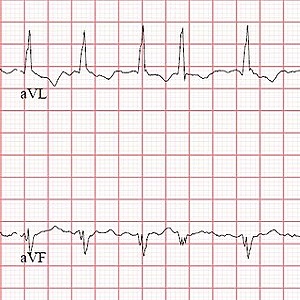
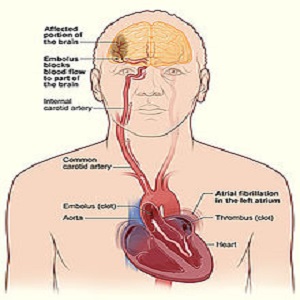
Atrial fibrillation (AF, AFib or A-fib) is an abnormal heart rhythm (arrhythmia) characterized by rapid and irregular beating of the atrial chambers of the heart. It often begins as short periods of abnormal beating, which become longer or continuous over time. It may also start as other forms of arrhythmia such as atrial flutter that then transform into AF.<br /> Atrial fibrillation is the most common serious abnormal heart rhythm and, as of 2020, affects more than 33 million people worldwide. The percentage of people with AF increases with age with 0.1% under 50 years old, 4% between 60 and 70 years old, and 14% over 80 years old being affected. A-fib and atrial flutter resulted in 193,300 deaths in 2015, up from 29,000 in 1990.<br />Episodes can be asymptomatic. Symptomatic episodes may involve heart palpitations, fainting, lightheadedness, shortness of breath.<br />the most common modifiable risk factors for AF is High blood pressure and valvular heart disease. Other risk factors include excess alcohol intake, tobacco smoking, diabetes mellitus, and thyrotoxicosis. <br />Diagnosis is with pulse examination showing irregular irregularity , A typical ECG in AF shows irregularly spaced QRS complexes without P waves. <br />In AF, the normal regular electrical impulses generated by the sinoatrial node are overwhelmed by disorganized electrical waves, usually originating from the roots of the pulmonary veins. These disorganized waves conduct intermittently through the atrioventricular node, leading to irregular activation of the ventricles that generate the heartbeat. <br />In atrial fibrillation, the lack of an organized atrial contraction can result in some stagnant blood in the left atrium (LA) or left atrial appendage (LAA). This lack of movement of blood can lead to thrombus formation (blood clotting). If the clot becomes mobile and is carried away by the blood circulation, it is called an embolus. Emboli in the brain may result in an ischemic stroke or a transient ischemic attack .<br />Management<br />Either trying to restore normal atrial rhythm or just controlling the fibrillating rate is a choice guided with several conditions, like the duration or accompanying structural heart damage or problems . anticoagulant may be used according to scores that designed to preclude future risk of thromboembolism. Recent years catheter ablation is used.<br />