Cardiac output and Ejection fraction
16/11/2023 Share :
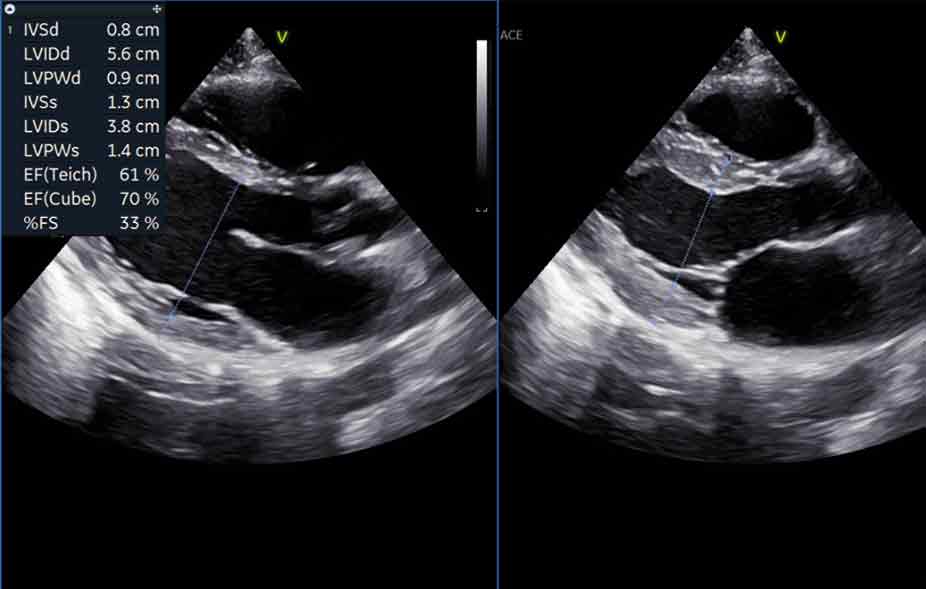
Cardiac output (CO) is the product of the heart rate (HR), (i.e. the number of heartbeats per minute (bpm)), and the stroke volume (SV), (which is the volume of blood pumped from chamber per beat mainly left ventricle); thus giving the formula: <br />CO L/min = HR*SV<br />Ejection Fraction (EF) is widely used as a measure of the pumping efficiency of the heart and is used to classify heart failure types. It is also used as an indicator of the severity of heart failure, although it has recognized limitations.<br />The EF of the left heart, known as the left ventricular ejection fraction (LVEF), is calculated by dividing the volume of blood pumped from the left ventricle per beat (stroke volume) by the volume of blood present in the left ventricle at the end of diastolic filling (end-diastolic volume). LVEF is an indicator of the effectiveness of pumping into the systemic circulation. The EF of the right heart, or right ventricular ejection fraction (RVEF), is a measure of the efficiency of pumping into the pulmonary circulation. A heart which cannot pump sufficient blood to meet the body's requirements (i.e., heart failure) will often, but not invariably, have a reduced ventricular ejection fraction.<br />Normal values<br />In a healthy 70-kilogram man, the stroke volume is approximately 70 mL, and the left ventricular end-diastolic volume (EDV) is approximately 120 mL, giving an estimated ejection fraction of 70⁄120, or 0.58 (58%). Healthy individuals typically have ejection fractions between 50% -65%, although the lower limits of normality are difficult to establish with confidence.<br />Pathophysiology<br />Heart failure is caused by any condition that reduces the efficiency of the heart muscle, through:- <br />a- Direct Damage of cardiac cells like in ischemia or myocarditis.<br />b- In-Direct through increase overloading. Over time, increase in workload lead to fibrosis, dilation or thickening in the cardiac muscle leading to cardiac wall stiffness .like in hypertension, valve failure.<br /><br />