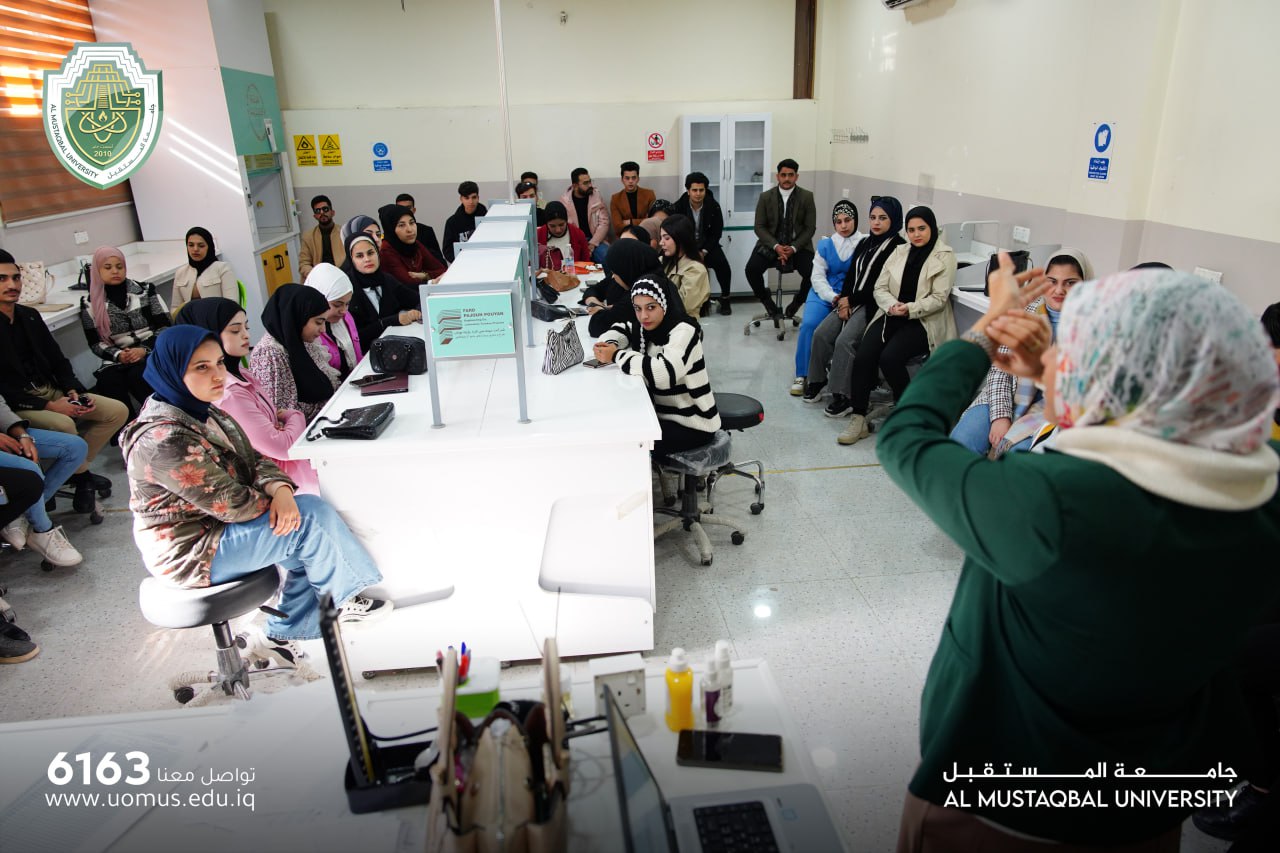



The Department of Anesthesia Techniques teaches students vital signs
20/01/2024 Share :
Under the patronage of the distinguished university president, Professor Dr. Hassan Shaker Magdy, the Department of Anesthesia Techniques at the College of Health and Medical Technologies taught students vital signs (how to measure blood pressure, heart rate, and temperature). Basic vital signs are used to evaluate a person’s general health, and they may also indicate... The presence of possible diseases, or it may indicate the progress in recovery of the sick person. The range of normal values for vital signs varies depending on age, weight, sex, and general health.<br />There are 4 basic vital signs: 1. Temperature. The normal body temperature for a healthy adult ranges between 36.6 and 37.2 degrees Celsius.<br />2 Pulse rate One of the basic vital signs is the heart rate per minute, as the pulse rate for healthy adults ranges between 60 and 100 beats per minute.<br />3 Blood pressure Blood pressure is a term that means the force of blood pressure on the walls of the arteries. For healthy adults at rest, it is 120/80 millimeters of mercury.<br />4 Respiratory rate Respiratory rate is one of the basic vital signs that represents the number of breaths taken per minute. The resting respiratory rate in healthy adults ranges from 12 to 16 breaths per minute