A scientific article by programmer Mustafa Mortada Khalaf entitled (The Importance of Artificial Intelligence in Medicine)
09/02/2024 Share :
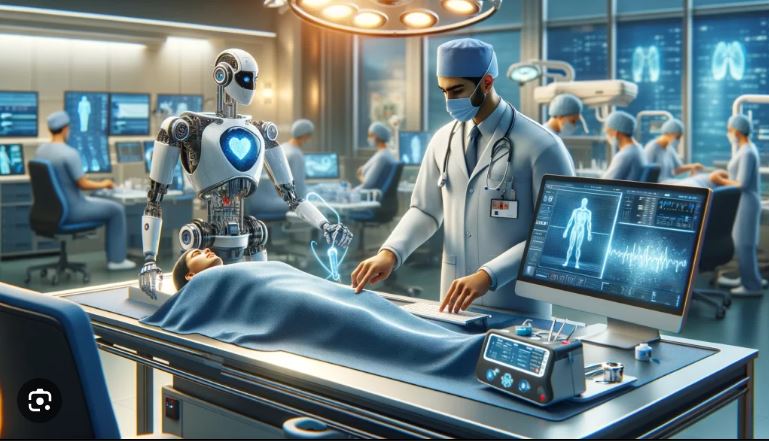
Artificial Intelligence (AI), thanks to its rapid technological progress and its ability to process and analyze huge amounts of data with high accuracy and speed, has begun to play a pivotal role in various fields, most notably the medical field. This development provides tremendous opportunities to improve healthcare, by accelerating diagnostic processes, personalizing treatments, and improving patient outcomes. In this article, we will explore the importance of artificial intelligence in medicine and how it is revolutionizing the field.<br /><br />### Improving accuracy in diagnosis<br /><br />One of the most prominent areas of use of artificial intelligence in medicine is improving the accuracy of diagnosis. By analyzing big data from medical records and medical images (such as X-rays and MRIs), AI-based systems can identify patterns that may not be obvious to doctors. For example, programs have been developed that are able to identify cancerous tumors with an accuracy that sometimes exceeds that of specialist doctors. This does not mean replacing the doctor, but rather providing valuable support that contributes to more accurate decision-making.<br /><br />### Customize treatment<br /><br />Artificial intelligence can also improve the way treatment is personalized for patients. By analyzing patient data, including their genome, AI can determine the most effective treatments for the specific condition. This reduces trial and error in medical treatments and speeds up the healing process, saving time and costs and improving the quality of life for patients.<br /><br />### Patient monitoring and preventive care<br /><br />Artificial intelligence technology also contributes to patient monitoring and preventive care. By wearing smart devices capable of collecting real-time health data, AI-based systems can analyze this data to warn doctors and patients when early signs of illness appear.<br /><br />Health problems, allowing early intervention and avoiding worsening of the condition.<br /><br />### Improving administrative efficiency<br /><br />In addition to clinical applications, artificial intelligence also contributes to improving administrative efficiency in health institutions. By analyzing data and automating routine processes, AI can reduce administrative burdens on medical workers, allowing them to devote more time to patient care.<br /><br />### Challenges and ethical considerations<br /><br />However, the challenges associated with the application of AI in medicine must be approached with caution. These challenges include issues of privacy and security of patient data, as well as the need to establish a regulatory and ethical framework that ensures that this technology is used in a way that respects the rights and dignity of patients. It is also necessary to ensure transparency in how medical decisions are made with the help of artificial intelligence and provide adequate training to medical professionals to work with this technology.<br /><br />### Conclusion<br /><br />In conclusion, it can be said that artificial intelligence offers unprecedented possibilities for transforming healthcare, enhancing the accuracy of diagnosis, the effectiveness of treatments, and the efficiency of preventive and administrative care. However, this future must be advanced consciously and responsibly, taking into account the ethical and regulatory challenges to ensure that patients and society at large benefit from this technology.