Admixtures in Concrete
20/03/2024 Share :
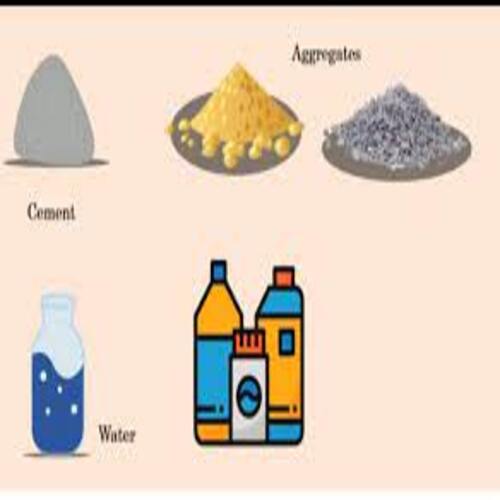
م دعاء فلاح<br />Admixtures in Concrete<br />Admixture is a material other than water, aggregate, hydrate <br />cement, and fiber reinforcement, used as an ingredient of a <br />cementations mixture to modify its freshly mixed, setting, or <br />hardened properties and that is added to the batch before or during <br />its mixing.<br />There are two types of admixtures: Chemical and Mineral<br />What is the difference between chemical admixtures and <br />mineral admixtures?<br /> The mineral admixtures are usually used to boost the strength <br />properties of concrete while also reducing the use of natural <br />resources and carbon dioxide emissions into the atmosphere, while <br />chemical admixtures improve the workability and effects on setting <br />time of cement.<br />1. Chemical admixtures<br />➢ air entrainers.<br />➢ water reducers.<br />➢ set retarders.<br />➢ set accelerators.<br />➢ Superplasticizers.<br />➢ specialty admixtures: which include corrosion inhibitors, <br />shrinkage control, alkali-silica reactivity inhibitors.<br />2. Mineral or Pozzolanic Admixtures<br />Mineral admixtures (fly ash, silica fume (SF), and slags) are <br />usually added to concrete in larger amounts to enhance the <br />workability of fresh concrete; to improve resistance of concrete to <br />thermal cracking, alkali-aggregate expansion, and sulfate attack; and <br />to enable a reduction in cement content.<br />Artificial Pozzolans<br />Fly ash<br />Blast Furnace slag<br />Silica Fume <br />Rice Husk ash<br />Metakaolin<br />Natural Pozzolans <br />Clay and Shales<br />Diatomaceous earth<br />Volcanic tuffs and pumicite