Compact City Concept
05/04/2024 Share :
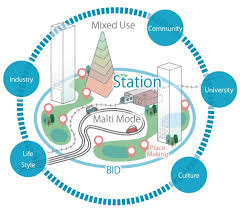
Assit. Prof Dr. Sabah Mohammed Abed<br />Nowadays it is very common to need to optimize spaces of both land and buildings. And the <br />thing is that previously it was thought of a horizontal growth of the City, trying to move all new <br />constructions to the outskirts of the City center. But this concept has changed radically to such an extent <br />that currently the growth plans of large cities are thinking about vertical and socially cohesive growth .<br />First of all, we will define what is a compact city? According to the Opamss master plan, a <br />compact city is “the City that presents a structure and plot of a certain compactness, socially cohesive, <br />that generates spaces for sociability, creates a territory with proximity to services, encourages the <br />meeting of activities and allows development.” of community life.”<br />After this definition, it is easy to understand why there are so many buildings in cities, since <br />what is sought is the optimization of natural resources, therefore, it is intended that constructions not <br />be moved towards tree areas or forest reserves. in the outskirts of the City, but rather try to renew the <br />current spaces as much as possible, adapting them to new needs or also generating new constructions <br />in the same spaces where old constructions existed.<br /><br /><br />