advantages and disadvantages of yield line theory compared to other methods of slab design
05/04/2024 Share :
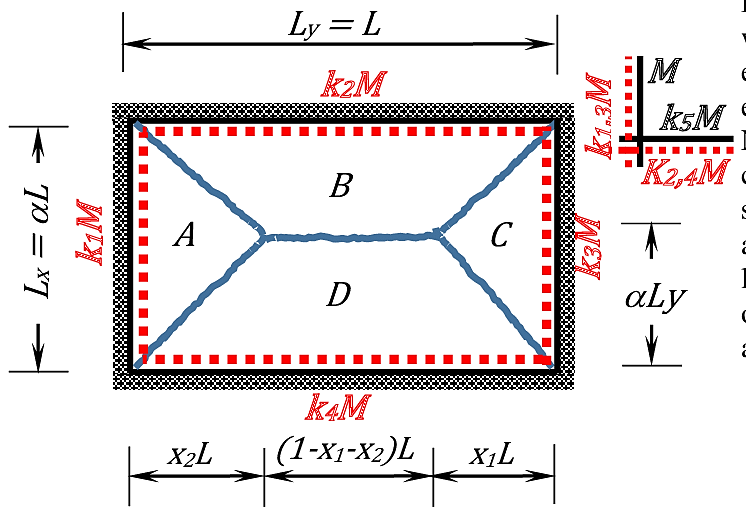
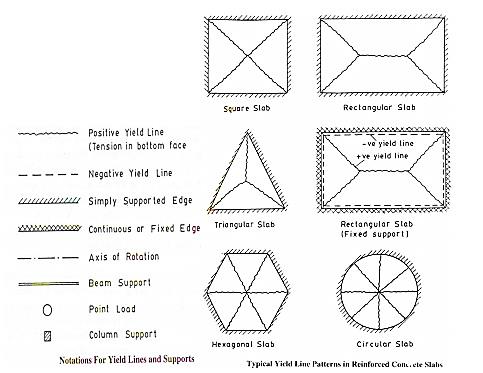
Lec. Dr. Riyadh Abdulabas Ali Alsultani<br />What are the advantages and disadvantages of yield line theory compared to other methods of slab design?<br />What is yield line theory?<br />Yield line theory is a method of slab design that assumes that the slab behaves as a perfectly plastic material, meaning that it can deform indefinitely without losing strength. The theory also assumes that the slab is supported by rigid supports, and that the failure occurs when a series of cracks, called yield lines, form along the slab. The yield lines divide the slab into rigid regions that rotate around the supports. The theory aims to find the collapse load and the shape of the yield lines that minimize the internal work done by the slab.<br />What are the advantages of yield line theory?<br />One of the main advantages of yield line theory is that it provides a realistic and conservative estimate of the ultimate load capacity and failure mode of slabs. Unlike the elastic theory, which assumes that the slab remains elastic until failure, the yield line theory accounts for the plastic behavior and ductility of the slab. This means that the yield line theory can capture the reserve strength and the redistribution of stresses that occur in slabs under increasing loads. Another advantage of yield line theory is that it is relatively simple and intuitive to apply, especially for slabs with regular shapes and supports. The theory only requires the knowledge of the yield moment and the geometry of the slab, and does not involve complex calculations or assumptions about the stress distribution or the deflection of the slab.<br />What are the disadvantages of yield line theory?<br />However, yield line theory also has some disadvantages that limit its applicability and accuracy. One of the main disadvantages is that the theory is based on idealized assumptions that may not reflect the actual behavior and conditions of slabs in practice. For example, the theory neglects the effects of shear, bond, reinforcement detailing, and cracking on the strength and stiffness of the slabs. The theory also assumes that the supports are rigid and fixed, which may not be true for some types of supports, such as beams or columns. Another disadvantage of yield line theory is that it can be difficult and tedious to apply for slabs with irregular shapes, supports, or loading patterns. The theory requires finding the optimal shape of the yield lines that minimizes the internal work, which may involve trial and error or optimization techniques. The theory also does not provide a direct solution for the serviceability or the reinforcement design of slabs.<br />How to use yield line theory in practice?<br />Yield line theory can be a useful and reliable method of slab design for some cases, despite its disadvantages. In order to use the theory in practice, you must first identify the shape, dimensions, supports, and loading pattern of the slab. Then you must assume a possible shape of the yield lines that divides the slab into rigid regions. Subsequently, you must calculate the internal work done by each region using the yield moment and rotation angle of the region and calculate the external work done by the applied loads using the load intensity and vertical displacement of the region. After comparing these two works and ensuring that they are equal or close enough, you can find the collapse load by multiplying the external work by a factor of safety. Lastly, you must check the serviceability and reinforcement design of the slab with other methods or codes.<br />