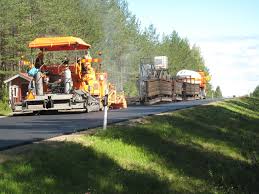
How to Mitigate environmental impacts of Highway projects Noise and Vibration
16/04/2024 Share :
Engineering Zainb Abd Alrahman<br />• Application of a thin surfacing course to the carriageways<br />• Installation of effective noise barriers<br />Following measures could be adopted during construction phase to minimise impacts of noise and vibration:<br />• Undertake engagement with the local community.<br />• Notify owners of any properties within 50m of the construction areas prior to the commencement of construction and share information on the length of time construction will continue.<br />• Provide contact details for Public Liaison Manager.<br />• Personnel should be instructed on best practicable means to reduce noise and vibration as part of their site induction training and in the form of tool-box talks to site staff.<br />• Agree any required extension of working hours with Local Authority prior to commencement of work<br />• Haulage routes and programming for the transportation of construction materials, equipment, fill, personnel etc. needs to be carefully considered in order to minimise the overall impact generated by these movements.<br />• Conform to principles specified within the Considerate Contractor Scheme relating to minimising the impact of vibration, and air, light and noise pollution.<br />• Modern, well-maintained plant, including any which may be on hire, should be used in accordance with manufacturer’s instructions at all times. Where possible, items of plant and equipment with lower noise emissions will be used.<br />• Shut down vehicles and plant when not in use.<br />• Keep drop heights from vehicles to a minimum practicable.<br />• Close engine compartments when equipment is in use and the resonance of body panels and cover plates should be reduced by the addition of suitable dampening materials. Any rattling noise should be addressed immediately by the tightening of loose parts or the addition of resilient materials.<br />• Semi-static equipment should be sited and orientated as far as is reasonably practicable away from noise relevant sensitive receptor.<br />• Machinery should be adequately lubricated in order to prevent undue screeching and squealing from moving parts.<br />Air Quality<br />Concentrations of pollutants and their associated health impacts are dependent on traffic composition and density, climatic conditions, vehicle travelling speeds and road layout<br />The government need to adopt long term policies and measures to encourage use of hybrid cars and discourage pollution creating vehicles<br />Appropriate dust control measures suitable for inclusion in a Construction Environment Management Plan (CEMP) may include:<br />• Sheeting of vehicles transporting earthworks materials to or from site.<br />• Wheel washing of site vehicles.<br />• Locating haul routes away from off-site sensitive properties, with regular watering, particularly during dry conditions (wet suppression of dust).<br />• Limiting site vehicle speeds on unpaved surfaces.<br />• Locating aggregate stocking areas away from sensitive properties.<br />• Minimising drop heights of material.<br />• Bulking of wastes to minimise transportation and handling requirements.<br />Measures to minimise plant exhaust emissions should also be employed during the construction phase and included in the CEMP, such as:<br /><br />• Ensuring, where possible, all Non-Road Mobile Machinery (NRMM) use ultra-low sulphur diesel.<br />• Placing onsite operating plant far from sensitive properties as practicable.<br />• Ensuring vehicles and operating plant engines are note idling unnecessarily.<br />• Maintaining all vehicles and plant and regularly servicing according to manufacturers’ recommendations.<br />Landscape Impacts<br />Following measures should be implemented to avoid or reduce landscape impacts:<br />• Minimise works area to retain existing roadside vegetation that currently provides screening<br />• Reinstate roadside vegetation where possible using appropriate native species<br />• Targeted screen planting where appropriate to mitigate potentially significant effects<br />• Use of appropriate surfaces and finishes to structures<br />• Tie into existing vegetation to provide local connectivity<br />Ecology and Biodiversity<br />• Generic measures that will be adopted as best practice to avoid predicted adverse impacts of degradation of terrestrial habitats, watercourses and species adjacent to work sites would include the following:<br />• All site works should be carried out in accordance with best environmental working practices e.g. CIRIA publications.<br />• Necessary surveys should be carried out and appropriate mitigating measures should be planned.<br />• Site clearance should be avoided during nesting season.<br />• Alternate refuges should be provided for protected species<br />• Polluting materials should not be stored in works areas located within areas of significant biodiversity value, particularly within 50m of watercourses.<br />• Methods to minimise/prevent contamination of the watercourses during the construction works should be implemented. The EA’s Pollution Prevention Guidance (PPG) 5 should be adhered to in order to prevent damage and/or pollution to aquatic habitats.<br />• Retention of as many trees as possible with reference to the undertaking of any essential tree surgery to the crown or roots in accordance with British Standard (BS) 3998:2010 Tree Work Recommendations and appropriate Arboriculture Association advice notes Protection of trees.<br />• Any works to drainage features must include necessary mitigation to ensure the features retain their correct working function.<br />• The presence of significant ecological receptors would also have implications for the timing of the development work. The avoidance of periods of particular sensitivity is considered best practice for protected species such as nesting bats, birds, water voles and amphibians.<br />• All trenches and work excavations should be covered overnight or fenced off to prevent animals falling in, or trenches should include an earth ramp to allow animals to climb out.<br />• An ecological toolbox talk should be given to contractors and site staff prior to construction commencing to highlight any potential ecological issues on site. This will ensure that all personnel undertaking works on the site have been provided with a level of understanding sufficient to ensure protection of sensitive ecological features during the construction process.<br />• If any protected species are found during the works, work should cease until the clerk of works or ecologist has been contacted to advice on how to proceed.<br />• Areas of verge temporarily disturbed should be re-instated once works are completed, with a low maintenance grass seed mix for verge areas and a species diverse mix for all other areas to encourage habitats to regenerate naturally.<br />• Mammal crossing points, appropriate fencing and roadside signage should be incorporated into the design to mitigate for severance of habitat associated with new roads.<br />• The generic mitigation measures identified above should be strictly adhered to during works within or immediately adjacent to any designated sites or water courses to ensure that the integrity of ecological receptors are maintained during and after works.<br />• Post construction, planting should aim to restore the ecological value where affected. This could include re-instating and re-linking severed linear wildlife corridors with new planting. Consideration should be given to the inclusion of locally sourced native plant species within planting proposals and the application of sensitive management and monitoring regimes.<br />• A landscape planting strategy of onsite habitats will serve to ensure that the overall biodiversity value of affected habitats is regained.<br />• Grassland, scrub and woodland should be replaced to create a linked matrix of new habitat with increased species diversity and structure. <br />