Is the science some type of an art?
22/05/2024 Share :
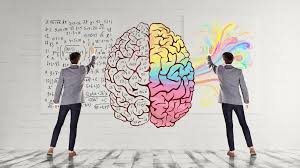
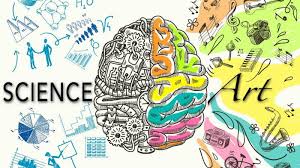
Najah M. L. Al Maimuri<br />Al Mustaqbal University, 2024<br />1. Introduction<br />The relationship between science and art is a topic of considerable philosophical debate and can be viewed from multiple perspectives. While science and art are traditionally seen as distinct domains with different goals and methodologies, there are compelling arguments and examples suggesting that science can indeed be seen as a type of art.<br />2. Points of Intersection<br />1. Creativity and Imagination:<br />• Both science and art require a high degree of creativity and imagination. Scientists often need to think outside the box to formulate hypotheses and design experiments, similar to how artists innovate with new forms and techniques.<br />• Famous scientists like Albert Einstein and Richard Feynman have spoken about the role of imagination in scientific discovery, akin to artistic creativity.<br />2. Aesthetic Appreciation:<br />• Many scientific theories and experiments are appreciated for their elegance and simplicity, similar to how we appreciate art. The beauty of a mathematical proof or the intricate structure of a natural phenomenon can evoke a sense of aesthetic pleasure.<br />• The concept of "elegance" in scientific theories often parallels the aesthetic criteria used in art.<br />3. Expression and Communication:<br />• Both fields seek to communicate ideas and evoke responses. Scientific visualization, such as images from telescopes or microscopic views, often have a striking visual impact that can be appreciated aesthetically.<br />• Art can convey complex ideas and emotions, just as science communicates complex concepts about the universe and our place within it.<br />4. Innovation and Exploration:<br />• Both science and art push boundaries and explore the unknown. Artists experiment with new mediums and techniques, while scientists test new theories and explore new realms of knowledge.<br />• This spirit of exploration and the drive to understand or express the unknown are common to both fields.<br />Differences<br />Despite these intersections, there are fundamental differences between science and art:<br />1. Objective vs. Subjective:<br />• Science strives for objective truth through empirical evidence and reproducibility. Its methods are designed to eliminate personal bias and subjectivity.<br />• Art, on the other hand, embraces subjectivity and personal interpretation. It is often valued for its ability to evoke personal and emotional responses.<br />2. Methodology:<br />• Scientific methodology is systematic, involving hypothesis testing, experimentation, and peer review. It follows a rigorous, structured process aimed at understanding natural laws.<br />• Artistic creation is more fluid and intuitive, often driven by the artist’s vision, emotions, and experiences.<br />3. Purpose and Outcomes:<br />• The primary goal of science is to understand and explain phenomena, leading to advancements in knowledge and technology.<br />• Art aims to create experiences, provoke thought, and convey meaning, often without the necessity of empirical evidence or practical application.<br />Conclusion<br />While science and art have distinct characteristics and methodologies, the overlaps in creativity, aesthetic appreciation, and the drive for innovation suggest that science can be considered a type of art in certain contexts. The scientific process involves artistic elements, and the outcomes of scientific work can possess artistic qualities. This interplay enriches both fields, demonstrating that the boundaries between science and art are more permeable than they might initially appear.<br /><br />