Dr : Shimaa Mohamed Abuzaid Assistant Professor, College of Physical Education & Sports Sciences/AL Mustaqbal University Biomechanics In Sport
17/06/2024 Share :
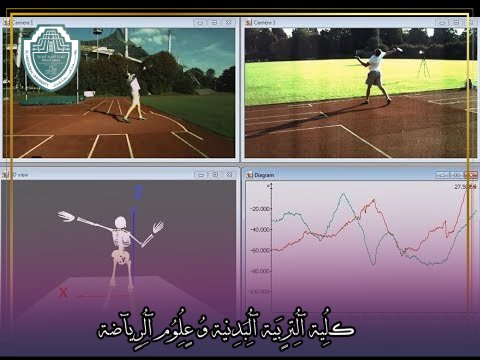
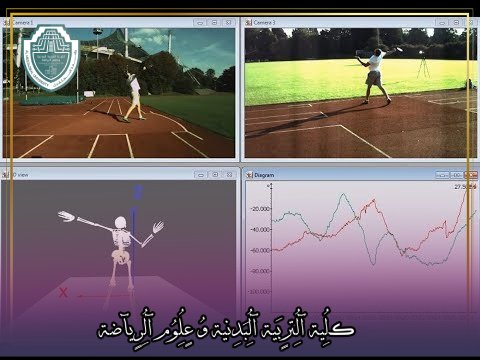
Biomechanics in sports involves detailed analysis of athletic movements in order to reduce the risk of injury and improve athletic performance. Sports and exercise biomechanics includes the field of science concerned with analyzing the mechanics of human movement. It refers to the detailed description, analysis and evaluation of human movement during sports activities. Mechanics is a branch of physics concerned with describing motion/motion and how forces create motion/motion. Therefore, sports biomechanics is the science of explaining how and why the human body moves the way it does. In sports and exercise, this definition is often expanded to also take into account the interaction between the performer, his or her equipment, and the environment. Biomechanics is traditionally divided into kinematic and kinetic areas. Kinematics is the branch of mechanics that deals with the geometry of the motion of objects, including displacement, velocity, and acceleration, without taking into account the forces that produce the motion. Kinematics is the study of the relationships between the force system acting on the body and the changes it produces in the body's movement. In terms of this, there are skeletal, muscular and neurological considerations that we need to take into account when describing biomechanics.<br />According to Knudson, human movement performance can be enhanced in several ways. Effective movement includes anatomical factors, neuromuscular skills, physiological abilities, and psychological/cognitive abilities. Biomechanics is essentially the science of movement technique and tends to be used more in sports where technique is a dominant factor rather than physical structure or physiological abilities. Here are some areas in which biomechanics is applied, either to support athletes' performance or solve problems in sport or exercise:<br /><br />Identify the optimal technique to enhance athletic performance<br />Analyze body loads to determine the safest way to perform a particular sport or exercise<br />Assess muscle recruitment and loading<br />Analysis of sports and exercise equipment such as shoes, surfaces and rackets.<br />Biomechanics is used to try to improve performance or reduce the risk of injury in sports and screening tasks.<br /><br />Principles of biomechanics<br />It is important to know several biomechanical terms and principles when studying the role of biomechanics in sports and exercise.<br />Forces and torques<br />Force is simply pushing or pulling. A force can change the movement of a body part. Movement is created and modified by the actions of forces. When a force rotates a body part or racket, this effect is called torque or moment of force. Example - Muscles create torque to rotate body parts in all tennis strokes. In the process of service, internal rotation of the upper arm is the result of internal torque in the shoulder joint, resulting from muscle movements (latissimus dorsi and parts of the pectoralis major and deltoids). To spin a clip with greater force, the player will generally use more muscle force.<br /><br />Newton's laws of motion<br />Newton's three laws of motion explain how forces create motion in sports. These laws are commonly referred to as the laws of inertia, acceleration, and reaction.<br /><br />Law of Inertia - Newton's first law of inertia states that objects tend to resist changes in their state of motion. An object in motion tends to stay in motion and an object at rest tends to stay at rest unless acted upon by a force. Example - A skater sliding on ice will continue to slide at the same speed and in the same direction, unless an external force acts on the skater.<br />Law of Acceleration - Newton's second law explains the amount of motion created by a force. The acceleration (the tendency of an object to change speed or direction) experienced by an object is proportional to the magnitude of the force and inversely proportional to the mass of the object (F = ma). Example - When a ball is thrown, kicked, or hit with an object, it tends to move in the direction of the line of action of the applied force. The greater the amount of force applied, the faster the ball will go.[8] If an athlete improves the strength of his legs through training while maintaining the same body mass, he will have an increased ability to accelerate the body using the legs, resulting in improved agility and speed.<br />Law of Reaction - The third law states that for every action (force) there is an equal and opposite reaction force. This means that forces do not act alone, but rather occur in equal and opposite pairs between interacting bodies. Example - The force from a player's legs "pushing" toward the ground creates ground reaction forces where the ground "pushes" back and allows the runner to move across the field (since the ground is much larger than the player, the player accelerates and moves quickly, while the ground does not accelerate or move Absolutely). This action reaction also occurs when the racket hits the ball. The force applied to the ball is identical to an equal and opposite force applied to the racket.<br />Paid<br />Newton's second law is also related to variable momentum, which is the product of an object's velocity and its mass. Momentum is the amount of motion an object has. Momentum can be transferred from one object to another. There are different types of momentum and each has a different effect on the sport.<br /><br />Linear Momentum: Momentum is in a straight line<br />Angular momentum: rotational momentum resulting from the rotation of different parts of the body<br />In tennis, one of the main reasons for the increased power of the game today is the incorporation of angular momentum into the groundstroke and serve techniques. The angular momentum generated by the coordinated action of the body parts is transferred to the linear momentum of the racket upon impact.<br />Center of gravity<br />The center of gravity (COG) is an imaginary point around which a body's weight is evenly distributed. The center of gravity of the human body can change dramatically because body parts can move their mass as the joints rotate. This concept is crucial to understanding balance, stability, and how gravity affects athletic techniques.<br /><br />The direction of the gravitational force across the body is downward, toward the center of the Earth, and through the COG. It is important to understand and visualize this line of gravity when determining a person's ability to successfully maintain balance. When the line of gravity lies outside the base of support (BOS), a reaction is needed in order to remain balanced.<br /><br />The squash racket's center of gravity is a much simpler process and can usually be found by locating the point where the racket balances on your finger or other narrow object.<br /><br />balance<br />Balance is an athlete's ability to control their balance or stability. A good understanding of both static and dynamic equilibrium is necessary:<br /><br />Static balance: The ability to maintain postural stability and orientation with the center of mass above the base of support and the body at rest<br />Dynamic Balance: The ability to maintain postural stability and orientation with the center of mass above the base of support during movement of body parts<br />Correct biomechanics<br />As mentioned above, correct biomechanics provides efficient movement and may reduce the risk of injury. In sports, it is always a good idea to consider abnormal or faulty biomechanics as a potential cause of injury. These abnormal biomechanics can be the result of anatomical or functional abnormalities. Anatomical deformities such as leg length differences cannot be changed, but secondary effects can be treated, for example, by inserting a shoe or orthotic. An example of functional abnormalities is muscle imbalance that develops after a long period of immobilization.<br /><br />The different planes of motion and axes are often referred to in biomechanics. Watch this video to refresh your memory.<br />