Carbon Capture and Storage (CCS)
16/09/2020 Share :
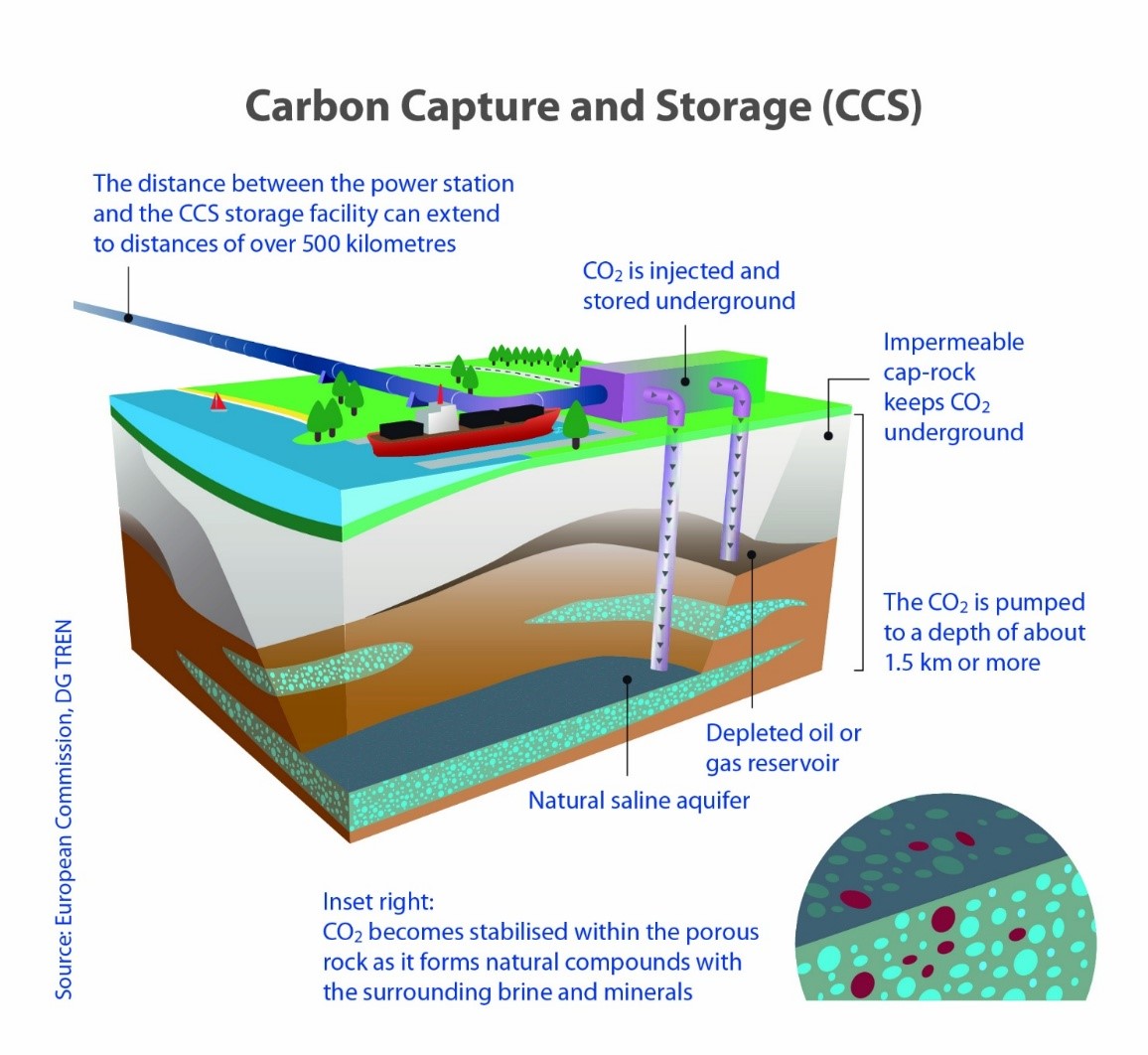
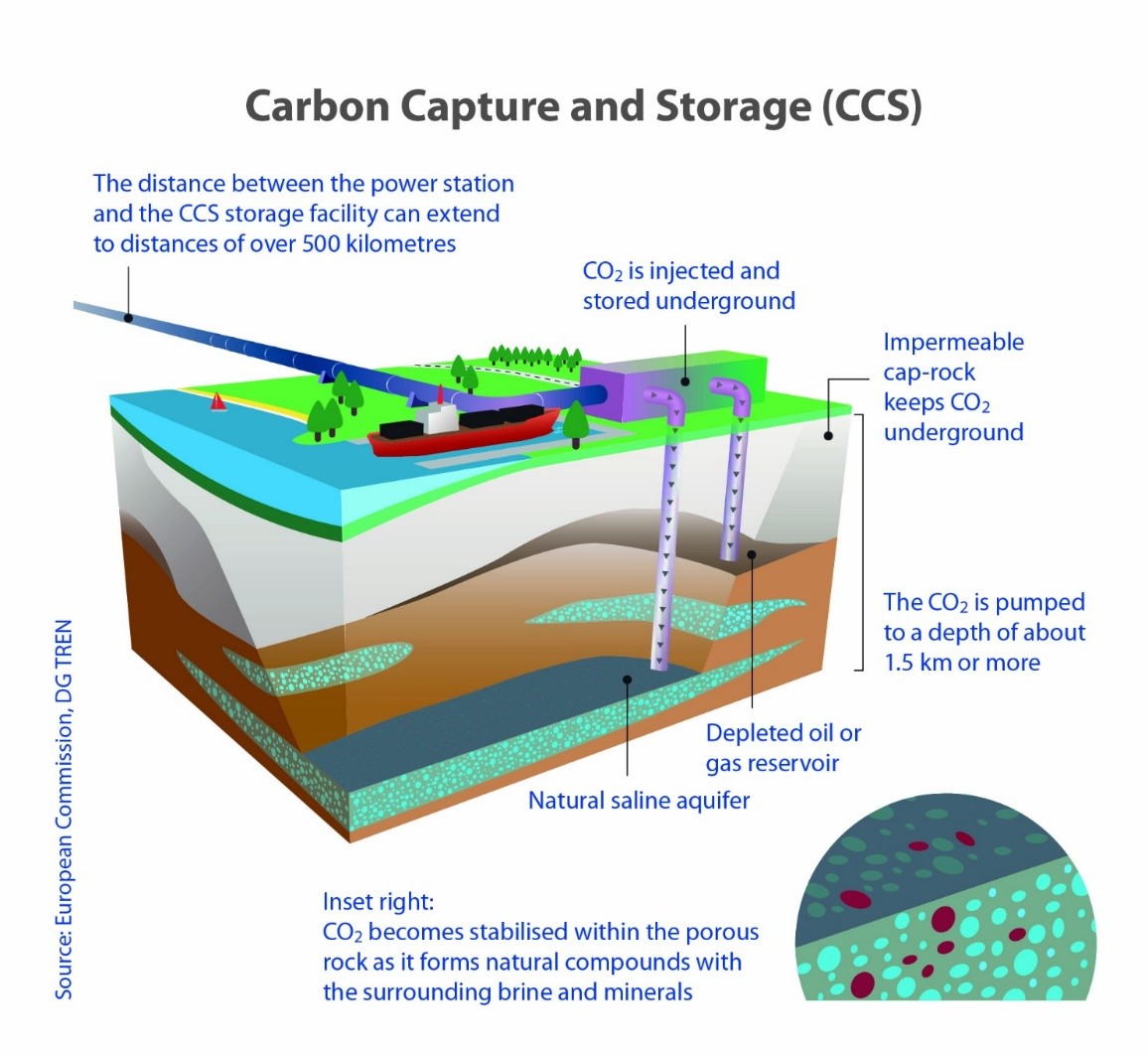
In spite of the current trend applied globally in utilisation renewable energy and adopting sustainable alternatives in the industries, the dependence on the fossil fuels remains significantly high and continues playing a major role in these industries. Globally, the consumption of fossil fuel in the power plants emits Co2 by about 40%. Add to that other industries such as cement, steel and iron, paper, refineries and aluminium causes carbon dioxide emissions during the conversion of raw materials(Fanchi, 2016). <br />Carbon capture and storage (CCS) is the new technology that involve capturing the Co2 emitted in the various large industries then transporting it to the storage location to be deposited in the geological layers instead of being trapped in the atmosphere. This method aims to capture 85% to 90% of carbon dioxide emitted in the aforementioned projects in order to contribute in mitigating the effect of global warming, ocean acidification and enhancing the atmosphere (European commission, 2020).<br />The CCS involves three subsequent stages which are capturing Co, transporting it and then storing the captured Co2 underground in exhausted gas and oil walls. <br />During the first stage, carbon dioxide is separated from gases combined with it in power plants and industrial process using capture technologies such as pre-combustion capture (mainly utilized in the industrial processes), oxyfuel combustion and post-combustion capture (the principle method utilized in the existing factories). In the post-combustion, carbon dioxide and the exhaust from the combustion are separated from each other. The pre-combustion capture techniques are available commercially; nevertheless, thier utilisation in the power plants are still limited. This method bases on gasifying fuel and separate out the carbon dioxide. In the oxy-fuel combustion, fuel is combusted in an environment with a fairly pure oxygen instead of regular air that produces Co2 emissions in high concentration (Resources Future, 2020)<br />Then, Co2 is transported by ship or pipeline. Millions tones of Co2 have been moved to the depleted oil fields or coal beds every year. After that the carbon dioxide is stored in careful way in the chosen geological rock which is situated several kilometres below the ground (Carbon Capture and Storage Association, 2020)<br />From 2005, the concept of CCS started getting the political attention in Europe. In 2006, the first debate about this project was initiated and in 2007, CCS was added to the European agenda as a crucial method to control the climate changes. Publishing of EU directive on the geological storage of carbon dioxide was occurred in 2009. Currently, two large scale power plants are being operated in association with carbon capture and storage having a capacity of 2.4 MtCo2 per year. In 2019, five new power plants equipped with CCS were operated. This aimed to reach a level of 310 MtCo2 by 2030 in spite of the shutting down that occurred in 2020 due to Covid-19 crisis (IEA, 2020).<br />In spite of all the benefits associated with CCS, there are some barriers obstacle its wide spreading. High cost of this technology is the main barrier which comes from the cost of equipment and energy required for collecting the Co2 then compressing it. Transportation challenges are another barriers as it is costly, considerable energy is needed to compress Co2 and keep the high pressure in the pipelines and the cost of the pipeline is high. Consideration of storage is also a problem as researchers are very worried about the ability of storage sites to preserve carbon with no considerable leakage. In 2018, IPCC report indicated that the underground injection of Co2 could be responsible about seismic activity. Finally, public support for the CCS is significantly important to be developed which have not guaranteed yet. This can be attributed to the idea that storing Co2 may prolong the role of fossil fuel in the industry, the agreement on the construction of pipelines, safety during transportation as well as the thought that other methods for alleviating the effect of climate change can be better (Kunaal Venugopal, 2020).<br /><br />Reference<br />1. Carbon Capture and Storage Association, 2020 What is CCS [Online] http://www.ccsassociation.org/what-is-ccs/ [Accessed 15 sep 2020]<br />2. IEA 2020 Carbon Capture, Utilisation and Storage [Online] https://www.iea.org/fuels-and-technologies/carbon-capture-utilisation-and-storage [Accessed 15 sep 2020]<br />3. European commission (2020) Carbon capture, utilisation and storage [online]<br />https://ec.europa.eu/jrc/en/research-topic/carbon-capture-utilisation-and-storage [Accessed 15 sep 2020]<br />4. Fanchi, John R; Fanchi, Christopher J (2016). Energy in the 21st Century. World Scientific Publishing Co Inc. p. 350. ISBN 978-981-314-480-4<br />5. Kunaal Venugopal (2020) Can Carbon Capture Stop Climate Change? [online] https://theincentive.org/2020/03/17/can-carbon-capture-stop-climate-change/amp/ [Accessed 16 sep 2020]<br />6. Resourcess Future (2020) Carbon Capture and Storage 1010 [online] https://www.rff.org/publications/explainers/carbon-capture-and-storage-101/ [Accessed: 16 sep 2020]<br />by Assist Lecturer Ruqaya Haider