Laryngeal spasm post extubation
09/11/2024 Share :
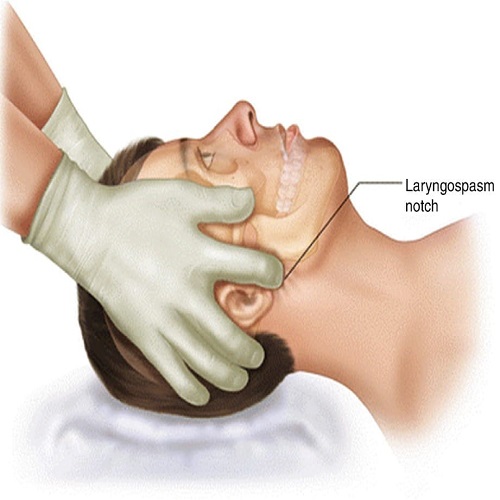
Laryngeal spasm is a potentially serious complication that can occur after (extubation) in the recovery period.<br />What is laryngeal spasm?<br />It is an involuntary contraction of the vocal cords that might lead to partial or complete closes of the airways.<br />It can happen during or immediately after extubation, causing difficulty breathing and a high-pitched noise (stridor).<br />Causes<br />The breathing tube itself can cause irritation of the vocal cords, or by secretions or debris that have accumulated in the airway.<br />Reflex response: natural reflexes to protect the airway this reflex sometimes trigger a spasm, especially if the patient is not fully awake or cooperative.<br />Underlying medical conditions: Certain conditions, such as acid reflux or neurological disorders, can increase the risk of laryngeal spasm.<br />Symptoms<br />Difficulty breathing<br />High-pitched noise (stridor)<br />Retractions (pulling in of the skin between the ribs or above the collarbone)<br />Cyanosis (bluish discoloration of the skin)<br /><br /><br /><br />Treatment<br />Immediate action: <br />The first step is to remain calm and reassure the patient.<br />Opening the airway: This can be done by;-<br /> -gently jaw-thrusting the patient's head forward <br />Or<br /> -using a bag-valve mask to provide oxygen.<br />-Medication:<br /> In some cases, medication may be needed to relax the vocal cords and open the airway. <br />1-Low dose Propofol might be significantly helpful in relaxing and southing the muscle of the larynx.<br />2-Bronchodilator can be helpful in reducing the narrowing of the airway <br />3-steriods to reduce the histamine released due to the spasm.<br />Reintubation: <br />If the spasm is severe or does not respond to other treatments, the patient may need to be re-intubated.<br />Prevention<br />Careful extubation: Extubating the patient when they are fully awake and cooperative can help reduce the risk of laryngeal spasm.<br />Use of lidocaine: Applying lidocaine to the vocal cords before extubation can help numb the area and reduce irritation.<br />Addressing underlying conditions: Treating any underlying medical conditions that may increase the risk of laryngeal spasm.<br /><br />م.م نهى نوماس