Theories of Aging
27/11/2024 Share :
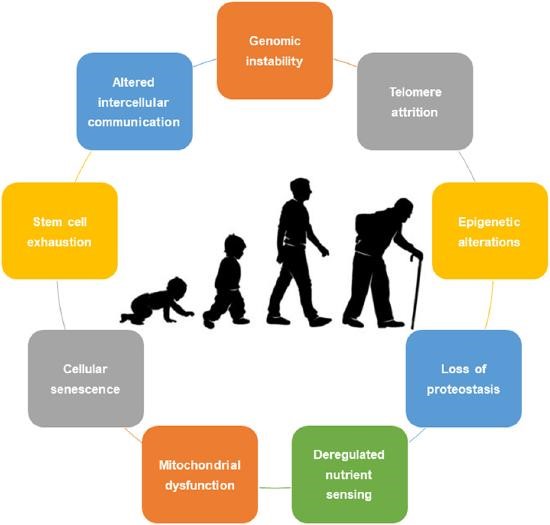
Theories of aging encompass a variety of biological, chemical, and social perspectives that seek to explain the complex process of aging. These theories can be broadly categorized into biological mechanisms, evolutionary perspectives, and social frameworks, each contributing unique insights into the aging phenomenon.<br />Biological Mechanisms<br />1-Wear and Tear Theory: Suggests that aging results from cumulative damage to cells and tissues over time (Ameen & Taqa, 2024).<br />2-Genetic Control Theory: Proposes that aging is regulated by genes that control cellular processes (Bains et al., 2021)<br />3-Mitochondrial Theory: Focuses on mitochondrial dysfunction as a key factor in aging(Chistiakov et al., 2014).<br />4-Chemical Kinetic Theory: Argues that aging arises from unregulated biochemical processes post-reproduction, leading to imbalances that contribute to aging(Kondyurin, 2023)(ÇAKIR, 2023).<br /><br /><br />Evolutionary Perspectives<br />1-Danaid Theory: Proposes that aging is a result of inherent physiological limitations in complex organisms, influenced by evolutionary pressures and developmental constraints(Wensink & Cohen, 2022).<br />2-Natural Selection: Suggests that aging evolved due to declining selective pressures, allowing aging traits to persist(Choi 2016).<br />Social Frameworks<br />Social Gerontology: Examines aging through social roles and interactions, highlighting the importance of societal context in understanding aging(Rosenberg, 2022). While these theories provide valuable insights, it is essential to recognize that aging is a multifaceted process influenced by a combination of biological, environmental, and social factors. This complexity suggests that no single theory can fully explain aging, and interdisciplinary approaches may yield a more comprehensive understanding.<br />Witten by: <br />Assistant Professor Dr. Aqeel Handil Al Jothery (PhD UK, Physiology)<br />Anesthesia Techniques Department, College of Health and Medical Technologies, Al Mustaqbal University, Hilla, Iraq<br /><br /> <br /><br />The evolution of aging<br /><br />Bibliography<br />Ameen., Omar, M., Taqa, Ghada, A. (2024). Understanding the Multifaceted Process of Aging: Theories, Mechanisms, and Implications for Treatment. ˜Al-Salam journal for medical science, doi: 10.55145/ajbms.2024.03.02.01<br />Bains, W., Borriello, E., & Schulze-Makuch, D. (2021). Evolution of default genetic control mechanisms. PloS one, 16(5), e0251568. https://doi.org/10.1371/journal.pone.0251568<br />Chistiakov, D. A., Sobenin, I. A., Revin, V. V., Orekhov, A. N., & Bobryshev, Y. V. (2014). Mitochondrial aging and age-related dysfunction of mitochondria. BioMed research international, 2014, 238463. https://doi.org/10.1155/2014/238463<br />Kondyurin, Alexey. (2023). 2. Chemical kinetic theory of aging. <br /> ÇAKIR, Musa, Faruk, (2023). Chemical kinetic theory of aging. doi: 10.48550/arxiv.2303.05585<br />Wensink., Maarten, Jan,; Cohen. Alan, A. (2022). The Danaid Theory of Aging. Frontiers in Cell and Developmental Biology, doi: 10.3389/fcell.2021.671208<br />Choi J. (2016). An Evolutionary Understanding of Aging. Archives of plastic surgery, 43(3), 306–308. https://doi.org/10.5999/aps.2016.43.3.306<br />Rosenberg, Edwin. (2022). Social Gerontology Theory. Europasian journal of medical sciences, doi: 10.46405/ejms.v4i0.454<br />