The Effect of Using AI in Modern Medical Education By SAJAD SAAD SALAH
29/11/2024 Share :
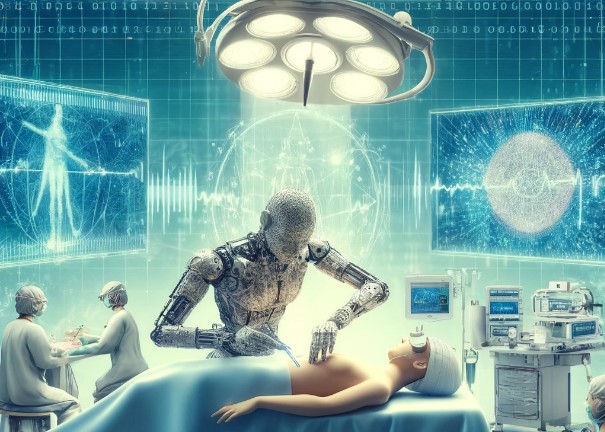
Artificial Intelligence (AI) has rapidly emerged as a transformative force across multiple industries, including healthcare and education. In modern medical education, AI has introduced innovative approaches to teaching and learning, equipping students with the skills they need to thrive in an increasingly technology-driven healthcare environment. By revolutionizing traditional methods and enhancing clinical and practical training, AI is reshaping how future medical professionals are trained. This article explores the far-reaching effects of AI on modern medical education, its benefits, challenges, and potential future developments.<br />________________________________________<br />Personalized Learning: A Tailored Approach to Medical Education<br />One of the most significant impacts of AI on medical education is its ability to offer personalized learning experiences. Unlike traditional one-size-fits-all teaching methods, AI-powered platforms use data analytics to identify the strengths and weaknesses of individual students.<br />For example, adaptive learning systems such as Smart Sparrow or Quizlet customize the content delivery based on a student’s performance. If a student struggles with anatomy, the system provides tailored resources, quizzes, and case studies to strengthen their understanding. These systems also allow students to progress at their own pace, ensuring a deeper grasp of complex medical concepts.<br />Additionally, AI enables real-time performance tracking, which benefits both educators and students. Professors can monitor the progress of each student, identifying those who need extra help. On the other hand, students receive immediate feedback, helping them address gaps in knowledge before moving forward. This personalized approach not only improves academic performance but also enhances confidence and motivation among learners.<br />________________________________________<br />Simulation-Based Training: Enhancing Practical Skills<br />AI has brought groundbreaking advancements to simulation-based training in medical education. By integrating technologies like virtual reality (VR) and augmented reality (AR) with AI algorithms, students can now practice complex procedures in lifelike environments.<br />For instance, AI-powered platforms such as Touch Surgery allow students to perform virtual surgeries step-by-step. These platforms provide real-time feedback, highlighting errors and suggesting corrections, ensuring that students refine their techniques without any risk to real patients.<br />AI-enhanced simulators also offer dynamic and adaptive scenarios. A student practicing on a virtual patient may encounter unexpected complications, requiring them to think critically and make swift decisions. This type of training is invaluable in preparing students for high-pressure situations in real clinical settings.<br />Moreover, AI tools can simulate rare medical conditions that students might not encounter during their training. These scenarios ensure that learners gain exposure to a wide range of cases, improving their diagnostic and treatment skills. Haptic feedback systems further enhance the experience by mimicking the tactile sensations of tissues and organs during surgical procedures, adding a layer of realism to the training process.<br />________________________________________<br />AI-Assisted Diagnostics: Bridging Knowledge and Technology<br />AI is not only transforming patient care but also revolutionizing how students are taught to diagnose and treat illnesses. Advanced machine learning algorithms can analyze complex medical data, such as imaging scans, genetic information, and lab reports, offering students valuable insights into diagnostic processes.<br />For example, AI tools like IBM Watson Health allow students to compare their diagnostic decisions with algorithm-generated results. By examining discrepancies, students learn to refine their clinical reasoning and better understand the nuances of patient care.<br />AI can also predict disease progression and recommend personalized treatment plans. These features provide students with an opportunity to understand how AI augments clinical decision-making, preparing them to collaborate effectively with such tools in the future.<br />In addition, AI fosters a more interactive learning experience. For instance, tools like ChatGPT-based tutors can simulate patient interviews, allowing students to practice gathering medical histories and identifying symptoms in a conversational setting. These interactions help students develop both technical expertise and interpersonal communication skills.<br />________________________________________<br />Streamlining Administrative Tasks: More Time for Learning<br />The administrative demands of medical education can be overwhelming for both educators and students. AI is alleviating this burden by automating routine tasks, allowing more time to focus on teaching and learning.<br />For educators, AI-powered grading systems can assess assignments, exams, and even written essays with remarkable accuracy and consistency. These tools not only save time but also provide detailed feedback, enabling students to improve specific areas of weakness.<br />AI-based scheduling systems optimize timetables for lectures, clinical rotations, and lab sessions, ensuring seamless coordination. This reduces logistical challenges and ensures that students get the most out of their training.<br />For students, AI chatbots act as virtual assistants, providing instant answers to questions, reminders for deadlines, and guidance on accessing learning materials. These bots are available 24/7, making them an invaluable resource for time-strapped medical students.<br />________________________________________<br />Advancing Research Opportunities: Unlocking New Frontiers<br />AI has unlocked unprecedented opportunities for research in medical education. By analyzing vast datasets, AI tools enable students and faculty to identify patterns, correlations, and trends that were previously impossible to detect.<br />For example, natural language processing (NLP) tools can sift through thousands of research papers in minutes, summarizing key findings and highlighting relevant studies. This allows students to stay updated on the latest advancements without spending countless hours reviewing literature.<br />AI also facilitates predictive modeling, which can be applied to epidemiology, pharmacology, and personalized medicine. Medical students can use these tools to study disease outbreaks, evaluate treatment efficacy, and even develop hypotheses for new studies.<br />Furthermore, AI-powered platforms encourage collaboration between disciplines. A medical student working on cancer research, for instance, can leverage AI tools to analyze genomic data, explore potential drug interactions, and simulate treatment outcomes. These interdisciplinary approaches foster a deeper understanding of complex medical challenges.<br />________________________________________<br />Ethical Considerations and the Risks of Over-Reliance<br />While AI offers numerous benefits, it also raises ethical and practical concerns. Over-reliance on AI tools may diminish critical thinking and problem-solving skills among students. Medical education must ensure that AI serves as a supplement, not a replacement, for foundational learning methods.<br />Ethical issues related to patient data privacy are also a significant concern. AI systems often require access to sensitive information, making them vulnerable to breaches. Medical schools must prioritize teaching students about the ethical use of AI, including data protection and algorithmic transparency.<br />Another challenge is bias in AI algorithms. If an AI system is trained on unrepresentative datasets, it may produce skewed or inaccurate results. Students must be taught to critically evaluate AI outputs and understand their limitations to avoid potential harm in clinical practice.<br />________________________________________<br />The Future of AI in Medical Education<br />As AI continues to evolve, its integration into medical education is likely to deepen. Future applications may include intelligent virtual tutors that provide real-time guidance during procedures, AI-powered collaborative platforms for global learning, and advanced predictive tools for personalized education.<br />AI may also democratize medical education by providing access to high-quality resources for students in underserved regions. Cloud-based AI systems can connect learners worldwide, fostering inclusivity and equity in healthcare training.<br />Medical schools must adapt their curricula to incorporate AI education, ensuring that students graduate with the skills needed to navigate an AI-driven healthcare environment. This includes not only technical proficiency but also ethical awareness and the ability to critically evaluate AI systems.<br />________________________________________<br />Conclusion<br />AI is revolutionizing modern medical education, offering tools that enhance personalized learning, practical training, and research. By integrating AI, medical schools can better prepare students for the demands of contemporary healthcare. However, the adoption of AI must be balanced with a commitment to ethical practices and the preservation of core clinical skills.<br />The future of medical education lies in the harmonious collaboration between human expertise and AI technology. By embracing this synergy, we can train a new generation of healthcare professionals who are not only knowledgeable but also innovative, adaptable, and prepared to lead in an era of rapid technological advancement.<br />