The Nervous System By: Dr. Doaa Diaa
08/01/2025 Share :
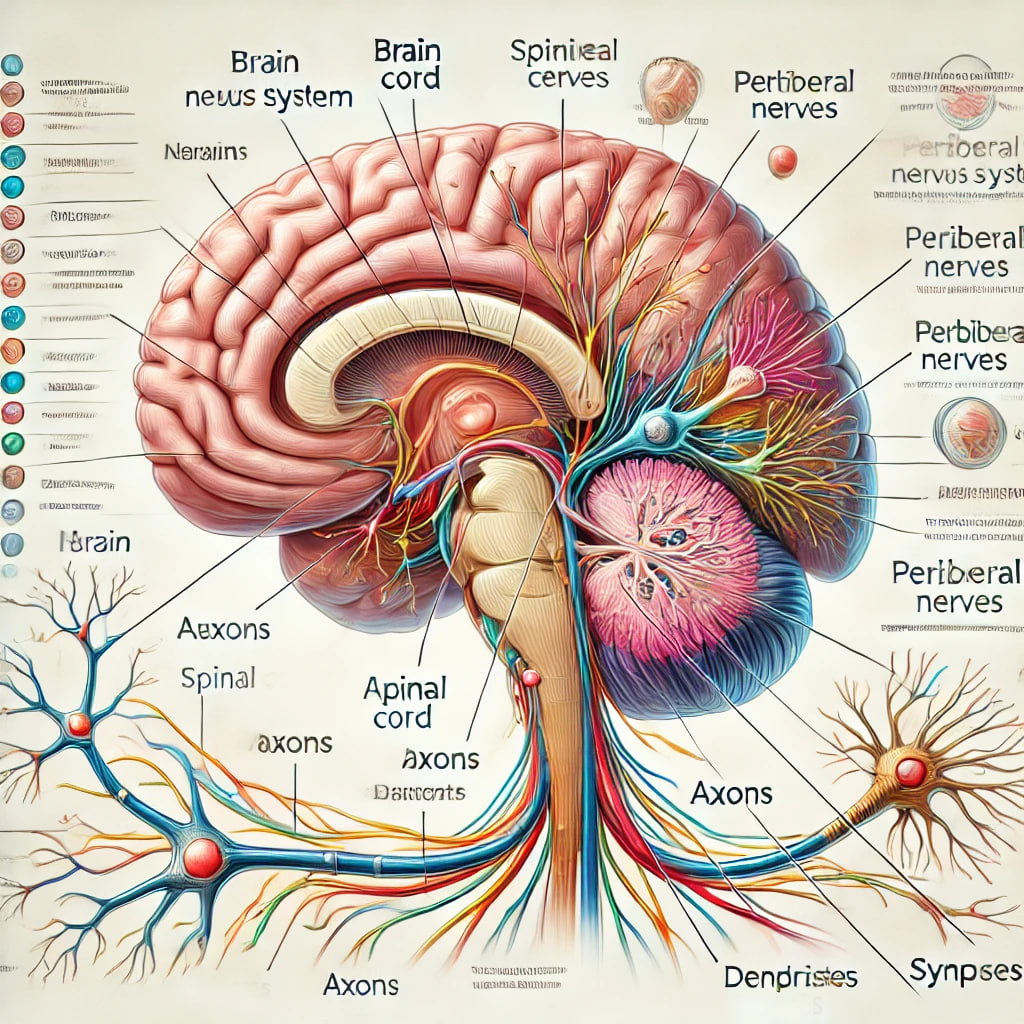
The nervous system is one of the most vital systems in the <br />human body, functioning as the central communication <br />and information-processing network. It regulates essential <br />life processes, coordinates responses to internal and <br />external changes, and ensures the body's overall <br />functionality. This report explores its structure, types of <br />cells, divisions, and critical roles.<br /><br /><br /><br /><br /><br /><br /><br /><br /><br /><br /><br />1. Overview of the Nervous System<br />The nervous system acts as the body’s communication system, processing information and sending signals to regulate various functions. It consists of over 100 billion cells distributed across the brain, spinal cord, and nerves.<br /><br />2. Structure of Neurons<br />Cell Body (Soma): Contains the nucleus and is responsible for energy supply and nutrition.<br />(Axon): Transmits information to neighboring cells at high speed, with two types: myelinated and unmyelinated.<br />(Dendrites): Receive information from other neurons through synapses.<br />(Terminal Buttons): Send signals to neighboring neurons via synapses.<br /><br />3. Types of Nerve Cells<br />1. (Receptors): Receive sensory information and send it to the central nervous system.<br />2. (Effectors): Transmit motor commands from the central nervous system to muscles and glands.<br />3.(Control Cells): Act as intermediaries between receptors and effectors.<br />4. Divisions of the Nervous System<br />Peripheral Nervous System (PNS): Includes nerves spread throughout the body, connecting the central nervous system to various organs.<br />Central Nervous System (CNS): Composed of the brain and spinal cord, responsible for processing and coordinating information.<br /><br />5. The Brain<br />The brain is divided into three main parts:<br />(Forebrain): Includes the cerebral cortex, thalamus,<br />Hypothalamus, and (limbic system). It is responsible for <br />cognitive processes, sensory integration, and hormonal <br />regulation. (Midbrain): Controls visual and auditory <br />attention, coordination, and balance. (Hindbrain): Includes <br />the medulla, pons, and cerebellum, which regulate vital <br />functions like breathing, heart rate, and muscle <br />coordination.<br /><br /><br /><br />6. Structural Characteristics of the CNS<br />Protected by the skull and spine.<br />Surrounded by three protective membranes and <br />cerebrospinal fluid, which cushion and nourish the brain and spinal cord.<br />7. Brain Development<br />The brain develops rapidly during fetal stages and continues to grow in complexity throughout life. By adolescence, it reaches its full developmental capacity, becoming highly specialized and complex.<br /><br />Conclusion<br />The nervous system is a cornerstone of human physiology, enabling survival and interaction with the environment. Its intricate design highlights its importance in regulating and sustaining life processes.<br />