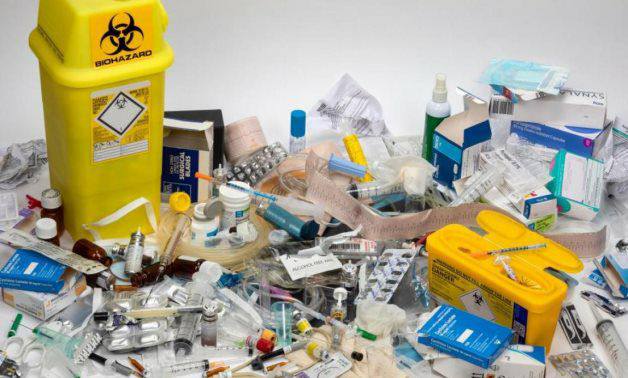
A scientific article for the teacher (Eng. Samaher Saad Hadi) entitled "Recycling Medical Waste".
22/01/2025 Share :
Recycling medical waste for sustainable development is a vital process that aims to:<br /><br />Main objectives<br />1. Reduce medical waste.<br />2. Improve waste management.<br />3. Promote environmental sustainability.<br />4. Reduce costs.<br />5. Improve overall health.<br /><br />Types of recyclable medical waste<br />1. Plastic waste (canals, syringes, packages).<br />2. Waste paper (documents, stamps, cans).<br />3. Metal waste (surgical instruments, equipment).<br />4. Organic residues (tissues, blood).<br />5. E-waste (medical devices, equipment).<br /><br />Recycling methods<br />1. Fermentation: conversion of organic waste into methane gas.<br />2. Pyrolysis: conversion of waste into solid or liquid fuel.<br />3. Hydrolysis: Extraction of valuable materials from waste.<br />4. Mechanical recycling: Converting waste into reusable materials.<br />5. Biotechnology: production of organic matter from waste.<br /><br />Benefits<br />1. Reduce waste.<br />2. Improve the environment.<br />3. Reduce costs.<br />4. Increase productivity.<br />5. Promote public health.<br />6. Achieve sustainability.<br />7. Create job opportunities.<br />8. Reduce greenhouse gas emissions.<br /><br />Challenges<br />1. Advanced technology.