The Impact of Medical Physics on Sustainability Prepared by: Assistant Lecturer Maryam Mohammed Kareem
26/01/2025 Share :
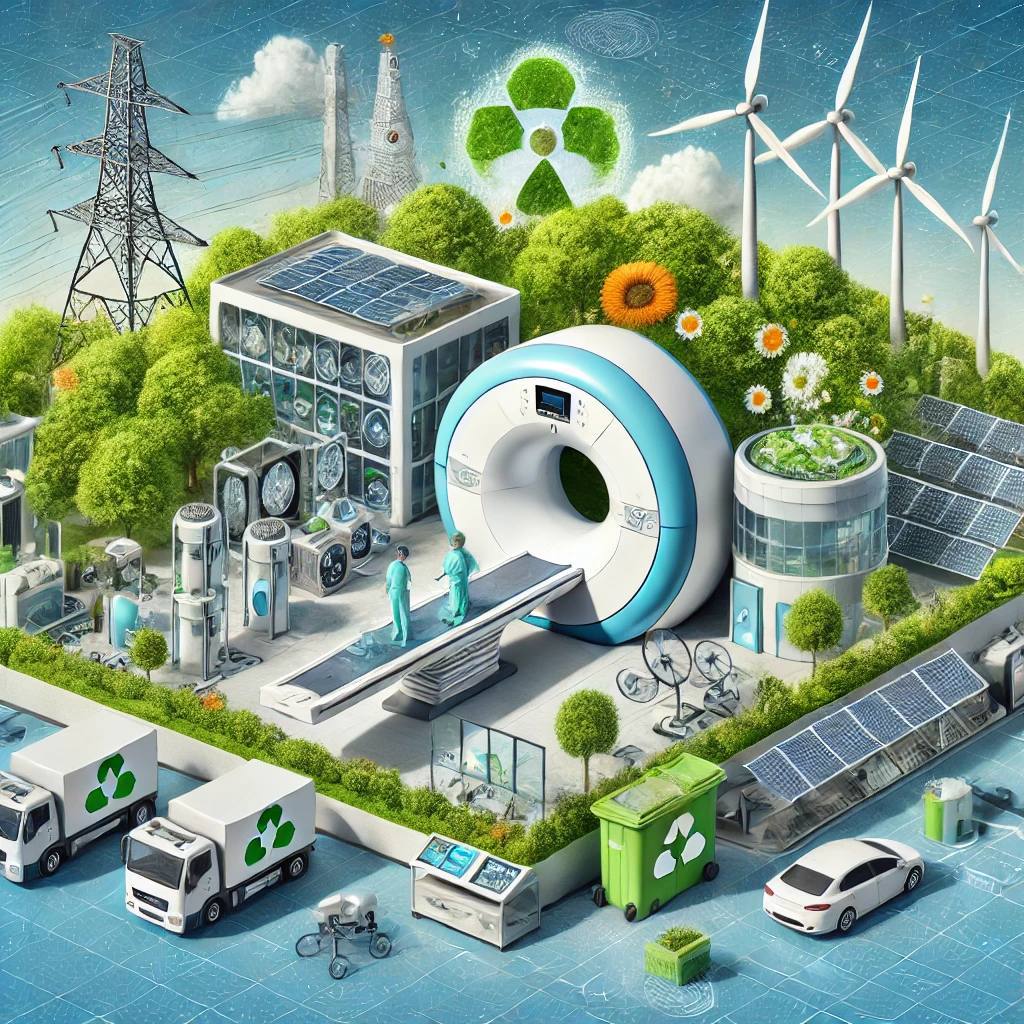
Medical physics is a scientific discipline concerned with the application of the principles of physics in the medical field to diagnose and treat diseases and improve health care. With the escalation of environmental and economic challenges in the modern era, medical physics has become an important role in promoting sustainability on several levels, ranging from improving the efficiency of the use of health resources to developing sustainable and environmentally friendly medical technologies.<br /><br />The Role of Medical Physics in Promoting Sustainability<br />1. Less Energy-Intensive Medical Imaging Technologies<br />Medical imaging technologies, such as X-rays, magnetic resonance imaging (MRI), and computed tomography (CT), are fundamental pillars of modern medicine. Medical physicists are working to develop more efficient imaging devices that consume less energy and use recyclable materials, thus reducing the environmental footprint of these technologies.<br />2. Reducing Medical Waste<br />Some medical procedures require the use of radioactive materials and precision devices, which can pose a risk to the environment if not managed properly. Medical physicists contribute to the design of safe processes for managing and recycling radioactive waste, thus reducing the environmental impact.<br />3. Developing innovative and sustainable treatments<br />Medical physics contributes to the development of precise therapeutic techniques such as radiotherapy and proton therapy, which target tumors with extreme precision. This reduces the need for intensive treatments, which reduces the consumption of medical resources and enhances the efficiency of treatment.<br />4. Promoting sustainability in education and training<br />Medical physicists work to develop virtual simulation models used in training and education, which reduces the need to use actual medical devices or consumables during training. These models contribute to reducing costs and reducing resource consumption.<br />5. Using clean energy<br />Some medical physics technologies, such as particle accelerators, rely on large amounts of energy. Through research and development, the energy efficiency of these devices can be improved and greater reliance on renewable energy sources can be achieved.<br /><br />Challenges and opportunities<br /><br />Despite the great potential of medical physics in promoting sustainability, there are challenges facing its sustainable applications, such as the high cost of developing new technologies and the need for global cooperation between governments and research institutions. However, innovations in this field provide tremendous opportunities to improve the quality of life and reduce the environmental impact of the healthcare sector.<br /><br />Abstract<br /><br />Medical physics shows a distinct potential to support sustainability by improving the efficiency of medical technologies, reducing waste, and promoting innovations in treatment and diagnosis. As progress in this field continues, medical physics could be a critical factor in achieving the Sustainable Development Goals in the long term.