"A Scientific Article by Dr. Karrar Majid Obeid title (Advanced Technology for Environmental Protection: A Future Vision)
29/01/2025 Share :
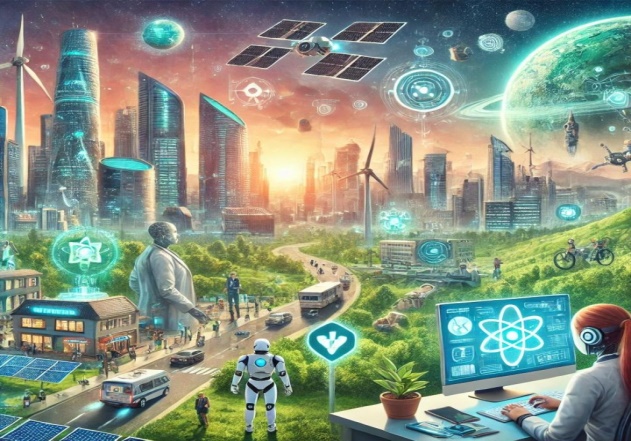
Advanced Technology for Environmental Protection: A Future Vision<br />Advanced technology serves as a key tool in addressing environmental challenges, contributing to reducing pollution and achieving resource sustainability. With continuous scientific progress, it has become possible to innovate advanced technologies that minimize the negative impacts of human activity on the environment and preserve ecological balance.<br />First: The Concept of Green Technology<br />Green technology refers to technological innovations aimed at reducing pollution, minimizing the depletion of natural resources, and enhancing energy and water efficiency. These technologies focus on mitigating negative environmental impacts through sustainable solutions.<br />Second: Examples of Advanced Technologies for Environmental Preservation<br />1. Renewable Energy and Storage Technologies<br />o Solar Energy:<br />Advanced solar panels equipped with high-efficiency photovoltaic cells are used to convert sunlight into electricity.<br />o Wind Energy:<br />Relies on large wind turbines that efficiently produce electricity.<br />o Energy Storage:<br />Development of high-capacity, longer-lasting batteries for storing renewable energy, such as lithium-ion and solid-state batteries.<br />2. Waste Management Technologies<br />o Smart Recycling:<br />AI-powered technologies effectively separate recyclable materials from other waste.<br />o Organic Waste Disposal:<br />Innovations that convert organic waste into natural fertilizers or biofuels through biological decomposition.<br />3. Improving Air Quality<br />o Air Filters:<br />Advanced air purifiers utilizing nanotechnology filters to absorb fine particles and pollutants.<br />o Carbon Capture Technologies:<br />Devices that capture CO2 from the atmosphere and either store it underground or reuse it in industries.<br />4. Smart and Sustainable Agriculture<br />o Vertical Farming Systems:<br />Rely on artificial lighting and recycled water to grow crops in compact spaces.<br />o Smart Irrigation:<br />IoT-based sensors determine the optimal water levels for irrigation, reducing water waste.<br />5. Sustainable Transportation<br />o Electric Vehicles (EVs):<br />Vehicles powered by electricity instead of fossil fuels, reducing harmful gas emissions.<br />o Electric Public Transit:<br />Development of electric trains and buses powered by clean energy sources.<br />6. Artificial Intelligence and Data Analysis<br />o Pollution Monitoring:<br />AI is used to analyze environmental data, such as air and water pollution levels, and predict environmental disasters.<br />o Resource Management:<br />Technologies that utilize data analysis to determine the most efficient use of resources.<br />Third: The Role of Advanced Technology in Environmental Sustainability<br />• Reducing Carbon Emissions:<br />Technology helps lower greenhouse gas emissions through clean energy sources and carbon capture techniques.<br />• Preserving Biodiversity:<br />Modern technologies are used to monitor and protect endangered species and rehabilitate damaged ecosystems.<br />• Enhancing Resource Efficiency:<br />Improving the consumption of energy, water, and raw materials, thus minimizing environmental waste.<br />Fourth: Challenges in Implementing Green Technology<br />1. High Costs:<br />Advanced technologies are often expensive, limiting their adoption in developing countries.<br />2. Lack of Environmental Awareness:<br />Insufficient awareness about the importance of these technologies may lead to their underutilization.<br />3. Technical Challenges:<br />Some technologies require further enhancements to become more efficient and reliable.<br />