A scientific article by the lecturer (Dr. Duaa Jaafar Diaa) entitled "The Role of Physics in the Development of Modern Medicine"
01/02/2025 Share :
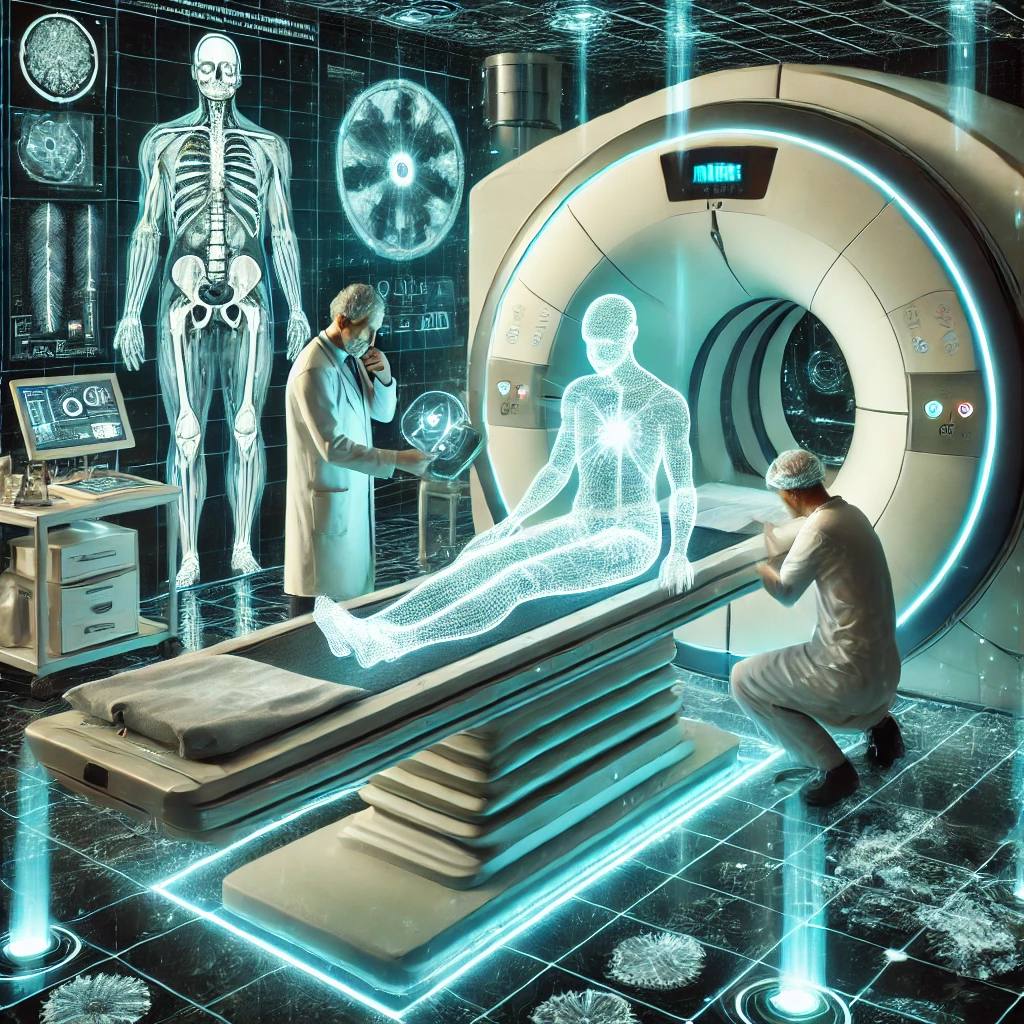
Medicine is one of the oldest and most significant sciences that has captivated human attention since ancient times. However, over the last few centuries, medicine has undergone tremendous advancements, largely due to the application of physical principles and technologies. Physics plays a crucial role in various aspects of medicine, from diagnosis and treatment to the development of medical technologies that provide effective treatments for many diseases. In this article, we will explore how physics influences medicine and examine some vital applications that contribute to improving healthcare.<br />1. Medical Diagnosis Using Physical Technologies<br />Medical examination and accurate diagnosis often require advanced techniques that help identify hidden health problems within the body. Below are some important physical applications in this area:<br />1.1 X-ray Imaging:<br />X-rays are one of the most well-known diagnostic techniques in medicine. This technique relies on high-energy radiation that passes through the body and is captured by a detector to create images showing bone fractures or internal organ conditions. The understanding of the properties of X-rays and methods of controlling radiation energy has made this technique safe and effective for diagnosis.<br />1.2 Magnetic Resonance Imaging (MRI):<br />MRI is based on electromagnetic and magnetic physics principles. It uses a strong magnetic field to realign hydrogen atoms in the body, and then radio waves are transmitted to generate detailed images of organs and tissues. The ability to obtain high-resolution images of soft tissues has made MRI essential in diagnosing neurological, muscular diseases and tumors.<br />1.3 Computed Tomography (CT Scan):<br />CT is a medical imaging technique that utilizes X-rays but provides detailed three-dimensional images of the body, allowing doctors to obtain more accurate views. This technique processes X-ray data from multiple angles to produce detailed images of internal organs, providing a clearer diagnosis.<br />1.4 Nuclear Medicine:<br />Nuclear medicine uses radioactive isotopes to diagnose diseases and evaluate organ function. In these procedures, a radioactive tracer is injected into the patient, which is then tracked inside the body using specialized cameras. This provides detailed images of the function of tissues and organs.<br />2. Physical Therapy: From Radiation Therapy to Laser Treatment<br />Physics-based technologies do not only play a role in diagnosis but are also pivotal in the treatment of various diseases. Below are some notable physical applications in the field of medical treatment:<br />2.1 Radiation Therapy:<br />Radiation therapy uses high-energy X-rays or cosmic rays to treat cancerous tumors. The radiation is directed precisely at the affected area to destroy cancer cells while minimizing damage to surrounding healthy tissues. The physical understanding of how radiation interacts with cancer cells, along with advancements in dose control techniques, has improved the effectiveness of this treatment.<br />2.2 Laser in Medicine:<br />Lasers are among the most advanced physical applications in medicine. They work by generating intense light of high energy, which can be precisely directed to treat various medical conditions. Laser technology is widely used in eye surgeries (such as corrective eye surgeries), tumor treatment, and many other medical procedures. Control over the wavelength and intensity of the light determines the effectiveness of the treatment.<br />2.3 Ultrasound:<br />Ultrasound utilizes sound waves to produce images of internal organs and tissues. It is widely used to detect conditions such as tumors, stones, or abnormal growths. The technology is based on the reflection of sound waves from different tissues, providing real-time, non-invasive imaging, making it a safe and reliable diagnostic tool.<br />3. Particle Physics and Personalized Medicine<br />Particle physics is increasingly contributing to medical treatments through cutting-edge techniques aimed at tailoring treatments for individual patients based on their genetic makeup. Here are some applications:<br />3.1 Gene Therapy:<br />Gene therapy involves modifying a patient’s DNA to treat genetic disorders. Physical techniques such as nanotechnology are used to deliver the therapeutic genes into the targeted cells. Understanding the physics behind particles and energy at the nanoscale is vital to the advancement of gene therapy.<br />3.2 Medical Nanotechnology:<br />Nanotechnology represents a fusion of physics and biology at the microscopic scale. In medicine, nanotechnology involves the creation of particles so small that they can target diseased cells with high precision. This technique allows for more effective drug delivery, particularly in treating cancer by targeting tumor cells directly.<br />4. Physics and Molecular Biology<br />Physics also plays a significant role in understanding biological processes at the molecular level. Researchers use physical techniques such as spectroscopy and X-ray crystallography to study the three-dimensional structure of proteins and DNA. This understanding is crucial for improving disease diagnosis and developing new drugs.<br />5. Conclusion<br />The relationship between medicine and physics is a vital and complementary one in the advancement of healthcare. Thanks to advanced physical applications, it has become possible to diagnose diseases more accurately, develop more effective treatments, and provide personalized care to patients. These applications are opening new horizons in the biomedical field, which increasingly intersects with advanced technological and scientific fields.