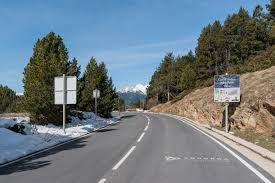
Roads: Lifelines and Key to Sustainable Development
05/02/2025 Share :
Lec Haneen Fadhil<br />Roads are the vessels that connect people to each other, and are one of the basic infrastructures that contribute to facilitating movement and the flow of economic and social activities. From ancient times to the modern era, roads have played a pivotal role in human development, as they were and still are the lifeline that supports the movement of trade, transportation, and tourism, and enhances communication between different communities. In this article, we will review the importance of roads of different types, their benefits, and their impact on sustainable development.<br /><br />First: Definition of roads and the importance of their design<br />A road is any paved or unpaved passage used for transportation or movement between two points. Roads can be land roads, waterways, or even airways, but in our context, we will focus on land roads, which are the most common in transporting people and goods.<br /><br />The importance of roads lies in their role as a basic element in organizing traffic, whether for individuals or goods, and they are a fundamental pillar for achieving economic and social development. By connecting cities and villages, roads contribute to facilitating trade and transportation and providing various job opportunities in various fields such as road construction, transportation, and maintenance.<br /><br />Second: Types of Roads<br />Roads vary greatly according to their purpose, use, and construction method. Roads can be classified according to several criteria, such as:<br /><br />Highways (expressways or main roads): These are roads with a special character that are mostly used for rapid movement between cities or across countries. They are characterized by dual directions, often containing more than one lane in each direction, and are subject to strict control in terms of maximum speeds and traffic regulation. For example, the "Desert Road" highway in the Emirates connects Dubai and Abu Dhabi and is one of the most prominent highways in the Arabian Gulf.<br /><br />Regional and local roads: These roads are used to travel between villages and small cities. Sometimes, they may be less developed than highways, as unpaved or semi-paved roads are used, but they remain vital in providing access to local communities.<br /><br />Mountainous or rugged roads: These roads are found in areas characterized by mountainous or difficult terrain, and require advanced engineering techniques to design them. These roads may be more dangerous and difficult to drive, but they are necessary to connect remote areas.<br /><br />Agricultural roads: These are roads that are mainly used to connect agricultural lands to commercial centers or points of sale of crops. These roads are often less congested and are used in rural areas.<br /><br />Ring roads and entrances: These roads are designed around major cities or vital places to ease traffic within the city. These roads help facilitate access to city centers without having to cross residential areas.<br /><br />Third: Benefits of roads<br />Roads play a vital role in daily life, and their most prominent benefits are:<br /><br />Stimulating economic development: Roads are one of the basic factors that contribute to improving trade and the economy, as they facilitate the movement of goods and products between cities and regions. By facilitating mobility, the ability to access markets increases and the scope of trade expands, which helps stimulate various economic sectors.<br /><br />Communication between communities: Roads contribute to enhancing communication between individuals and different communities. In rural countries, roads contribute to connecting villages to the capital and major cities, which contributes to providing basic services such as education and health care.<br /><br />Increased job opportunities: The road sector is one of the largest sectors that create job opportunities. From road construction and maintenance to transportation services, all of these functions contribute to improving the standard of living in local communities.<br /><br />Improving the quality of life: By facilitating access to places people need such as schools, hospitals, and shops, roads contribute to improving the quality of life. In addition, roads contribute to facilitating access to places of entertainment, recreation, and tourism.<br /><br />Reducing accidents and congestion: When roads are well designed, they contribute to reducing accidents and easing congestion, especially in large cities. Modern roads equipped with traffic signals and a traffic control system can help regulate the movement of cars and pedestrians alike.<br /><br />Fourth: Challenges of road construction and maintenance<br />Despite the importance and benefits of roads, there are several challenges that may face the construction and maintenance process:<br /><br />Financing: Financing road projects is one of the biggest challenges facing countries, especially in developing countries that lack sufficient financial resources. The cost of building and maintaining roads also requires huge budgets.<br /><br />Environmental problems: Road construction can destroy natural environments and cause the loss of agricultural land or harm wildlife. In some cases, roads may destroy the natural habitats of some species or increase pollution.<br /><br />Difficult terrain: In some mountainous or rugged areas, road construction requires very complex engineering techniques, which increases the cost and time required to build roads.<br /><br />Traffic congestion: In large cities or densely populated areas, roads may be insufficient to accommodate the large increase in the number of vehicles. Therefore, the problem of traffic congestion becomes an ongoing challenge that requires innovative solutions.<br /><br />Continuous maintenance: Roads require regular maintenance to ensure their continued effectiveness. Operations such as leveling surfaces, repairing potholes, and installing new traffic signals are part of the necessary work to ensure the safety and quality of roads.<br /><br />Conclusion<br />Roads are the backbone of any country’s infrastructure, and they are more than just corridors for transportation; they are vital arteries for trade, culture, and economic development. By improving the design and development of roads, any country can achieve tangible progress in various fields, and benefit from the connections that these networks provide in facilitating movement and knowledge exchange. With modern-day challenges, such as expansion<br />#الجامعة_الأولى_في_العراق