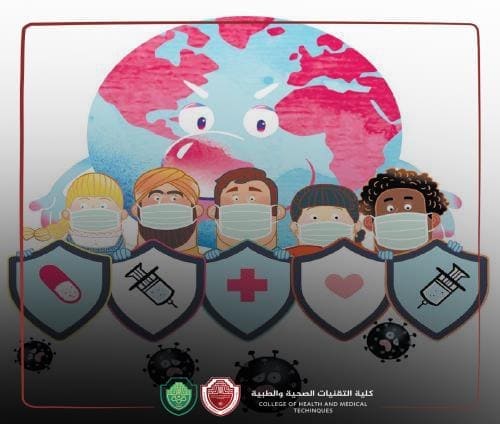
مقاله علمية للسيدة العميدة الاستاذ المساعد الدكتور زهراء حليم القيم بعنوان " Health security "
09/02/2025 Share :
Health security is defined as the activities required, both proactive and reactive, to minimize the danger and impact of acute public health events that endanger people’s health across geographical regions and international boundaries.<br /><br />Population growth, rapid urbanization, environmental degradation, and the misuse of antimicrobials are disrupting the equilibrium of the microbial world.. Billions of passengers travel on airplanes each year, increasing the opportunities for the rapid international spread of infectious agents and their vectors.<br /><br />The type dangerous Dependence on 1- chemicals has increased, as has awareness of the potential hazards for health and the environment,<br /><br /> 3- climate change and air pollution. <br />4- globalization of food production increases, so does the risk of tainted ingredients and risk of foodborne diseases. <br />5- population becomes more mobile and increases its economic interdependence, these global health threat increase and traditional defences at national borders cannot protect against the invasion of a disease or vector.<br /><br /> So the Health security refers to the measures and strategies put in place to protect populations from health threats, including infectious diseases, bioterrorism, pandemics, and environmental hazards. It ensures the resilience of healthcare systems and the ability to prevent, detect, and respond to public health crises.<br /><br />What the Components of Health Security<br /> 1. Disease Surveillance & Early Detection<br /> • Monitoring for outbreaks (e.g., COVID-19, Ebola, influenza).<br /> • Using AI and data analytics to predict and track disease spread.<br /> • Strengthening global reporting systems like the WHO’s International Health Regulations (IHR).<br /> 2. Pandemic Preparedness & Response<br /> • Stockpiling vaccines, medicines, and personal protective equipment (PPE).<br /> • Establishing emergency response teams and health protocols.<br /> • Coordinating international efforts to contain outbreaks.<br /> 3. Biological Threats & Bioterrorism Prevention<br /> • Safeguarding laboratories handling dangerous pathogens.<br /> • Preventing the misuse of genetic engineering (e.g., CRISPR) for harmful purposes.<br /> • Strengthening biosecurity laws and policies.<br /> 4. Healthcare System Resilience<br /> • Ensuring hospitals and clinics can handle surges in patients.<br /> • Training healthcare workers for crisis situations.<br /> • Securing medical supply chains to prevent shortages.<br /> 5. Vaccine Development & Immunization Programs<br /> • Accelerating vaccine research and distribution.<br /> • Combating misinformation to ensure high vaccination rates.<br /> • Promoting equitable access to vaccines, especially in low-income countries.<br /> 6. Environmental & Global Health Factors<br /> • Addressing climate change’s impact on health (e.g., air pollution, heatwaves).<br /> • Managing antimicrobial resistance (AMR) to prevent superbugs.<br /> • Ensuring clean water and sanitation access.<br /><br />What the Challenges in Health Security<br /> • Funding gaps in public health infrastructure.<br /> • Misinformation and vaccine hesitancy slowing pandemic response.<br /> • Emerging threats like new viruses, antibiotic resistance, and climate-related diseases.<br /> • Global coordination difficulties between nations and organizations.<br />جامعة المستقبل الجامعة الاولى في العراق