A scientific article by the lecturer M.D. Hussein Mahdi Abdul titled "Swine Influenza".
11/02/2025 Share :
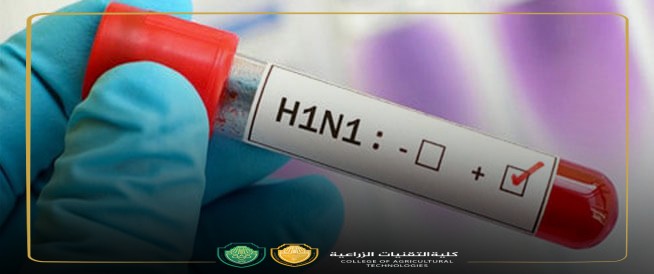
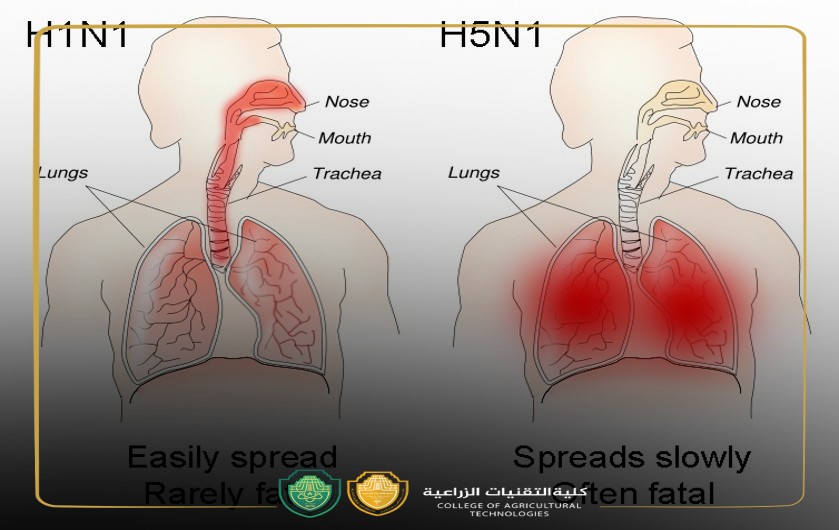
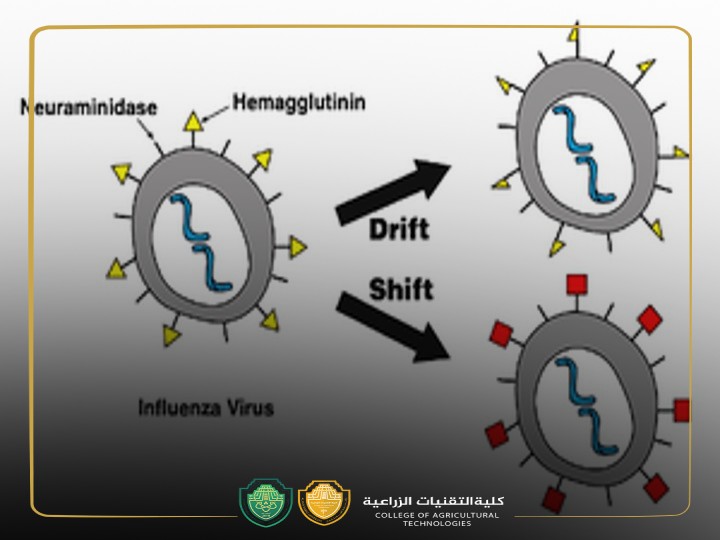
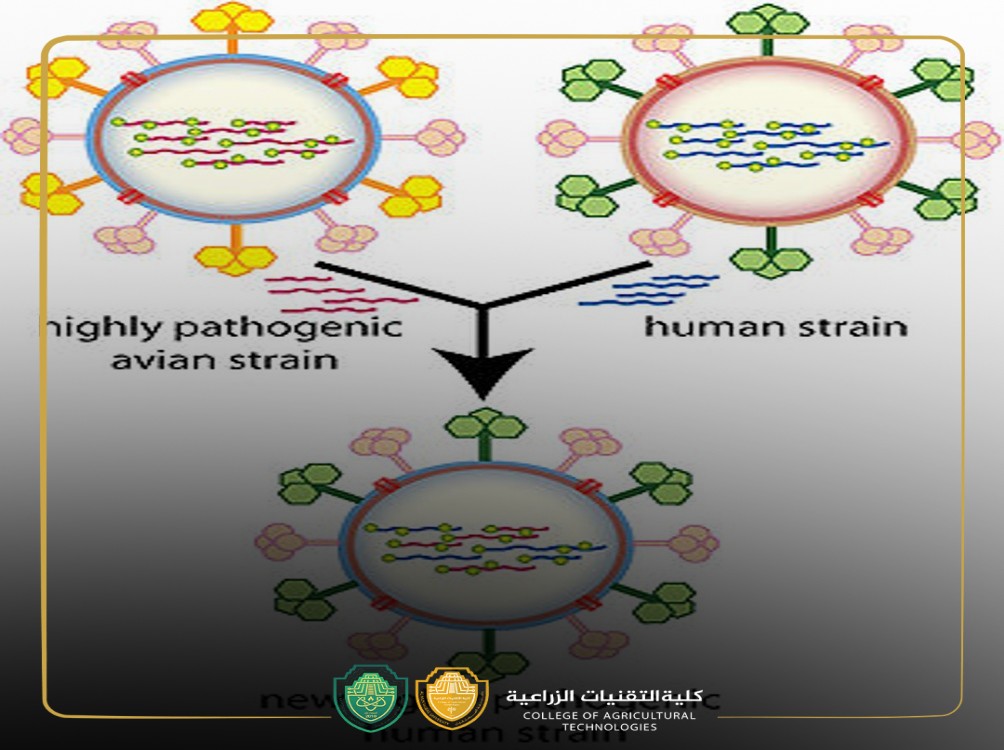
Swine Influenza<br />The new outbreak in Human, Why now? :<br />1. Is it a type of God punishment?<br />2. Is it developed because of Environmental pollution.<br />3. Is it a Natural genetic mutation.<br />4. Is it cloned in a biological weapon lab.<br />The Virus Characteristics<br />1. The virus is Influenza Virus A, H1N1.<br />2. The virus caused Spanish Flu in 1918 and killed 40 to 100 millions individuals.<br />3. The virus kills directly by massive hemorrhages and edema in lungs.<br /> And indirectly by secondary infections. <br />4. Its genetic structure is RNA consists of 8 segments.<br />5. Its genes code for 11 proteins of which 3 important surface proteins, namely Neuroaminidase, Hemagglutinins, and M2 ion channel proteins.<br />6. HA and N proteins are recognized by host antibodies and the viral serotyping depends on them.<br />7. M2 and N proteins are targets of the antiviral drugs.<br />8. Hemagglutinins mediates binding of the virus to the target cells <br />9. Neuroaminidaseis an enzyme involved in the release of the virus from infected cells <br />10. Swine flu is not an accident from a lab. WHO says.<br />11. In 2005 H1N1 genome was published in the journal Scienc Dr. Taubenberger noticed that the change in amino acids of the virus<br /> ( 25-30 out of 4400 )will result in a change of<br /> bird virus into a killer virus spread from <br /> person to person.<br /><br />Risky Groups for Influenza A virus subtype H1N1<br />1. Younger than two years and older than 65 years people.<br />2. People of any age with certain medical conditions, such as chronic heart, lung, kidney, liver, blood, or metabolic diseases.<br />3. Health care workers.<br />4. People working with pigs.<br />5. Young age people! <br />Transmission of the disease<br /> 1. Aerosoles containing the virus from sneezes and coughs.<br /> 2. Direct contact.<br /> a. Touching of contaminated door handles and<br /> phones and then touching your own mouth,<br /> nose, or eyes.<br /> b. Greeting by Kissing!<br /> 3. From mucus, nasal secretions, blood , and stool.<br /> 4. Patients discharge viruses one day before getting the symptoms to approximately 5 days after the symptoms start.<br /> 5. Flu virus remain infectious for about::<br /> a. One week at body temperature.<br /> b. Over 30 days at 0 C.<br /> c. Indefinitely at very low temperatures<br /> 6. The virus is inactivated easily by disinfactants and detergents.<br />Key Elements for Protection<br />1. Use medical masks.<br /> 2.Use hand hygiene.<br /> 3.Dealing with patients:<br /> a. Use medical masks and eye protection (goggles).<br /> b. Use gown and clean gloves.<br />4. Respiratory hygiene:<br /> Health-care workers, family members should cover mouth and nose with tissue when coughing or sneezing.<br />5. Stay home and avoid kissing or contacting people when you have fever with respiratory symptoms.<br />6. Use strict sanitary measurements at home when any one has flu like symptoms. Health-care workers should be vaccinated. Treatment can be taken prophylacticly when there is outbreak .<br />7. Treat any waste as infectious clinical waste.<br />8. Family members and visitors should limited.<br />Immunity to the Virus<br /> There are two types of Immune<br /> Responses:<br />1. Natural (unspecific) response.<br />2. Acquired (specific) response.<br /> There are two types of acquired Immune Responses:<br /> a. Primary immune response.<br /> b. Secondary immune response.<br />Viral Infection<br />It is a biological process controlled by<br /> many factor such as:<br /> 1. Virulence of the virus.<br /> 2. The infective dose of the viral particles.<br /> 3. The immunological status of the host.<br /> 4. Previous challenge <br />Genetic Diversity of Influenza A virus<br />New influenza A viruses are constantly being produced by mutations or reassortment:<br />1. Because of absence of Proofreading enzymes, every newly manufactured influenza virus will contain a mutation in the genome.<br />2. Mutations can cause small change in HA or N antigens on the surface of the virus. This is called antigenic drift. <br />3. 2. Influenza virus ca reassort and may acquire new antigens from avian, swine or from other species. This is called antigenic shift. <br />Vaccines and Vaccination<br />The most common vaccines are two types:<br /> 1. Flu killed injectable vaccine.<br /> 2. Live attenuated influenza virus nasal spray vaccine. It is not recommended for under<br /> age 2 or over age 50.<br /> 3. The virus strains chosen by the WHO are:<br /> a. Influenza A H1N1.<br /> b. Influenza A H3N2.<br /> c. Influenza B. <br />Most common influenza vaccines are trivalent contain two influenza A subtypes and one influenza B strain.<br />A vaccine formulated for one year may be ineffective in the following year, since influenza virus evolves rapidly.<br />WHO recommends a vaccine composition that targets the three most representative strains in circulation. <br />Vaccine can protect 70 to 90% of influenza specific illness.<br />Among adults, the vaccine reduces the severe illness and complications by up to 60% and deaths by 80%.<br />It is most effective when there is matching between the vaccine viruses and the circulating virus.<br />Annual reformulation of the vaccine : due to high mutation rate of the virus, the WHO recommend yearly reformulation of the vaccine according to the most circulating strains.<br />Treatment<br /> Since Influenza is caused by virus,antibiotics have no effect on infection, unless prescribed for secondary bacterial infection.<br /> Antiviral medication is sometimes effective, but viruses ca develop resistance to standard antiviral drugs.<br />There are two classes of antiviral drugs:<br />1. Neuroaminidase inhibitors. Oseltamivir (Tamiflu), and Zanamivir.<br />2. M2 inhibitors (adamantanes). Amantidine and rimantidine.<br />Neuroaminidase Inhibitors<br /> Neuroaminidase inhibitors,Tamiflu and<br /> Relenza are effective as following:<br />1. They stop the spread of the virus in the body.<br />2. They are effective against both influenza A and B.<br />3. They reduce the symptoms and complications.<br />4. The viruses have low resistance as compared to other class the M2 inhibitors.<br />M2 Inhibitors (Adamantanes)<br /> M2 inhibitors, amantadine and rimantadine are designed to block a viral ion channel ( M2 protein) and prevent the virus from infecting the cells:<br />1. They are effective mainly against Influenza B, but sometimes against A.<br />2. The virus has great resistance to these drugs reaching to 91% as used in 2005 against H3N2 subtypes.<br />Control Measures<br />1. Annual Influenza vaccination.<br />2. Implementation of standard and droplet precautions.<br />3. Active influenza testing for new illness cases.<br />4. Restriction of ill visitors and personnel from entering the facility.<br />5. Administration of influenza antiviral medication for prophylaxis and treatment when influenza detected in the facility.<br />6. Other respiratory and cough etiquette programs.<br />Most Frequent Questions<br />1. How long do the contaminated materials stay infective?<br />2. Is there any reliable treatment?<br />3. Is there any reliable vaccine?<br />4. Can the infection be transmitted from food materials? <br />5. Can the infection transmitted from human to human?<br />6. Why does the disease appear now?<br />7. Is it possible for the disease to occur in our region?<br />8. Is the virus cloned in a biological weapon lab.?<br />9. How do we disinfect the contaminated materials?<br />