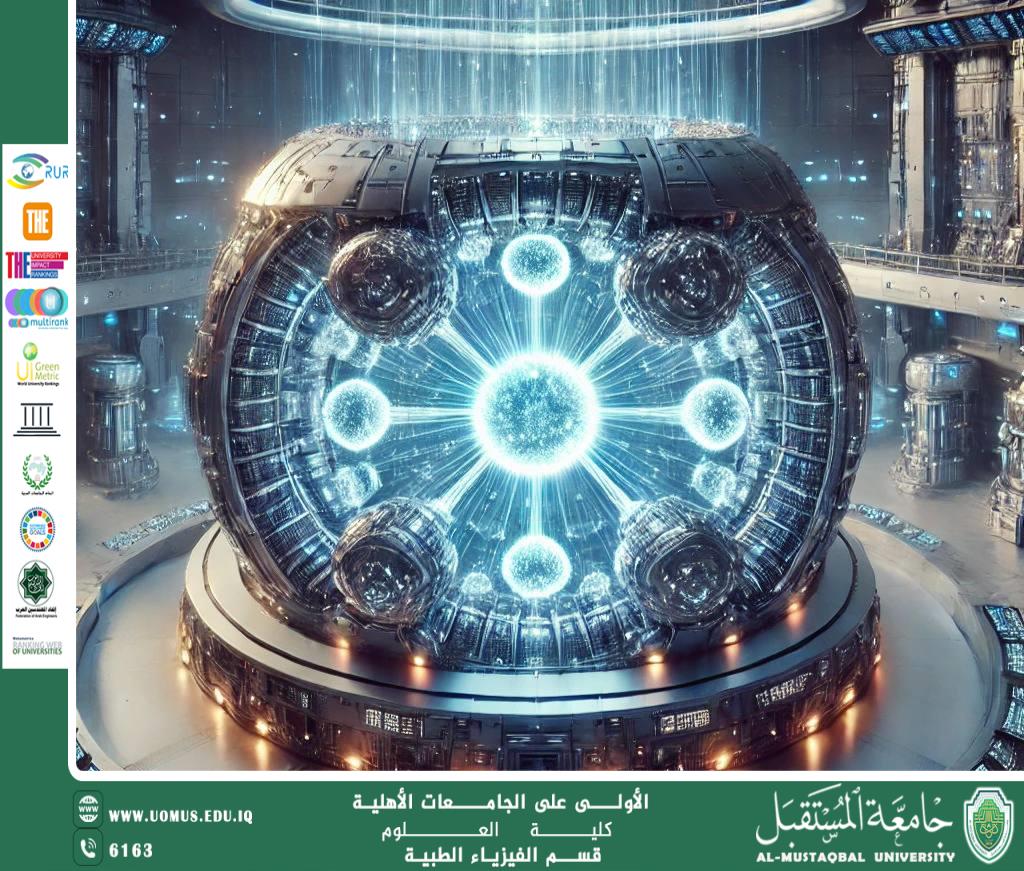
A scientific article by the teaching assistant (Hanin Hani) entitled "Nuclear Fusion: The Energy of the Future."
17/02/2025 Share :
Nuclear fusion is a process in which two light atomic nuclei, such as hydrogen, combine to form a heavier nucleus, releasing enormous amounts of energy. This is the same process that powers the sun, providing it with light and heat.<br /><br />Fusion is considered a promising energy source because it does not produce carbon emissions, generates no hazardous nuclear waste like current nuclear reactors, and has an abundant fuel supply in nature. Additionally, it is very safe, as there is no risk of nuclear explosions—if the necessary conditions are not met, the reaction simply stops.<br /><br />Despite these advantages, achieving sustainable nuclear fusion remains a major scientific challenge. It requires extremely high temperatures—exceeding 100 million degrees Celsius—as well as advanced technologies to maintain plasma stability. Scientists are currently working on developing fusion reactors, such as the ITER project in France, which aims to demonstrate the feasibility of using this technology as a permanent energy source.