Scientific Article by Lecturer Maryam Lateef Shandal "Autism Spectrum Disorder (ASD)"
22/02/2025 Share :
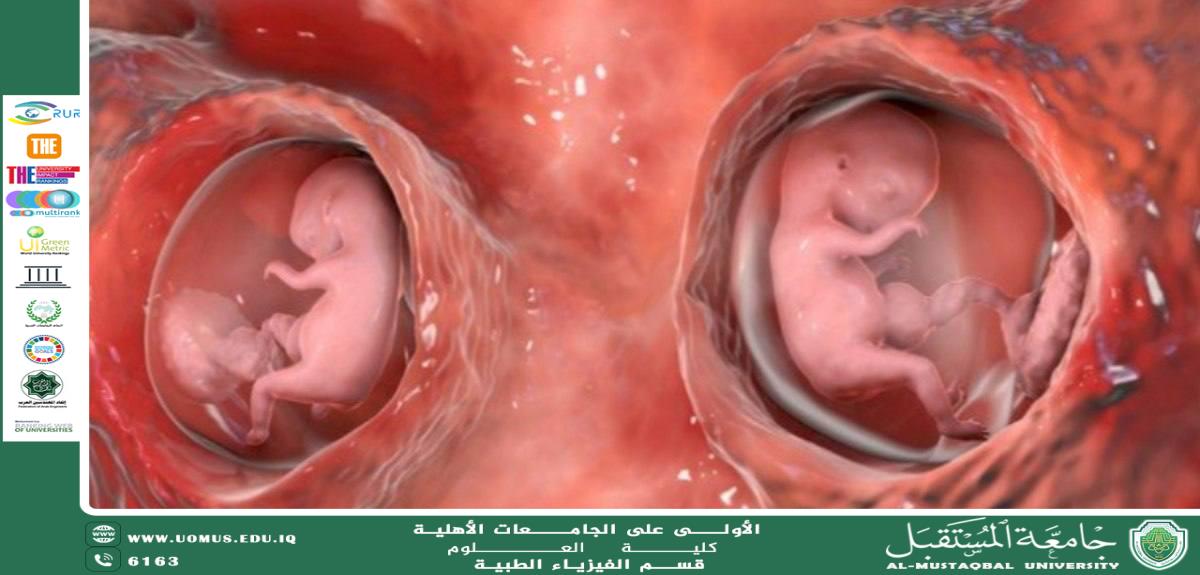
The phenomenon of twins has long fascinated humans as one of nature’s most intriguing occurrences. This phenomenon happens when a mother carries more than one fetus in her womb simultaneously. Twins are classified into two main types: identical (monozygotic) and fraternal (dizygotic) twins. These two types differ in their formation process, genetic makeup, and biological characteristics.<br /><br />🟦 The Biological Process of Pregnancy and Childbirth<br />Pregnancy and childbirth occur through a series of biological events, starting with fertilization and ending with delivery:<br /><br />Ovulation: Every month, a woman’s ovary releases a mature egg in a process called ovulation. The egg travels through the fallopian tube toward the uterus.<br /><br />Fertilization: If intercourse occurs around the time of ovulation, the male’s sperm enters the female body and reaches the fallopian tube. Fertilization happens when a sperm cell merges with the egg, forming a zygote (fertilized egg).<br /><br />Implantation: After fertilization, the zygote moves toward the uterus and begins dividing into multiple cells. About 6-7 days after fertilization, this cell mass, known as a blastocyst, attaches to the uterine wall, initiating the growth of the embryo. This process is called implantation.<br /><br />Embryo Development: Once implantation occurs, the embryo begins to grow and develop within the womb. Over the approximately 40-week pregnancy period, the embryo’s organs and systems form and mature.<br /><br />Birth: After the fetus has fully developed, childbirth occurs. Labor typically begins with uterine contractions and ends with the delivery of the baby, either through the natural birth canal (vaginal delivery) or, in some cases, via cesarean section.<br /><br />🔴 Identical Twins (Monozygotic Twins):<br />🔵 Biological Formation Process:<br /><br />Identical twins occur when a single fertilized egg (zygote) splits into two or more cells, forming separate embryos. The timing of this division affects the type of placenta that develops:<br />Division within the first three days: Results in two embryos, each with its own placenta and amniotic sac (dichorionic-diamniotic twins).<br />Division between days 4 and 8: Results in two embryos sharing one placenta but with separate amniotic sacs (monochorionic-diamniotic twins).<br />Division after day 8: May lead to twins sharing both the same placenta and the same amniotic sac (monochorionic-monoamniotic twins).<br />🔵 Environmental Factors Affecting Identical Twins:<br />Despite sharing identical genetic material, environmental factors can affect each twin differently:<br /><br />Intrauterine Nutrition: Differences in resource distribution within the womb can affect the growth of one twin more than the other, leading to variations in weight and height.<br />Postnatal External Factors: Factors such as diet, physical activity levels, and psychological stress can lead to health and behavioral differences between identical twins.<br />🔴 Fraternal Twins (Dizygotic Twins):<br />🔵 Biological Formation Process:<br /><br />Fraternal twins occur when more than one egg is released during ovulation, and each egg is fertilized by a separate sperm. As a result, each twin has a unique genetic makeup.<br />🔵 Genetic Characteristics:<br /><br />Fraternal twins often differ in many traits, such as height, hair color, eye color, and behavioral characteristics, due to the diverse genes inherited from their parents.<br />🔵 Cultural and Social Influences:<br /><br />Environmental and societal factors affect fraternal twins differently than identical twins. In societies that encourage individuality, fraternal twins may develop highly distinct identities and personalities.<br />🔵 Factors Increasing the Likelihood of Having Twins:<br />Genetics: If either parent has a family history of twins, the likelihood of having twins increases, especially if the mother herself is a fraternal twin or has a family history of fraternal twins.<br /><br />Age: Women between the ages of 30 and 40 have a higher chance of having fraternal twins due to hormonal changes that may lead to the release of more than one egg during ovulation.<br /><br />Height and Weight: Taller and heavier women have a higher chance of having twins, as studies suggest a connection between nutritional status and multiple fertility rates.<br /><br />University of the Future – The First University in Iraq