A scientific article by the teaching assistant, Ala Adel Rasmi, entitled “Bird Flu”
22/02/2025 Share :
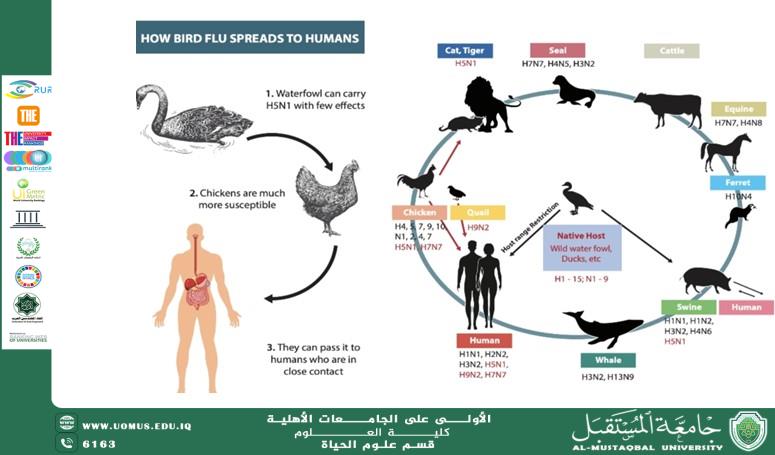
Avian Influenza<br /><br />Avian influenza is a viral disease that infects birds and is characterized by its rapid spread and impact on wild birds and poultry, and poses a major threat to human health in some cases. The virus causes a deterioration in the health of birds and may lead to their rapid death. The virus may be transmitted between birds through the wind or through direct or indirect contact with infected birds or their environments.<br /><br />Species causing the disease:<br />Avian influenza viruses (H5N1, H7N9, H9N2) are the most well-known in terms of health effects on birds and humans. These viruses are transmitted to humans in rare cases, but they pose a major threat to public health due to the ability of the viruses to genetic mutations, which makes it easy to transmit from one person to another in some cases.<br /><br />Methods of transmission:<br />Avian influenza is transmitted mainly through respiratory secretions such as saliva and droppings, and sometimes through contaminated food or contaminated environments. Wild birds may be infected with the virus during their movement between different regions, which contributes to its global spread.<br /><br />Symptoms of bird flu:<br />In infected birds, symptoms include fever, loss of appetite, difficulty breathing, eye inflammation, and swelling of the legs. In humans, symptoms include fever, cough, muscle pain, and difficulty breathing. In severe cases, the disease can lead to life-threatening complications.<br /><br />Diagnosis of the disease:<br />Aviation flu is diagnosed using PCR (polymerase chain reaction) tests to detect the virus in samples of respiratory secretions or from infected birds. Other laboratory tests are also performed to detect the type of virus and analyze its ability to transmit to humans.<br /><br />Prevention and treatment:<br /><br />*Prevention: Preventive measures include controlling the movement of infected birds, disinfecting the places where the birds are located, and sterilizing equipment used in poultry farms. It is also recommended to reduce direct contact between humans and wild birds.<br /><br />*Treatment: In the case of human infection, treatment is done using antiviral drugs such as Oseltamivir (Tamiflu) or Zanamivir (Relenza) if the infection is detected early. It is also stressed that intensive medical care should be provided in severe cases.<br /><br />*Challenges and Future Prospects:<br />The outbreak of avian influenza represents a major health and economic challenge for many countries. Moreover, the rapid transmission of viruses among birds may lead to a global influenza pandemic. This requires scientists to work hard to improve prevention and diagnosis strategies, and develop effective vaccines against multiple viruses.<br /><br />Conclusion:<br />Avian influenza is a rapidly spreading disease that can pose a threat not only to birds but also to humans. Prevention, early diagnosis, and effective treatment are key factors to reduce its effects. International cooperation in disease surveillance and scientific research contributes significantly to protecting humans and animals from this changing virus.<br /><br />Al-Mustaqbal University is the first university in Iraq