Chaos Theory
24/02/2025 Share :
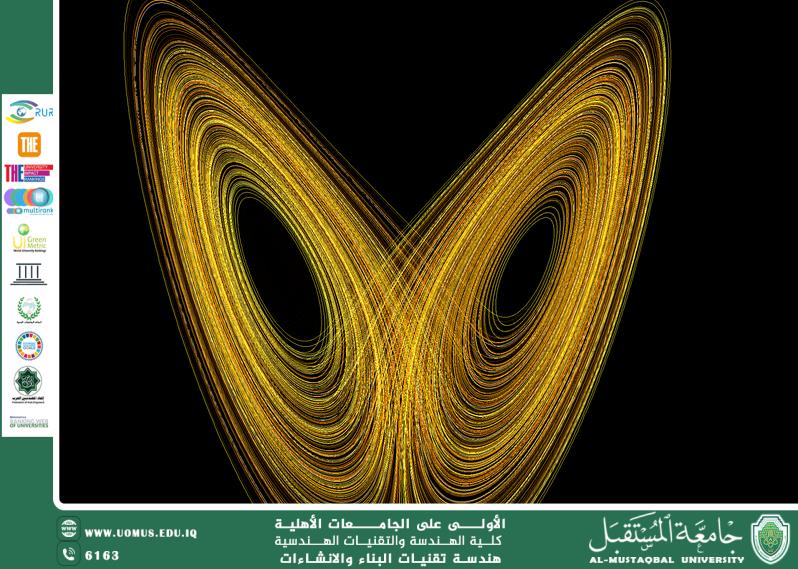
By Dr. Sabah Mohammad<br />**Three Characteristics of Chaos Systems:**<br /><br />1. **Orderliness**: Chaos systems are orderly in ways that might not be immediately obvious to the naked eye, but can be understood through visual perception, the mind's eye, or advanced computer applications. In other words, there is an underlying order governing the universe.<br /><br />2. **Determinism**: These forms are governed by mathematical equations that can be calculated.<br /><br />3. **Sensitivity** (The Butterfly Effect): Even a small change in the initial conditions of any system can lead to enormous, cumulative changes in the system's future behavior.<br /><br />Chaos theory is one of the significant theories that explains the behavior of nonlinear systems (which are usually difficult to understand and predict). A nonlinear system may seem random at first glance, but there is an underlying system behind the apparent randomness. Thus, chaos is a metaphorical term, differing from the literal meaning of the word. This theory represents one of the new selective intellectual propositions where humans mistakenly believe they possess complete freedom and control.<br /><br />Due to positive feedback, minuscule data are amplified into large-scale data, leading to the Butterfly Effect (the flapping of butterfly wings in Singapore can eventually lead to a hurricane in Florida). This theory focuses on explaining the behavior of nonlinear systems.<br /><br />**Nonlinear (Organic) Systems**: These are intricate and branching, much like traditional Arab-Islamic cities, and they generate elements of suspense and surprise.