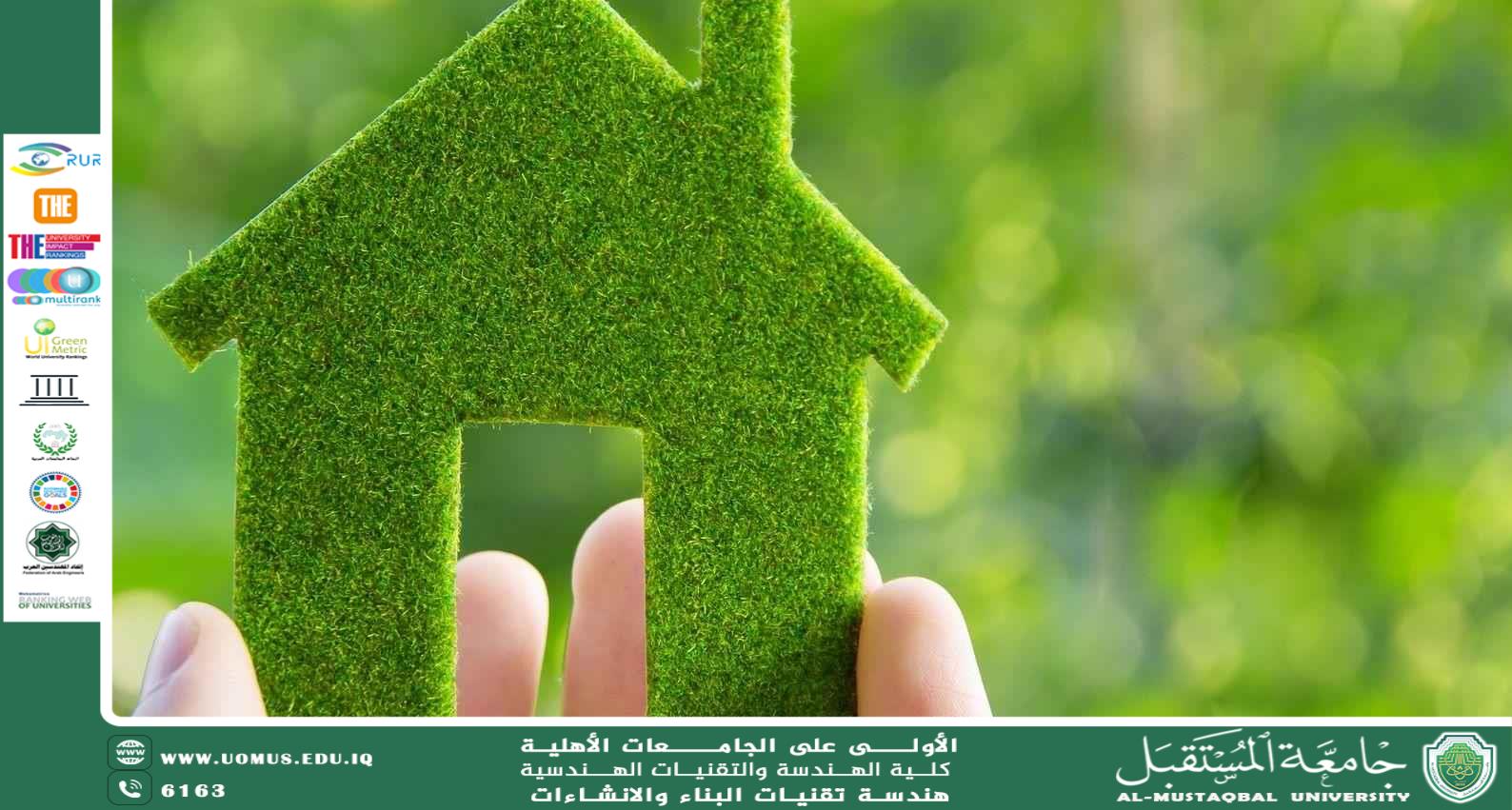
Sustainable Building Materials: Towards a Greener Environment
24/02/2025 Share :
Aِlaa Hussien<br />Introduction<br />Sustainability in construction is a crucial topic in the modern era, especially with the growing awareness of the need to preserve the environment and reduce the negative impacts of human activities. The construction industry has increasingly adopted sustainable materials that contribute to creating greener and more eco-friendly environments. These materials aim to reduce natural resource consumption, minimize waste, and lower greenhouse gas emissions, helping build a more sustainable future.<br /><br />1. Recycled Materials<br />One of the most significant trends in sustainable construction is the use of recycled materials. These materials help reduce waste and serve as a cost-effective and environmentally friendly alternative to new materials. Examples include:<br /><br />Recycled concrete: Used in building foundations and roads.<br />Recycled steel: Utilized in steel structures to reduce the need for raw iron extraction.<br />Reclaimed wood: Used in interior designs and furniture, reducing deforestation.<br />2. Green Concrete<br />Green concrete is an important innovation in sustainable construction. It is manufactured using eco-friendly components such as fly ash from power plants or blast furnace slag. This type of concrete offers:<br /><br />Lower carbon emissions<br />Increased strength and durability compared to traditional concrete<br />Improved thermal and sound insulation for buildings<br />3. Sustainable Thermal Insulation<br />Thermal insulation is essential for energy efficiency in buildings, and using sustainable insulation materials can significantly reduce energy consumption. Key sustainable insulation materials include:<br /><br />Recycled cotton: Used for wall and roof insulation.<br />Natural wool insulation: Such as rock wool or wood wool, providing excellent thermal protection and being eco-friendly.<br />Insulated glass: Helps reduce heat transfer inside buildings, minimizing the need for air conditioning and heating.<br />4. Natural Building Materials<br />Using natural materials is a fundamental principle of sustainable construction, offering significant environmental benefits. Some key natural building materials include:<br /><br />Clay bricks: A natural and cost-effective building material.<br />Wood: One of the most renewable and environmentally friendly materials, used in structures and furniture.<br />Straw and grass: Used as eco-friendly insulation materials, contributing to comfortable and sustainable indoor environments.<br />5. Solar Energy and Smart Materials<br />Smart materials that interact with the surrounding environment are part of modern sustainable construction trends. These include:<br /><br />Smart glass: Adjusts light and heat levels automatically, reducing energy consumption.<br />Integrated solar panels in roofs: Allow the use of solar energy to generate electricity, reducing dependence on traditional energy sources.<br />Impact of Sustainable Materials on the Environment<br />The environmental benefits of using sustainable building materials include:<br /><br />Reducing carbon emissions: By minimizing the need for raw material extraction and using eco-friendly technologies.<br />Decreasing natural resource consumption: Through the use of recycled and renewable materials.<br />Enhancing energy efficiency: By incorporating effective insulation and materials that lower energy demands in buildings.<br />Conclusion<br />The adoption of sustainable materials in construction not only improves the efficiency of buildings in terms of energy and cost but also plays a vital role in preserving the environment. By embracing these materials, construction can become greener and more sustainable, paving the way for a better future for future generations.<br /><br />Al-Mustaqbal , The First University in Iraq