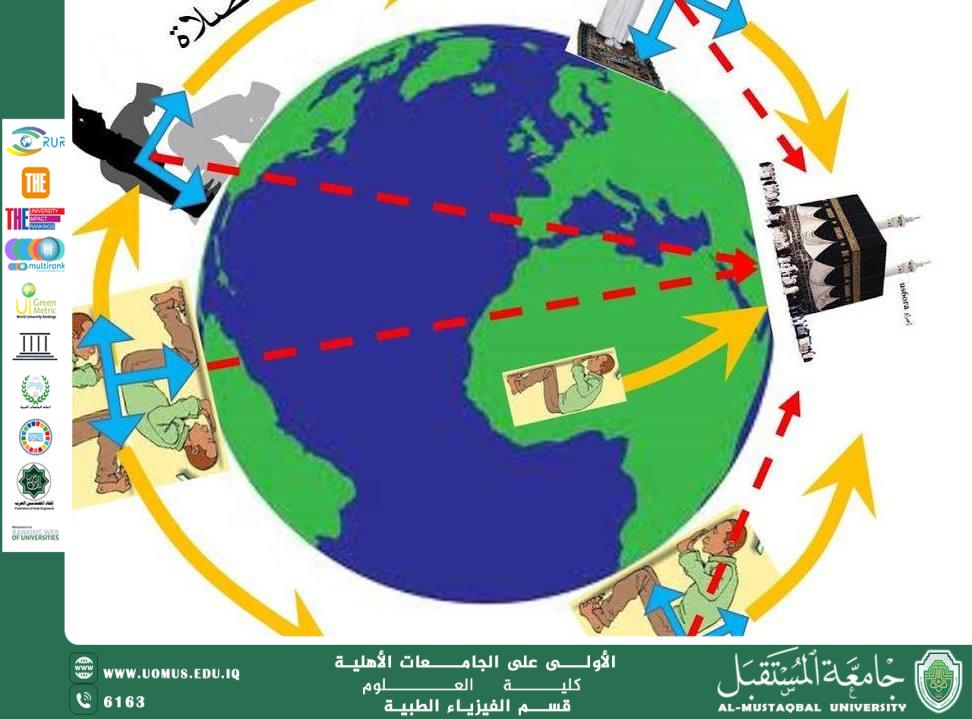
The Scientific Article by Assistant Lecturer (Afrah Hussein Jihad) Entitled “What is the Effect of the Qibla Direction on the Body?”
25/02/2025 Share :
The Qibla direction holds great religious and spiritual significance for Muslims, as they are required to face the Kaaba in Mecca during their daily prayers. While this practice is primarily a matter of faith, researchers have explored its potential impact on the body and mind from a scientific and health perspective.<br /><br />Physical Effects<br /><br /> 1. Body Movement Regulation:<br /> • Facing the Qibla during prayer involves a sequence of movements, including standing, bowing, and prostration. These movements enhance blood circulation, improve joint flexibility, and strengthen muscles.<br /> • Some studies in bioenergy sciences suggest that aligning the body with specific geographic directions may contribute to balanced energy distribution within the body.<br /> 2. Physical Balance:<br /> • Prayer requires maintaining stability in postures such as standing and prostration. This consistent orientation towards the Qibla helps improve physical balance, making prayer a form of light exercise practiced regularly.<br /><br />Psychological Effects<br /><br /> 1. Spiritual Connection and Tranquility:<br /> • Facing a specific point (the Kaaba) fosters focus and a sense of connection with a greater purpose, promoting inner peace and relaxation.<br /> • Prostration towards the Qibla is considered one of the most calming postures, helping to relieve stress and relax the nervous system.<br /> 2. Sense of Belonging:<br /> • The shared direction in prayer strengthens the feeling of unity and belonging among Muslims worldwide, reinforcing social and religious bonds.<br /><br />Health Benefits<br /><br /> 1. Enhanced Blood Circulation:<br /> • Prostration increases blood flow to the brain, improving cognitive functions such as concentration and memory.<br /> • Some believe that facing the Qibla during prayer may help in distributing bioenergy positively within the body.<br /> 2. Regulation of Biological Rhythms:<br /> • Praying at fixed times while facing the Qibla helps regulate the body’s biological clock, positively impacting sleep patterns and digestion.<br /><br />Perspective from Bioenergy Studies<br /><br />According to certain modern theories, aligning oneself with a specific geographic direction, such as the Qibla, may harmonize with the Earth’s magnetic fields, potentially influencing the body’s energy and vitality. While further scientific research is needed, this concept opens the door to a deeper understanding of the relationship between body orientation and overall well-being.<br /><br />Conclusion<br /><br />Facing the Qibla during prayer is not only a spiritual and religious practice but also has potential positive effects on physical and mental well-being. Although more research is required, these effects suggest a harmony between faith and human nature, reinforcing the role of religious practices in achieving overall balance and wellness. "AL_mustaqbal University is the first university in Iraq"