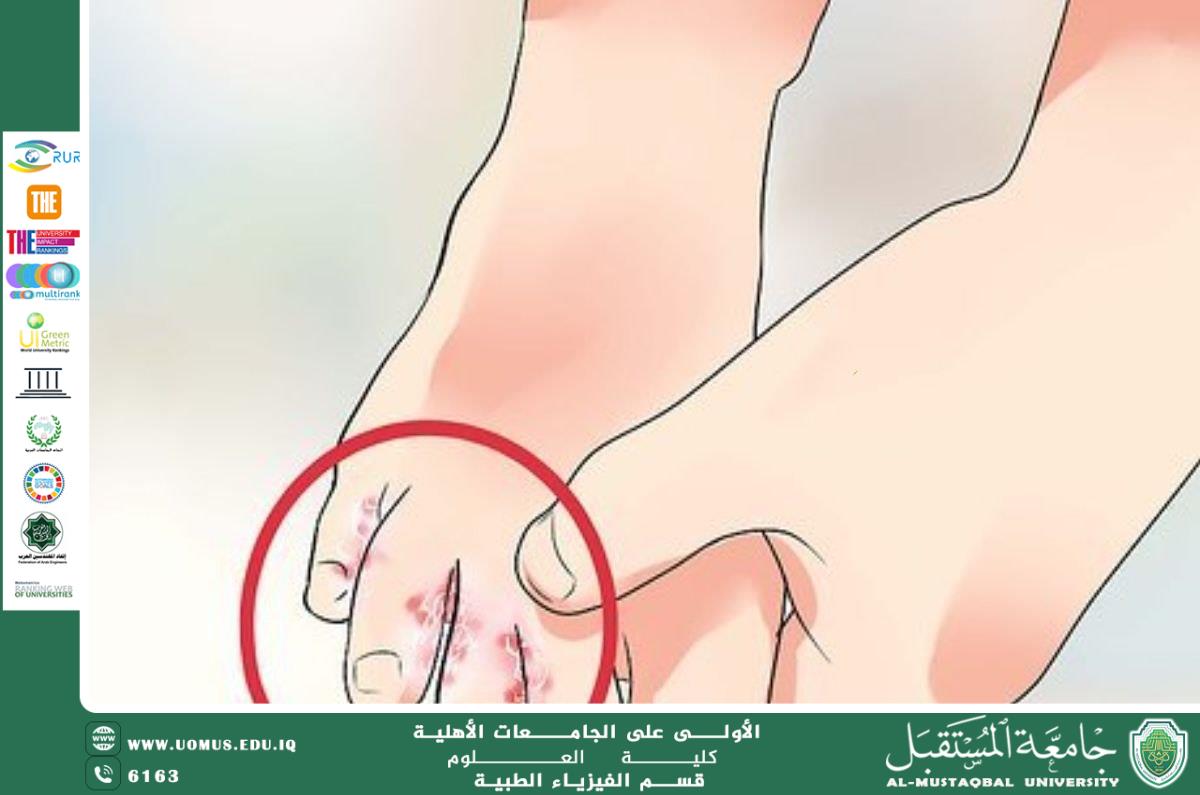
**Athlete's Foot** By Assistant Lecturer Maryam Latif Shandal
01/03/2025 Share :
Athlete's foot is a common fungal infection of the skin, especially on the feet. The infection occurs when fungi grow in warm, moist areas, such as between the toes. This condition is also called "tinea pedis," a type of skin infection that can also affect other parts of the body.<br /><br />🔴 Symptoms:<br /><br />🔻- Itching: Feeling intense itching in the feet, especially between the toes.<br />🔻- Redness and peeling of the skin: The infected skin appears red and becomes dry or peeling.<br />🔻- Cracks: Painful cracks or sores may occur on the affected skin.<br />🔻- Bad smell: The infection can cause an unpleasant odor from the feet.<br /><br />Mariam Latif, [2/25/2025 11:23 AM]<br />🔴 Causes:<br /><br />🔻. Fungi: The fungi responsible for athlete's foot are usually found in moist environments such as swimming pools, locker rooms, and sneakers.<br /><br />🔻. Humidity and heat: Moist and warm environments promote the growth of fungi, so wearing socks or shoes for long periods without ventilating the feet can increase the risk of infection.<br /><br />🔻. Direct contact: The infection can be transmitted through direct contact with the skin of an infected person or by touching contaminated surfaces, such as towels or shoes.<br /><br />🔴 Treatment:<br /><br />What to do when you get athlete's foot?<br /><br />🔻. Immediate treatment<br />If you notice symptoms of athlete's foot such as itching or peeling skin, you should start using antifungal creams or sprays immediately. These products can be easily found in pharmacies, and they are effective in eliminating the infection if used regularly. It is recommended to continue using the treatment for 2-4 weeks even after the symptoms disappear to ensure complete elimination of the fungus.<br /><br />Mariam Latif, [2/25/2025 11:24 AM]<br />🔻. Visit a doctor when needed<br />In some cases, symptoms may not improve after using home treatment or may worsen. If you do not notice any improvement within two weeks of treatment or if the condition becomes severe and painful, it is best to consult a doctor. The doctor may need to prescribe oral medications or provide intensive treatment to control the infection.<br /><br />🔴 How to prevent athlete's foot?<br /><br />🔻. Keeping feet clean and dry<br />Cleanliness is the first step in preventing athlete's foot. The feet should be washed daily with soap and water, making sure to dry them well afterwards, especially between the toes where moisture can accumulate and help fungi grow. Moisture is the main factor that helps fungi multiply, so it is important to avoid leaving the feet wet for long periods.<br /><br />🔻. Wearing appropriate shoes<br />Choosing appropriate shoes can greatly help in preventing athlete's foot. It is preferable to wear shoes that allow the feet to breathe, and avoid tight shoes or shoes made of materials that do not allow air to pass through. If you must wear closed shoes for long periods, choosing cotton socks and changing them regularly is vital to keep your feet dry.<br /><br />🔻. Use antifungal products<br />If you are prone to athlete's foot or are in environments that encourage fungal growth (such as gyms or swimming pools), it is advisable to use an antifungal powder or spray on your feet before putting on your shoes. These products help prevent fungal growth and keep your feet dry.<br /><br />🔻. Avoid walking barefoot in public places<br />Walking barefoot in public places such as gyms, swimming pools, and locker rooms increases your risk of athlete's foot. Wearing shoes or sandals in these places helps protect your feet from contact with contaminated surfaces that may carry fungi.<br /><br />🔻. Do not share personal items<br />Sharing socks, towels, or shoes with others can be a way to transmit fungal infections. Therefore, it is important to avoid sharing these personal items even with close people.<br /><br />🔴 Effects of athlete's foot on daily life:<br /><br />Athlete's foot may affect daily activities, especially if the infection is severe and causes pain when walking or exercising. In some cases, the infection can lead to secondary bacterial infections or other health problems if not treated properly. In addition to the physical impact, some people may feel embarrassed or anxious about the symptoms on their feet, especially if they are obvious and accompanied by an unpleasant odor.<br />"AL_mustaqbal University is the first university in Iraq"<br /><br /><br />