Challenges of Managing Risks
17/08/2021 Share :
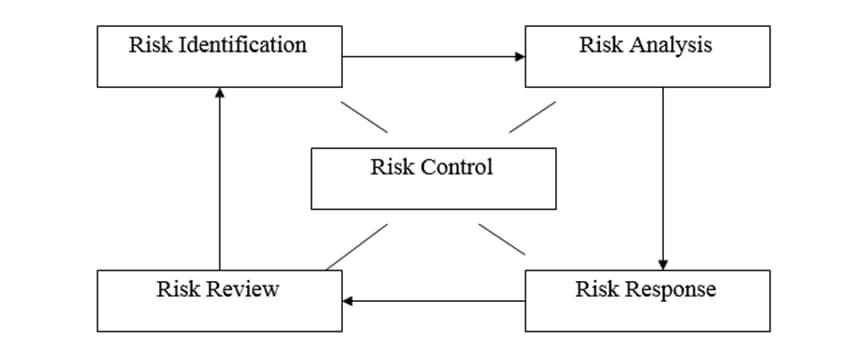
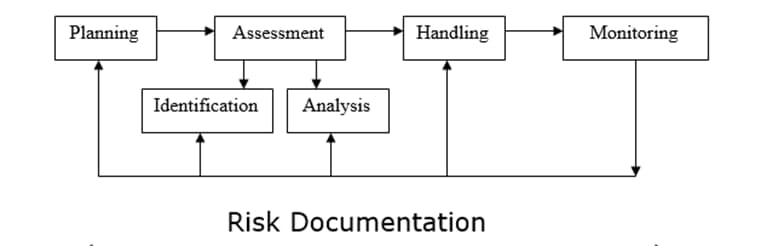
It is well known that unforeseen events may happen during life of any project and may damage partially or totally the objectives that project found for them . These are called risks . Risk Management is an approach used for avoiding , reducing , absorbing or transferring risks . There are many factors affect achieving goals of Risk Management . From these factors the four ones are the most important : <br />1- Management attention , motivation and insight among project personnel<br />2- The qualifications and knowledge within the project<br />3- The experience (practice) within the field of risk managing <br />4- The personality of the manager /analyst leading the process <br /><br />As it is seen Risk Management is related to personnel attitudes . In general there are risk takers and risk avoiders that is two main categories of people . For example those who invest in financial markets are risk lovers while those who work under construction projects are risk averse . Risk takers usually underrate risk and risk avoiders take in consideration all obstacles and hence overrate risk . These two kinds of people exist , in fact , together in project teams and it is important for management to distinguish between them clearly in selecting personnel for the process of managing risks . There is another problem existing usually in construction project management regarding managing risks . It is the reason on which the analysis of risks performed . The common case is performing the analysis on request of other party , say the government , the partner or the client in general . Working on these basis , in hurry and without understanding why and what benefits there are the work will start going wrong . Finally it is useful to indicate here that the judgment of high skilled individual is often more accurate than combined group judgment <br /><br />The type of approach followed in managing risks in construction projects affects directly the entire process and hence is a key factor in it .There are generally two types that is two approaches one of them is informal and the second is an informal one . In the first approach the organization implements methods of managing risks but does not relies that they operate a kind of risk management . The contingency funds either lump sum or percentage may be considered as an example of the informal approach . Discussion with an expert on similar project and outlining possible risks is another example . This approach , by experience , has lower value than the second and it is dangerous to build results on its basis especially in large projects . Formal approach usually consists of procedures to be followed by organization in managing risks . This does not mean a unique method but a framework leading to formalize the suitable method to be followed in each one project . The type and size of the project affect the process and it is thought that every project needs a special technique . However , there are standard steps which must be followed . Among these steps is the assessment of risks either in a qualitative or quantitative manner . <br /><br />There are many methods used in managing risks in construction projects . Risk Management practitioners developed their own methodologies each in his type and nature of the project . However there is a standard model which is a Risk and Value approach which is divided into four parts : <br />1- Risk identification<br />2- Risk analysis<br />3- Risk response <br />5- Risk review<br />It is essential for the process to be success that many trials should be done to consider all possible risks . Various techniques usually used for this purpose like brainstorming and checklists . A number of authors have listed sources of risks in construction projects . Following an example of a checklist which can be derived .<br />Financial risks<br />Legal risks<br />Political risks<br />Social risks<br />Environmental risks<br />Communications risks<br />Geographical risks<br />Geotechnical risks<br />Construction risks<br />Technological risks<br />Demand/product risks<br />Completion risk<br />Commissioning risk<br />Supply risk<br />Natural force risk<br />