Dr. Ibrahim Abdullah Merdas publishes a global research on improving electrocardiogram accuracy within Scoops' sensors"
04/03/2025 Share :
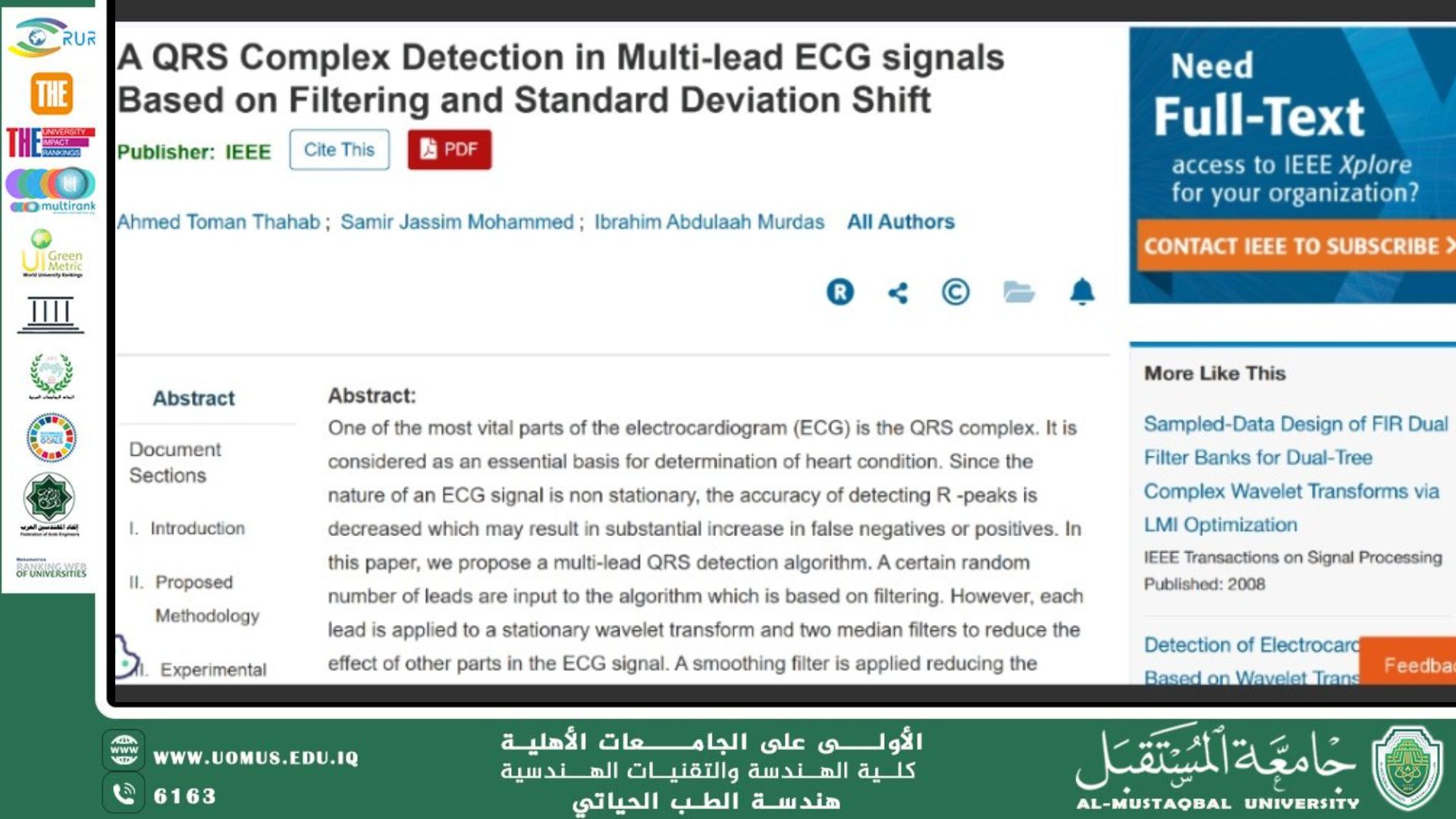
Within the framework of achieving the third goal of sustainable development (good health and well-being), which seeks to achieve universal health coverage and improve the quality of medical services, Prof. Dr. Ibrahim Abdullah Merdas, Head of the Department of Life Medicine Engineering, published a scientific research in a global journal within Scoops' Encounters, in which he addressed the development of an advanced algorithm for QRS signal analysis in electrocardiogram (ECG).<br /><br />The QRS complex is one of the most important parts of electrocardiogram, where accurate detection of R peaks enables better diagnosis of heart disorders. However, the immutable nature of the ECG signal results in less accurate detection of these peaks, which may lead to a higher rate of false negative or positive results.<br /><br />The search suggested a multipolar QRS detection algorithm, based on the analysis of the ECG signals from several electrodes, where a random number of these signals are entered into a filter-based algorithm. Fixed-wave conversion and advanced filtering techniques have also been applied to reduce the impact of other parts of the signal and improve the accuracy of detection, thus contributing to less jamming and more efficient analysis.<br /><br />This research is an important step in biomedical engineering, as it can contribute to the development of more accurate diagnostic tools, enhancing the quality of health care and helping to improve early diagnosis of heart disease.